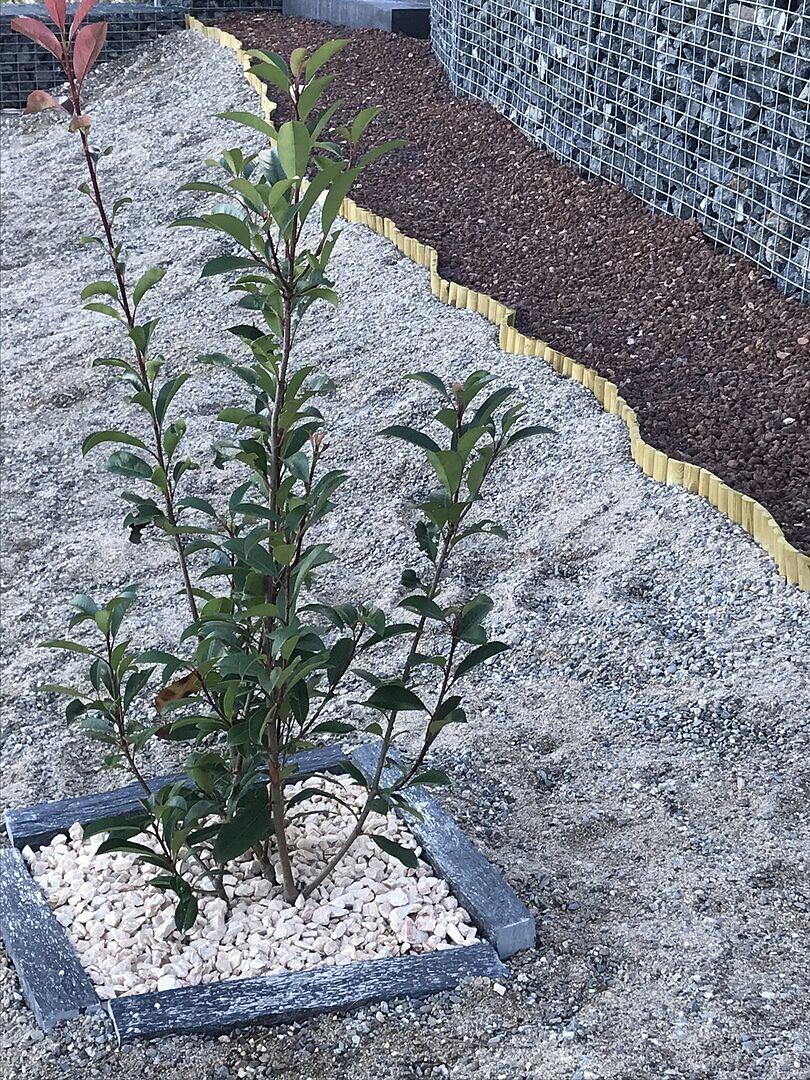
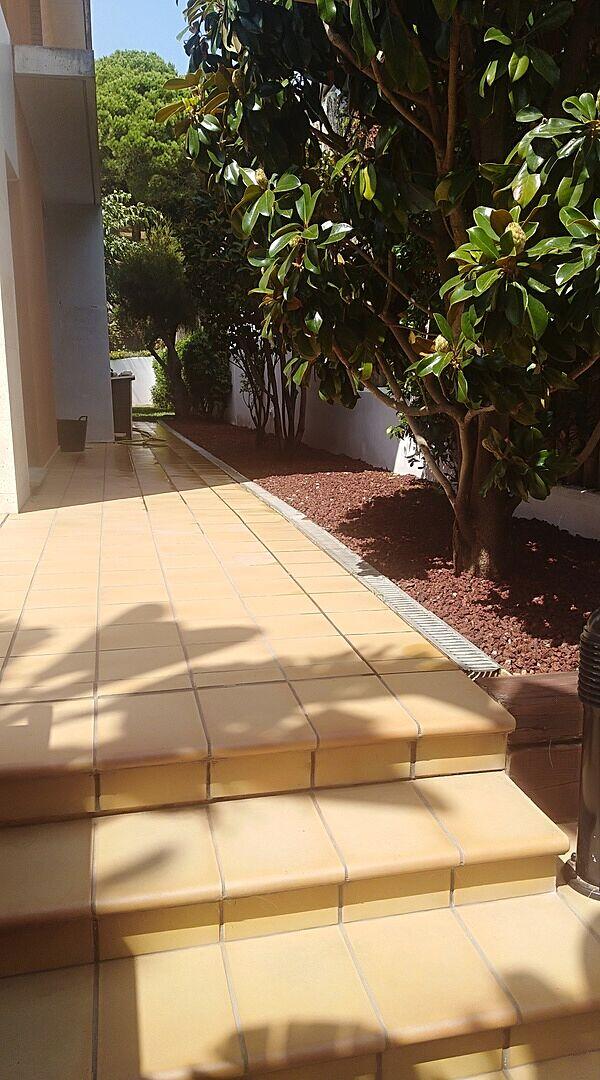
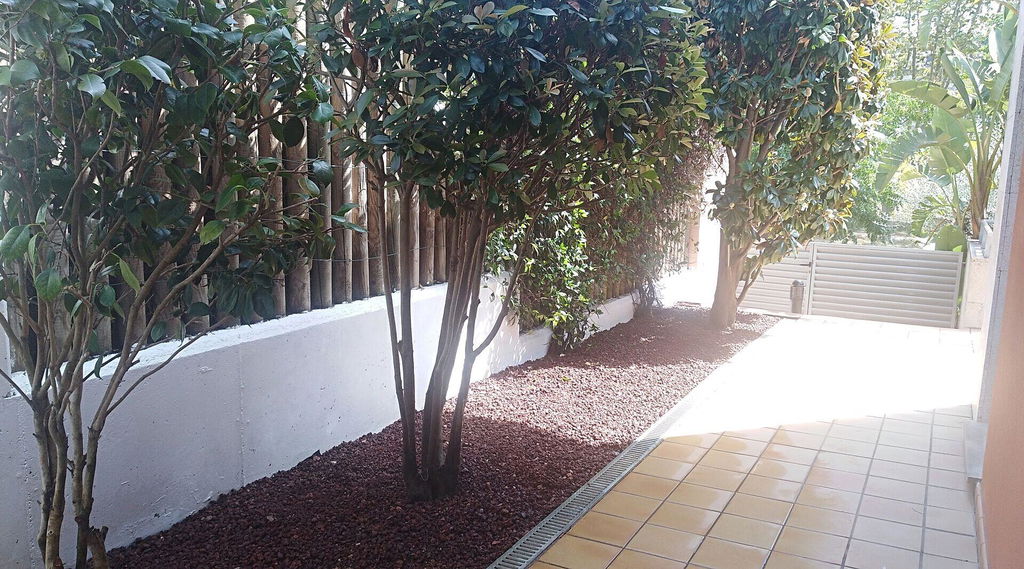
For pebbles and gravel: • ±80 kg per m², based on a 5 cm layer.*For grain sizes >32 mm a thicker layer is required.• Consumption per big bag: 1000 kg = 0.625 m³. • Coverage: ±12.5 m² with a 5 cm layer.
For pine bark: • ±70 L per m², based on a 5 cm layer. • Consumption per big bag: 1000 L = ±1 m³ = ±600 kg • Coverage: ±14 m² with a 5 cm layer.
For volcanic rock, slate and chamotte: • ±50 kg per m², based on a 5 cm layer. • Consumption per big bag: 1000 kg = ±1 m³ • Coverage: ±20 m² with a 5 cm layer
How much stone do I need to fill a gabion?
Density of ±1,650 kg per m³.
The calculation is easy to understand with an example: for a gabion measuring 100x50x30 cm, do the following: 1x0.5x0.3 = 0.15 m³ 0.15x1,650 = 247.50 kg of stone. *It is always a good idea to allow 5% extra, as gabions widen slightly when filled and always take a little more stone than the theoretical calculation.
Please note!
PLEASE NOTE! Before buying, read this information about gravel and pebbles
Grain sizes are sieve sizes, not exact measurements
When we talk about stone of, for example, 60-80 mm, we mean that the stones pass through an 80x80 mm square mesh and do not pass through a 60x60 mm one. A stone 100 mm long and 65 mm wide can easily pass through that 80x80 mesh, because the mesh sorts by the width of the stone as it passes through, not by its total length. That is why it is normal for a percentage of stones to have some dimension above 80 mm or below 60 mm.
Machines do not sort 100% accurately
In addition, no industrial sorting process is perfect: there is always a small percentage of stone which, due to speed, irregular shape or pieces overlapping on the belt, does not pass correctly through the corresponding mesh and slips into the grade, so stones larger than stated may occasionally appear. This is normal for this type of product and is not considered a defect.
Breakage of pebbles
In pebbles over 60 mm, up to 10% of the stones may break during sorting, washing, loading and unloading. We currently have no machinery that completely prevents this breakage. The product photos show only real pieces: broken pieces have not been removed.
Dust and sand in the product
This product is not washed, so it contains dust, sand and even traces of other materials from processing and transport. This is no problem for its use: the stone washes itself over time, or you can rinse it with water before use if you prefer.
Colour can vary considerably between batches
This is natural stone, and the colour changes from one batch to another, sometimes noticeably. This is especially important for multi-toned stones such as Blanco Rosa: some batches come out very white and others very pink, within the same product. If the exact shade is very important for your project, we recommend not buying this type of product online, as we cannot guarantee that the batch you receive will match the photo or a previous purchase.
Returns
Please bear in mind that returns, especially of 1,000 kg big bags, are usually complicated and expensive because of the weight and volume of the material. If the return is not due to an error on our part, the costs and arrangement of the return transport are borne by the customer.
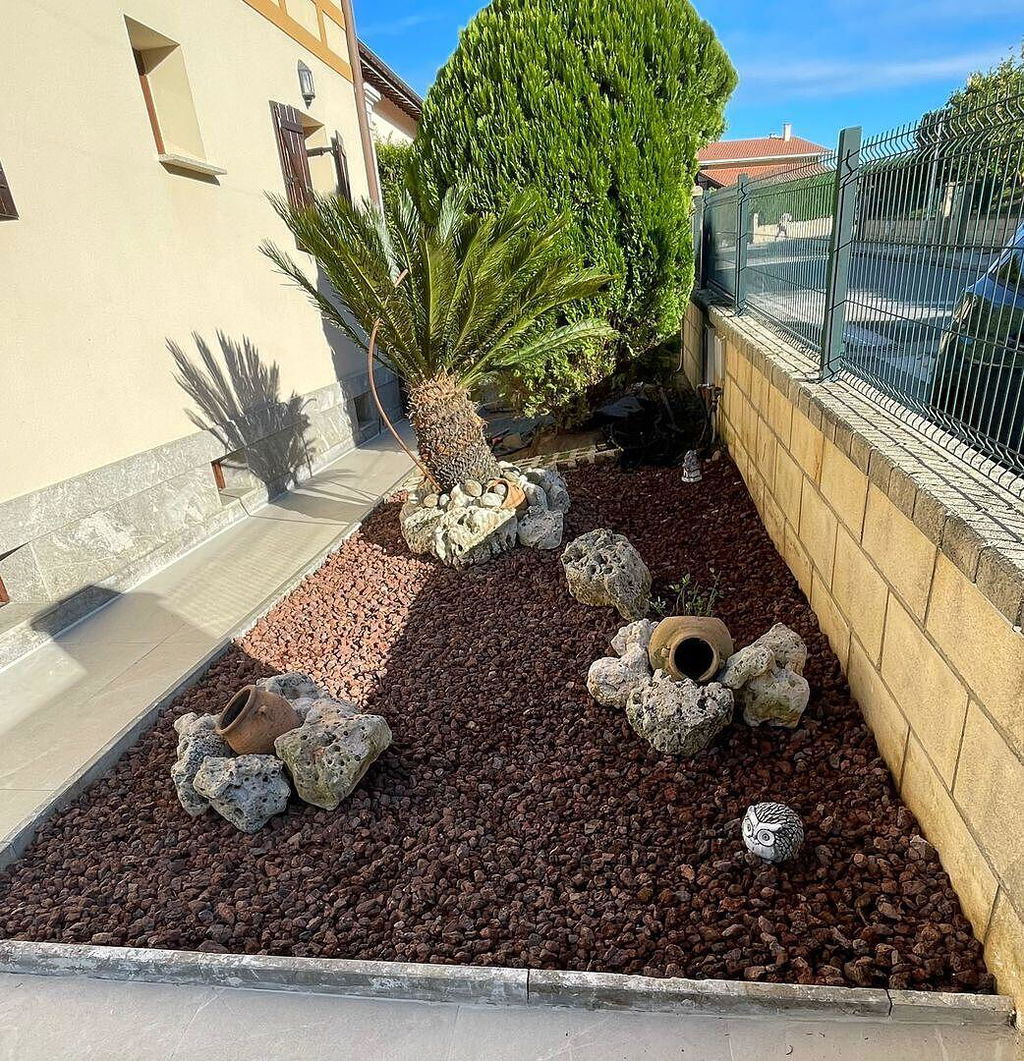
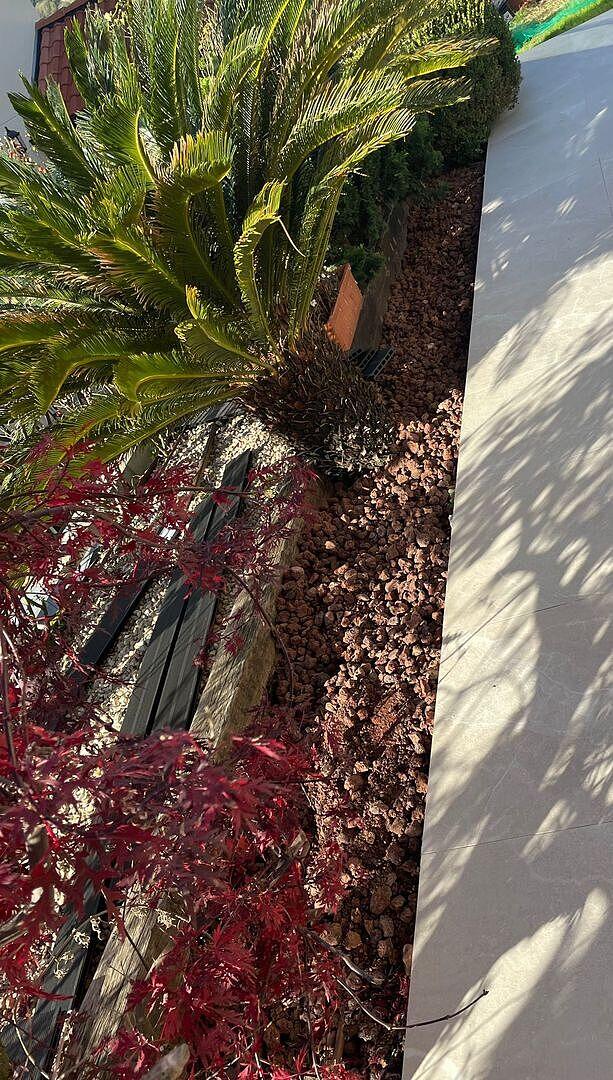
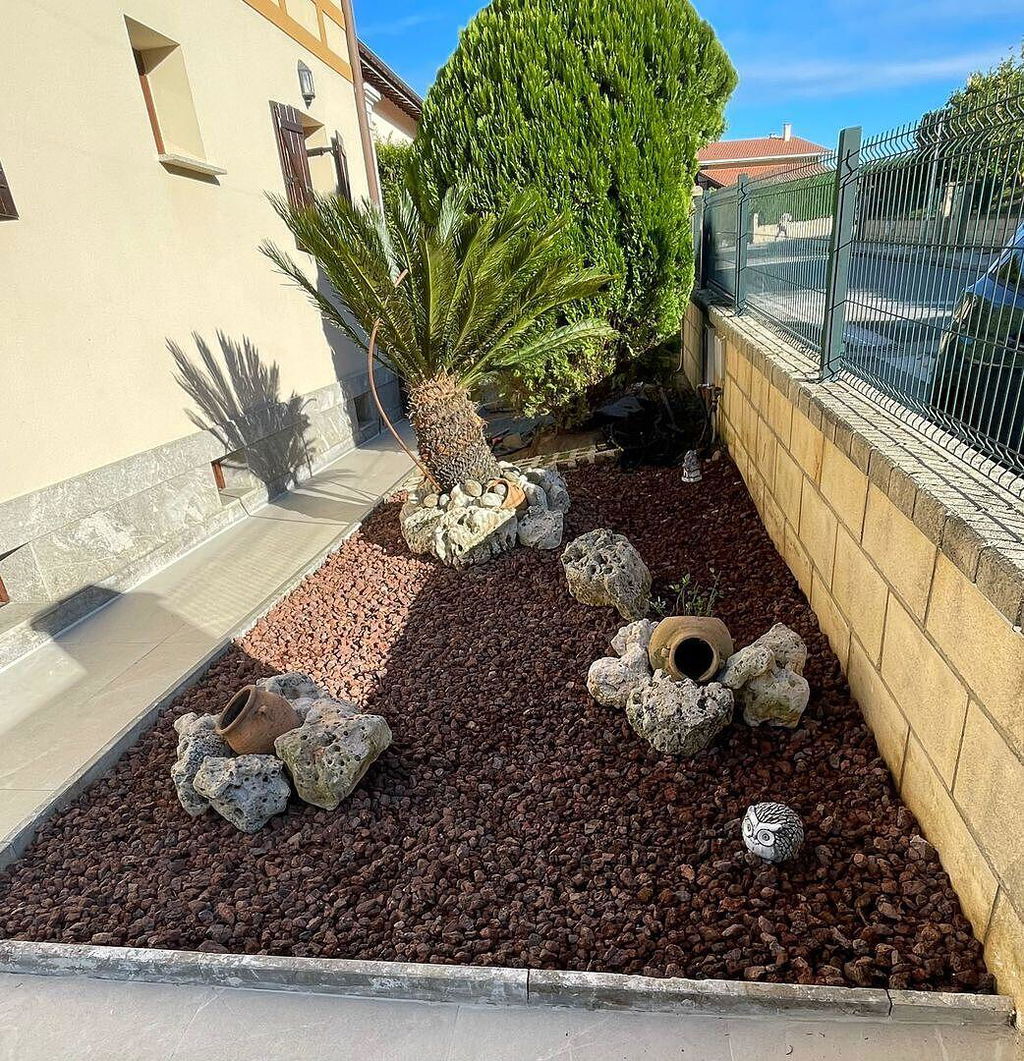
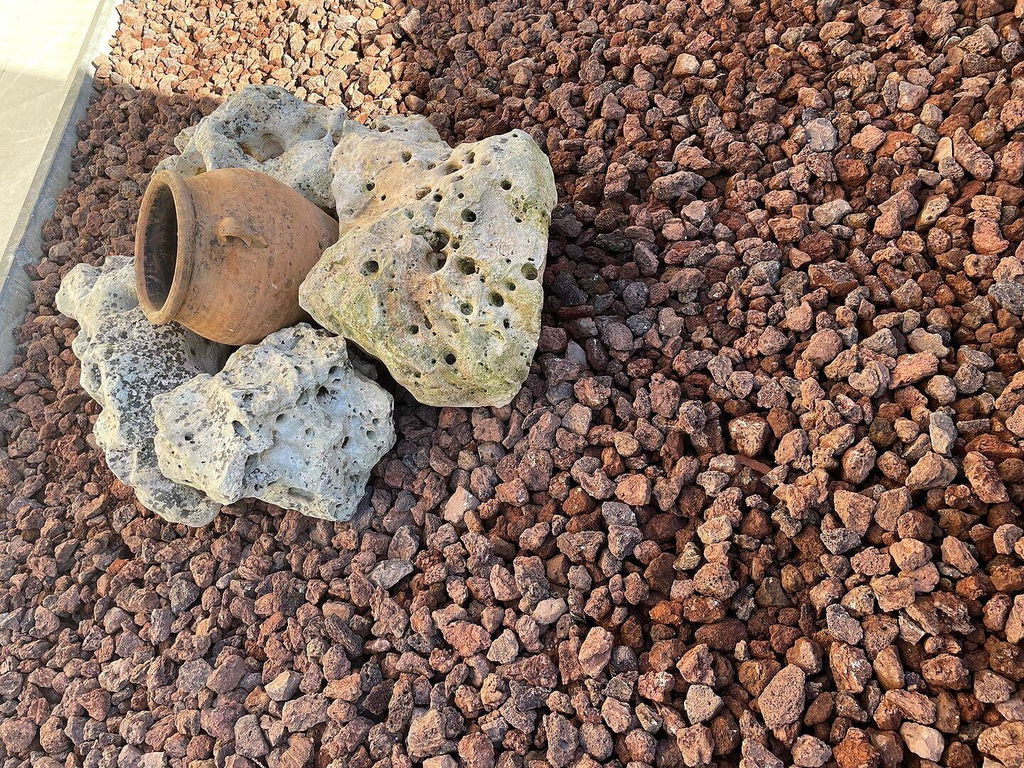
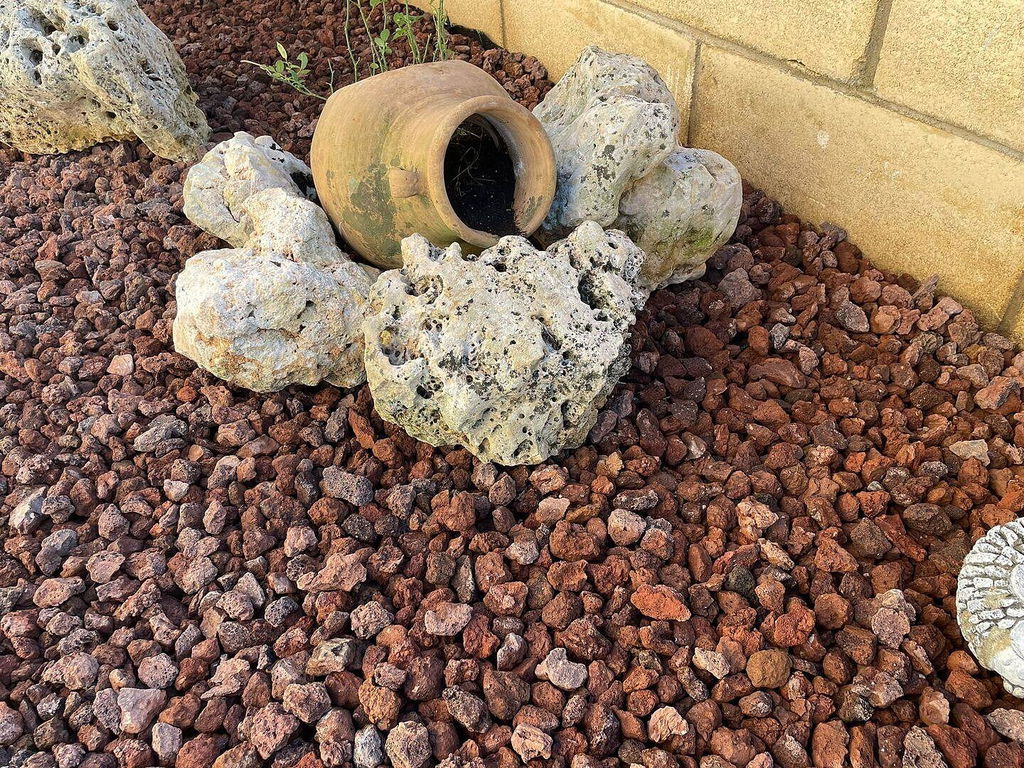
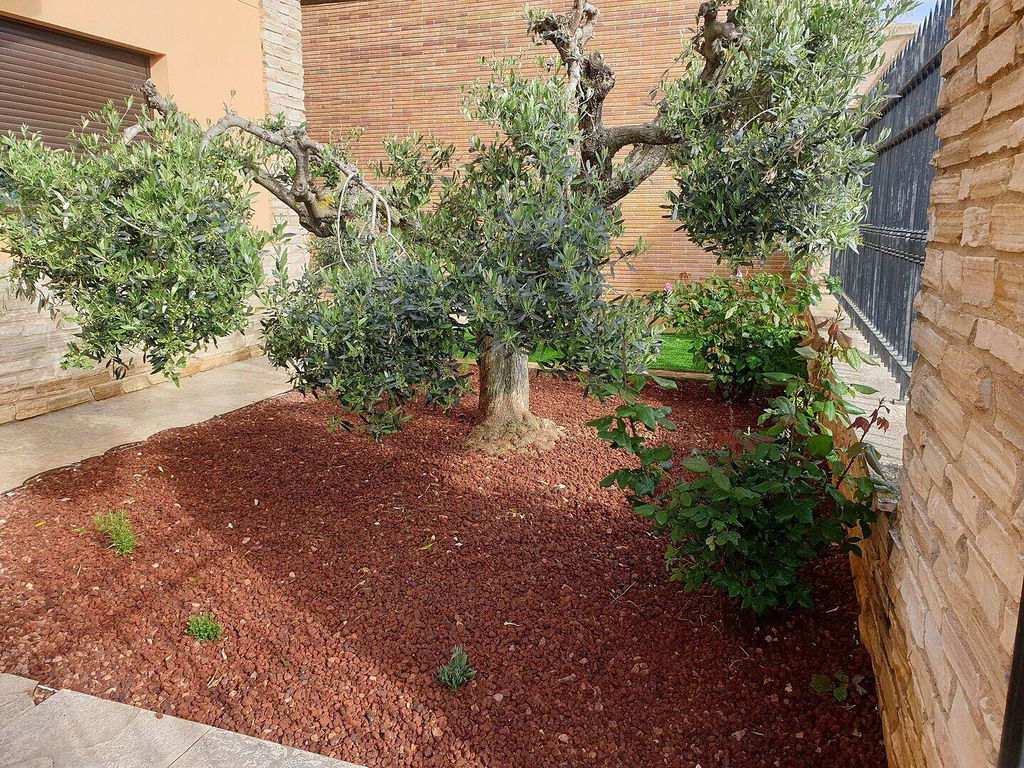
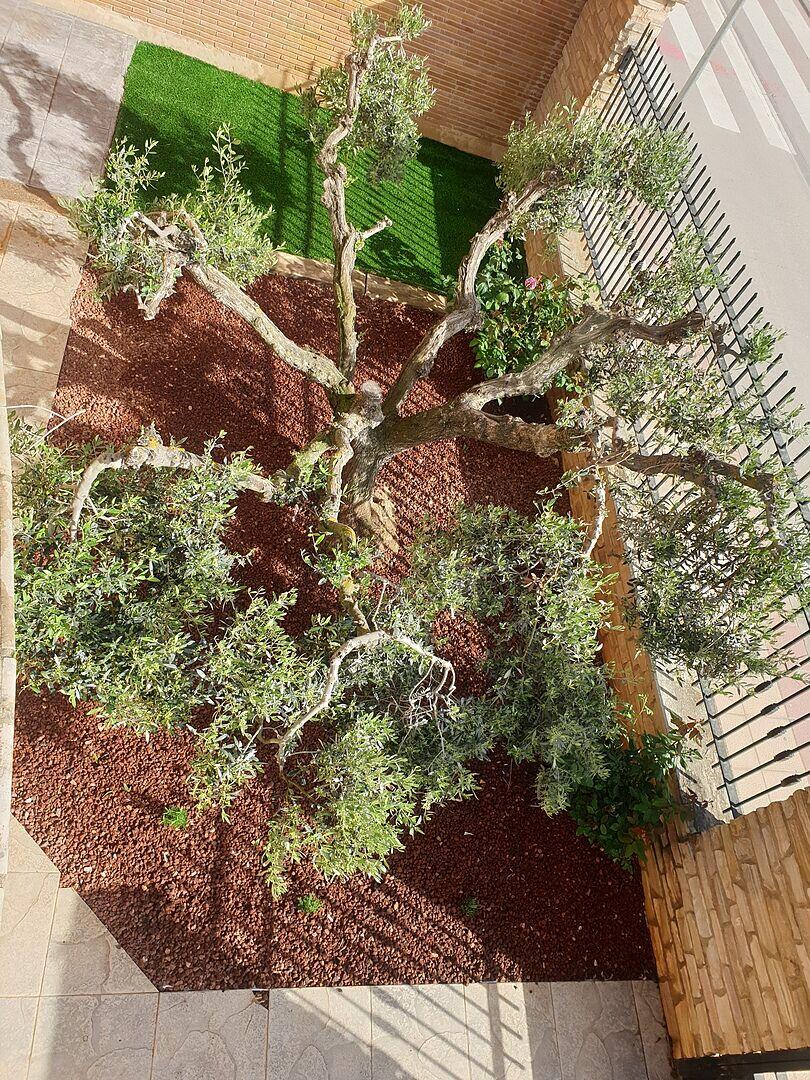
Red Volcanic Gravel
Red Volcanic Gravel for Garden
Discover our volcanic gravel, a classic ideal for your garden. Perfect for your plants and trees, this gravel helps maintain the moisture of the soil, protecting your land and promoting optimal growth.
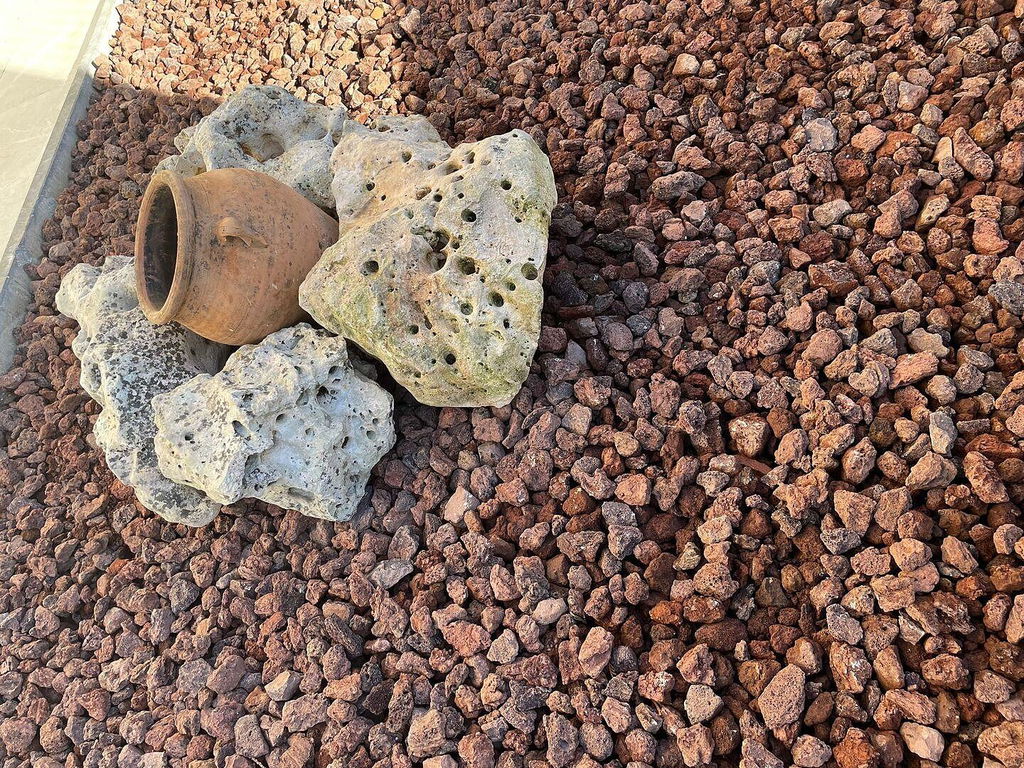
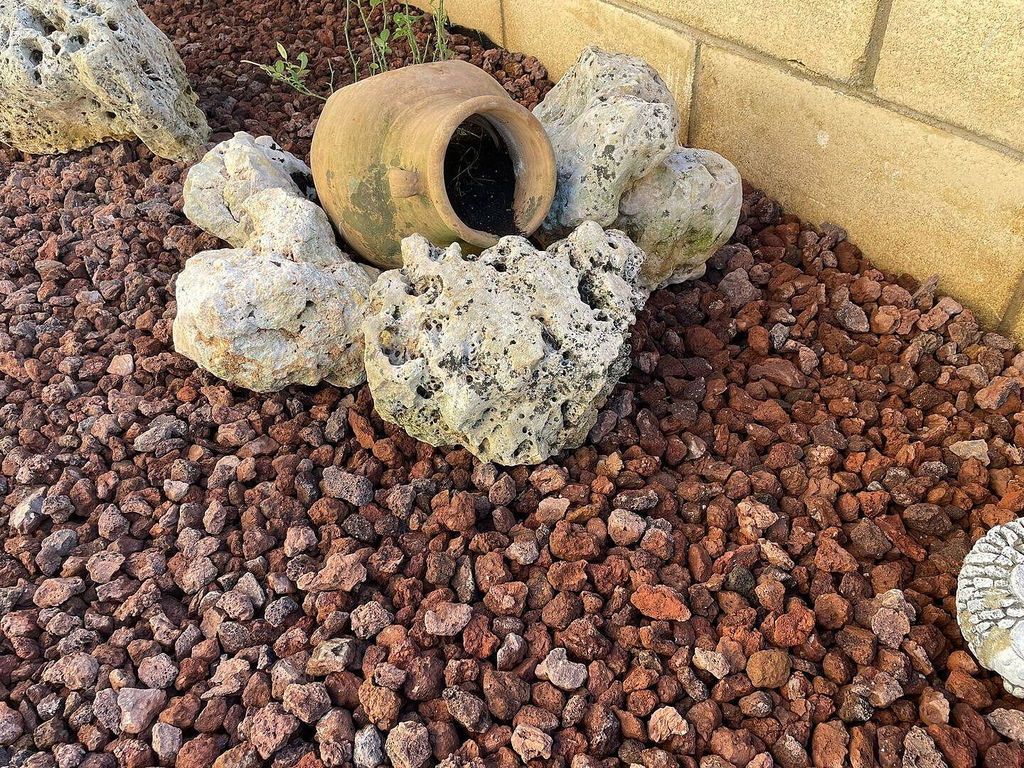
We have volcanic gravel in two colors: garnet red and natural (more grayish), as well as in a wide variety of sizes or granulations for you to choose the size you like best.
Placement of Red/Garnet Volcanic Gravel for Garden The placement of volcanic gravel is simple. We recommend using a weed control fabric to prevent the growth of weeds that harm your plants. Once the fabric is laid, simply add the stones; at least two layers are recommended for better soil and moisture protection.
How much gravel do I need per m²? A common question is how much gravel you need. The equivalence of 1 m³ of stone (whether it is gravel, pumice, or volcanic clay) is approximately between 900 and 1,000 L. To cover 10 m² with gravel of 10-25 mm, a thickness of 40 mm is recommended, resulting in 0.4 m³ (400 L). If you prefer the size of 25-50 mm, you will need approximately 0.8 m³ (800 L) with a thickness of 80 mm. Calculating is easy, but if you need help, feel free to contact us.
Color and Characteristics of Volcanic Stone Our volcanic gravel is available in red and natural. It is important to note that the intensity of the color may vary depending on the moisture of the stone. Although the gravel appears consistent, it may show subtle color differences between different batches and depending on exposure to light and moisture. Keep this in mind when making your choice.
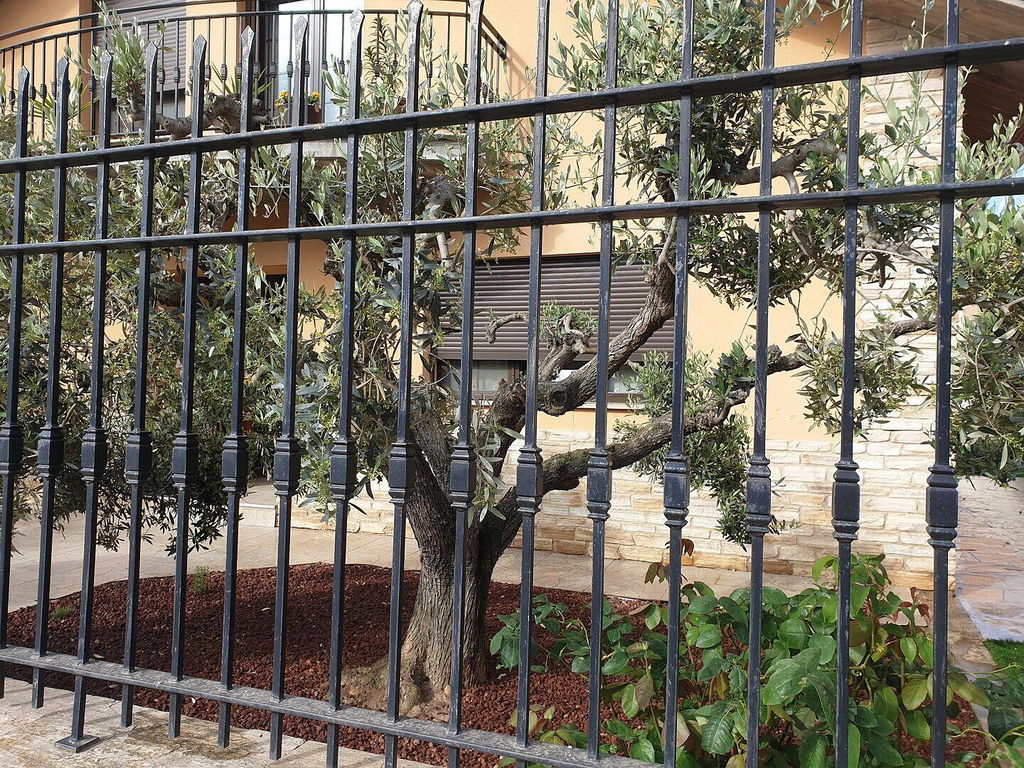
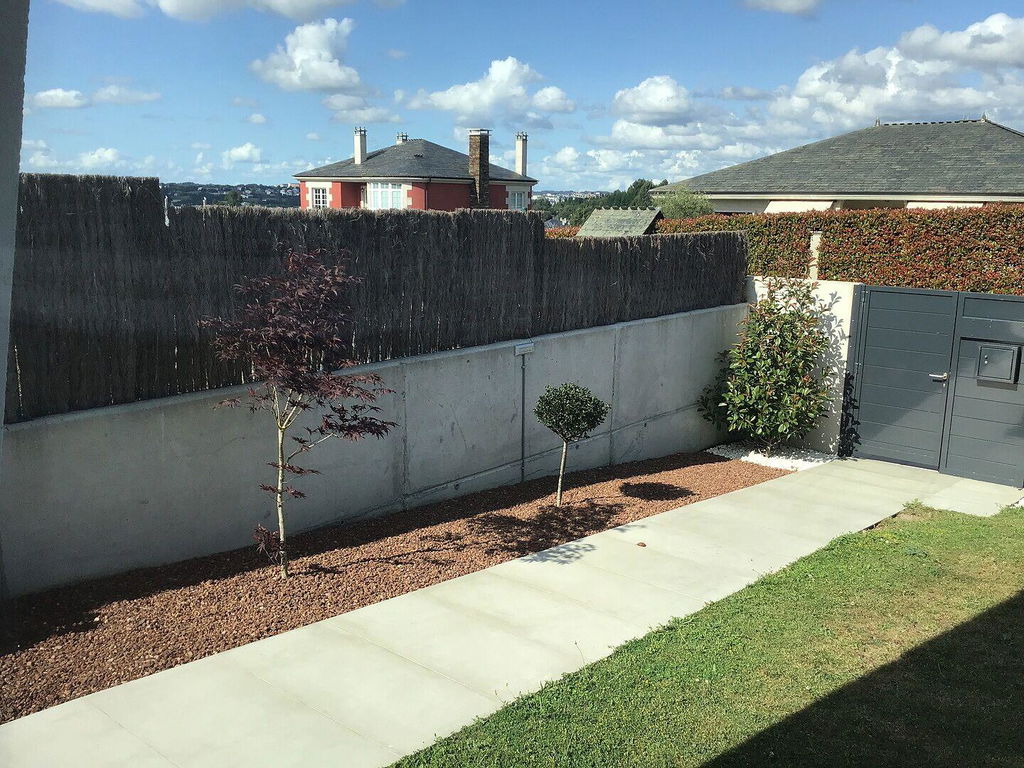
Ha cumplido mis expectativas. Buscaba como hacer que mi jardinera luciese sin perder la naturalidad y ha quedado, genial.
G
GONZALO JIMENEZ LOPEZ
Me gusta
Contento con la compra. Solo me falta echar piedra amarilla a los lados y en los árboles.
P
Pedro Y.
El transporte fue bien. . Me
El transporte fue bien. . Me llamo la atención el exceso de arenilla residual , más de lo que yo esperaba.
A
Ander Garcia Etxebarria
Rapidez y comodidad
Rapidez y comodidad
D
David Delgado Martinez
Muy satisfecho
Tanto el servicio de atención al cliente previo por whatsapp como el transporte y la calidad de producto acorde a toda la descripción ha sido muy satisfactoria
Ha cumplido mis expectativas. Buscaba como hacer que mi jardinera luciese sin perder la naturalidad y ha quedado, genial.
A
Alberto C.
Piedra volcanica TOP
Una piedra que ofrece una elegancia especial. Muy recomendable.
Por lo demas el envio fue rapidisimo y la comunicacion sobre el mismo inmejorable. He comprado mas veces en esta empresa y seguire haciendolo!
A
Alberto C.
Piedra volcanica TOP
Una piedra que ofrece una elegancia especial. Muy recomendable.
Por lo demas el envio fue rapidisimo y la comunicacion sobre el mismo inmejorable. He comprado mas veces en esta empresa y seguire haciendolo!
I
IGOR S.
Transporte genial y envío rápido.
Transporte genial y envío rápido.
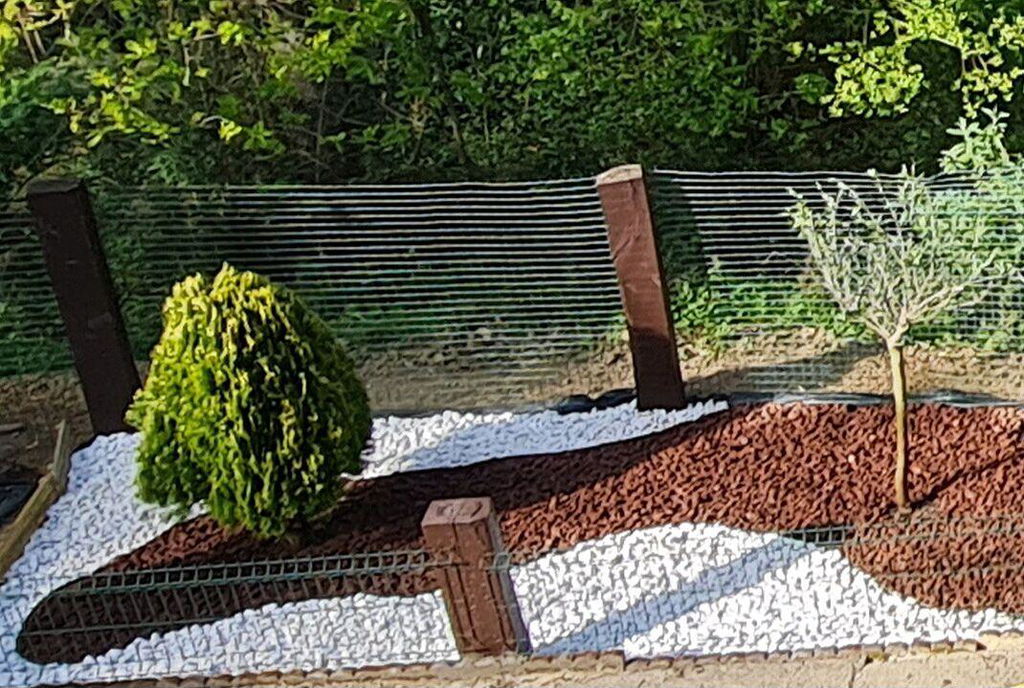
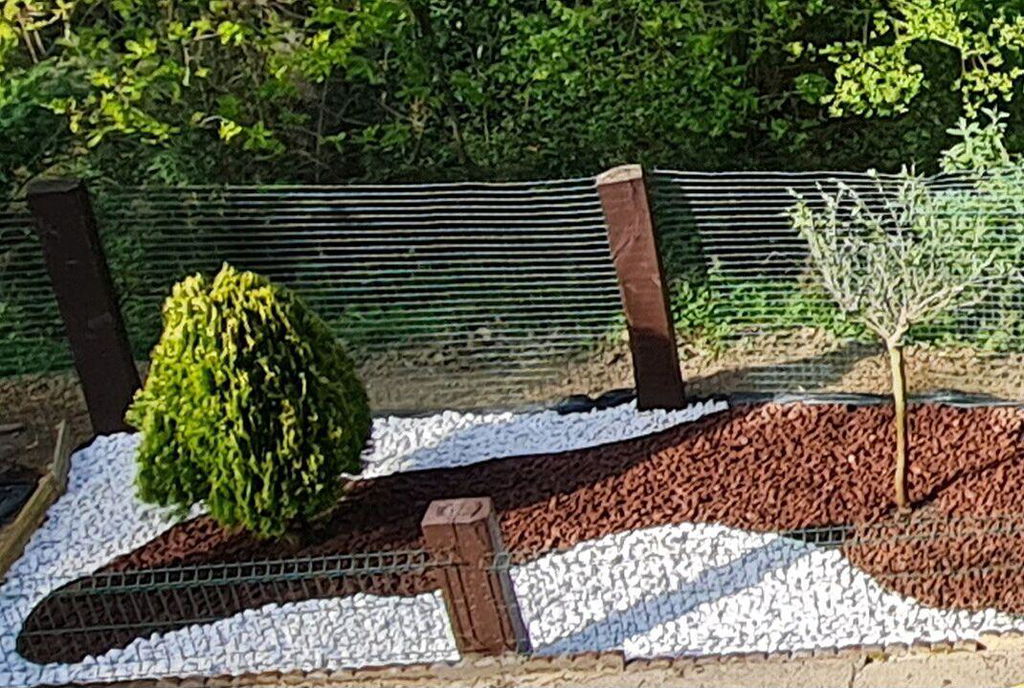
Gran contraste con el canto rodado blanco
I
IGOR S.
Transporte genial y envío rápido.
Transporte genial y envío rápido.
Gran contraste con el canto rodado blanco
J
Juan V.
Muy buena relación calidad-precio
Aunque inicialmente tuvimos algún que otro problema con el envío, ya que venían 970 kilos en un camión con una plataforma para su descarga que podía cargar hasta 900 kilos. Por que lo que tuvimos que cambiar la dirección de entrega y hacer que el camión descargara en otro lugar donde había maquinaria adecuada para ello. Y posteriormente nosotros hemos tenido que ir llevando poco a poco las piedras hasta el jardín donde debían haberse descargado.
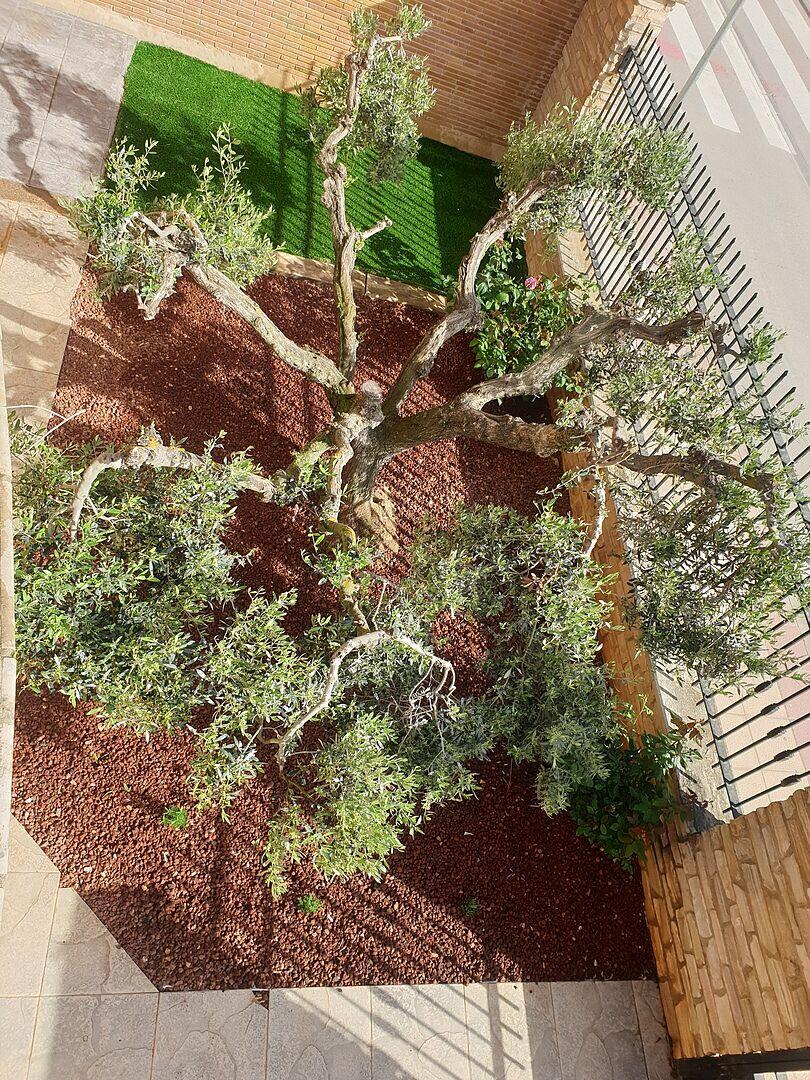
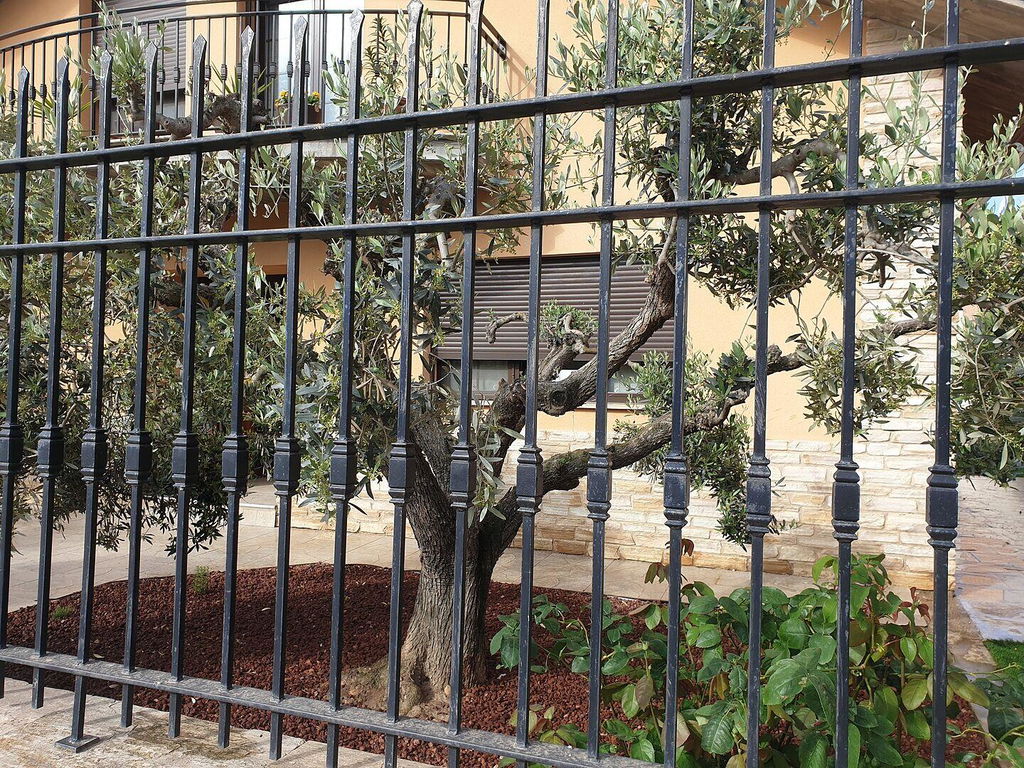
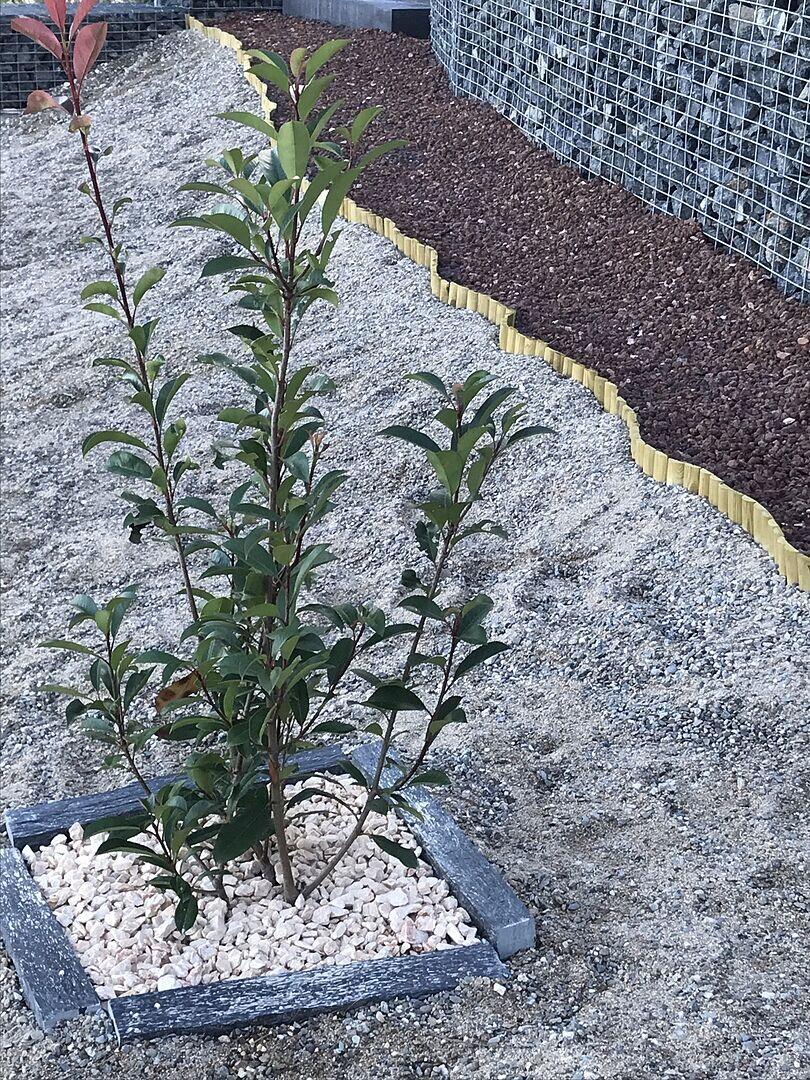
A pesar de esta pega inicial con la entrega, por lo demás muy bien. Las piedras son de un tamaño adecuado y un color precioso. Recomendable.
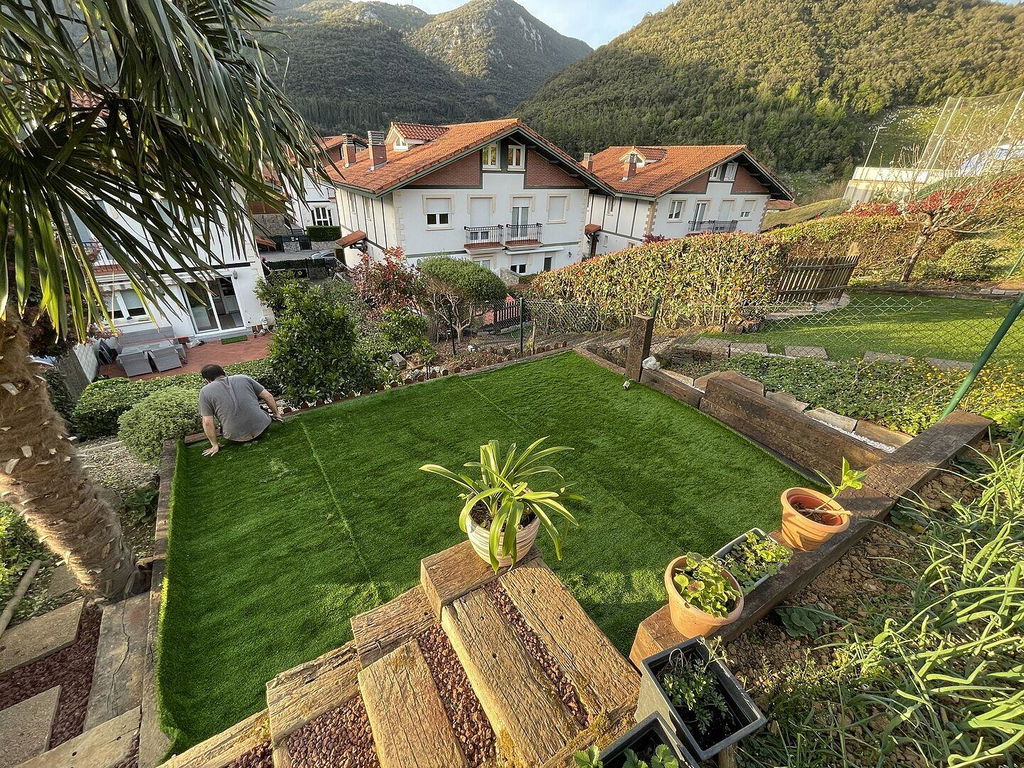
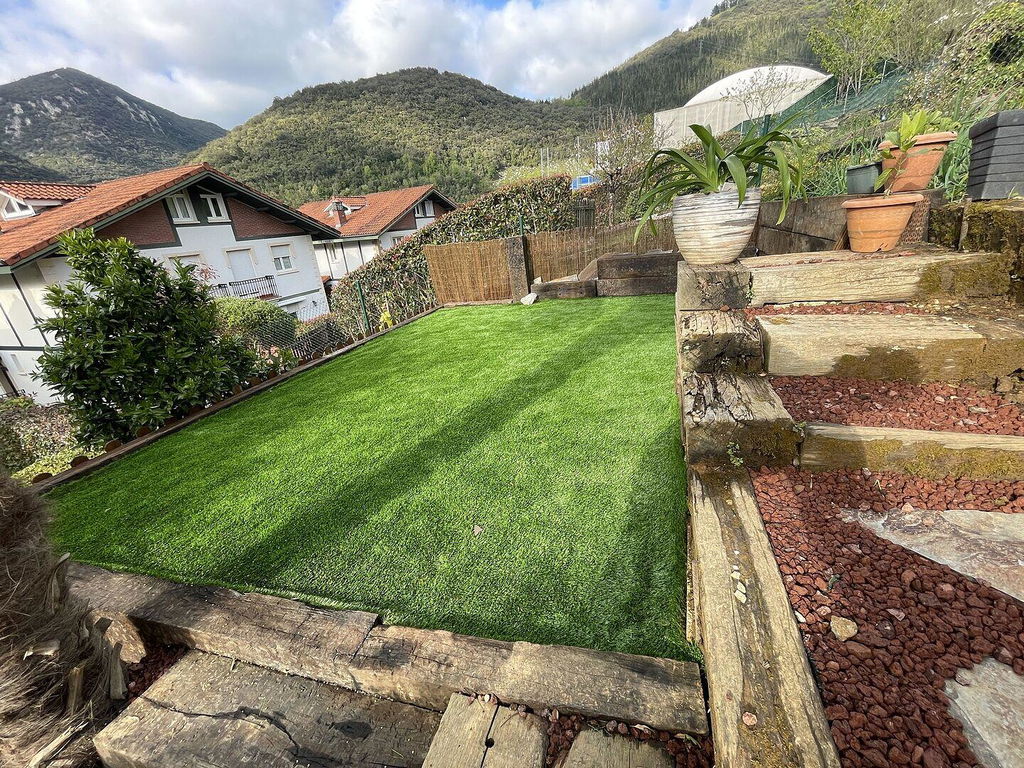
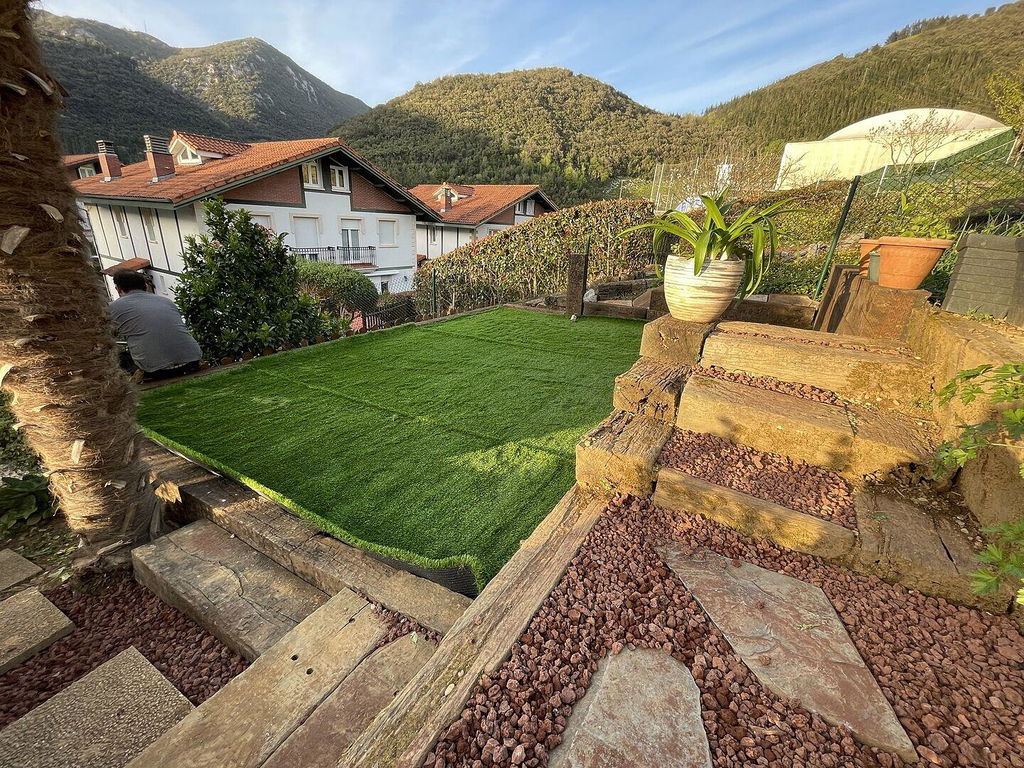
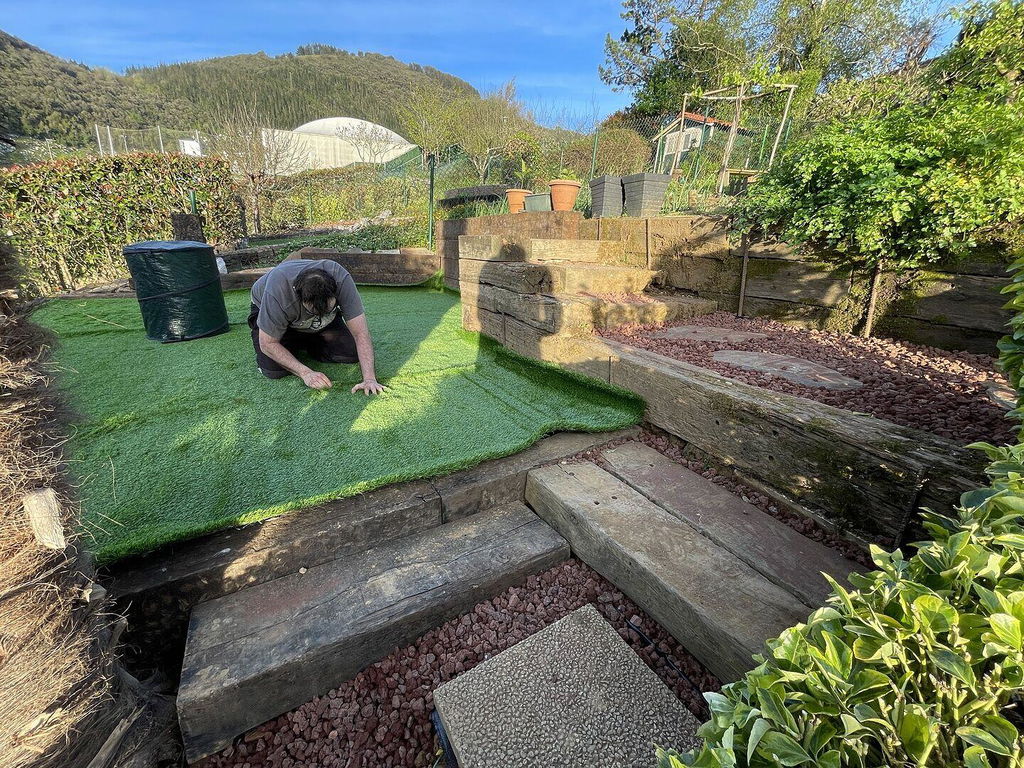
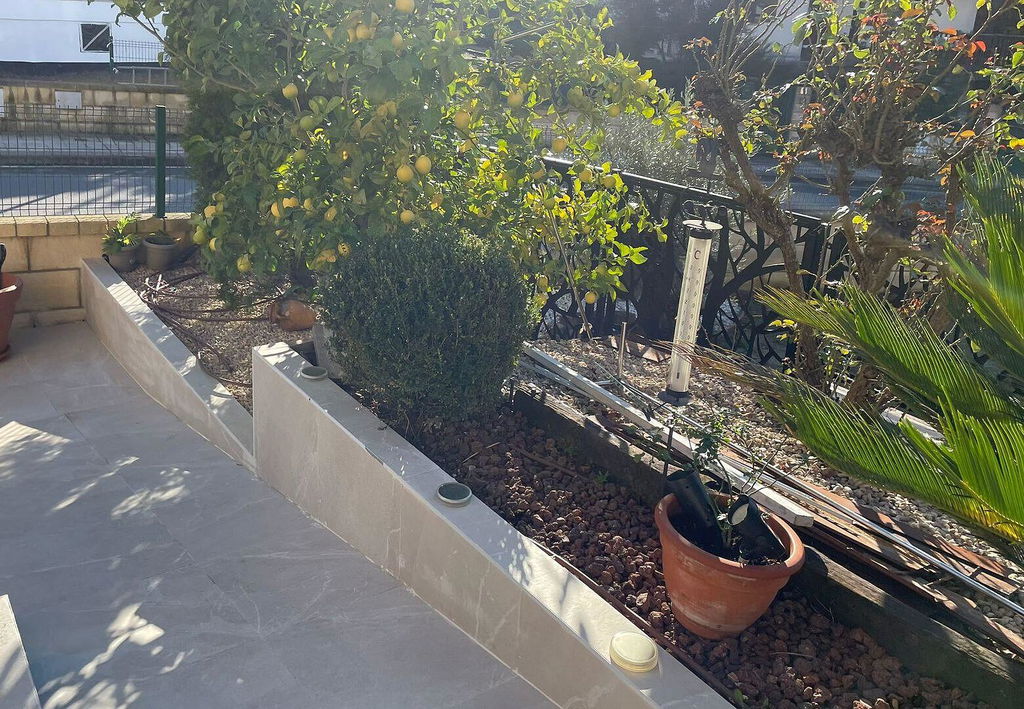
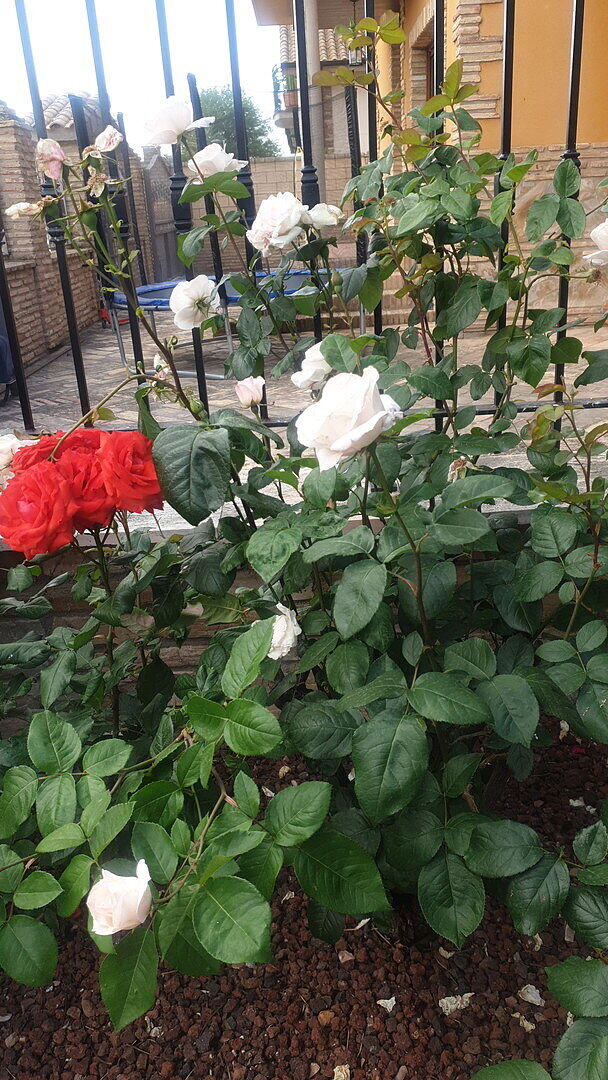
Hola Juan, muchas gracias por tu comentario y por tus fotografías, muy buen gusto, muy guapas!
J
Juan V.
Muy buena relación calidad-precio
Aunque inicialmente tuvimos algún que otro problema con el envío, ya que venían 970 kilos en un camión con una plataforma para su descarga que podía cargar hasta 900 kilos. Por que lo que tuvimos que cambiar la dirección de entrega y hacer que el camión descargara en otro lugar donde había maquinaria adecuada para ello. Y posteriormente nosotros hemos tenido que ir llevando poco a poco las piedras hasta el jardín donde debían haberse descargado.
A pesar de esta pega inicial con la entrega, por lo demás muy bien. Las piedras son de un tamaño adecuado y un color precioso. Recomendable.
Hola Juan, muchas gracias por tu comentario y por tus fotografías, muy buen gusto, muy guapas!
M
M.Jose R.
Espectacular
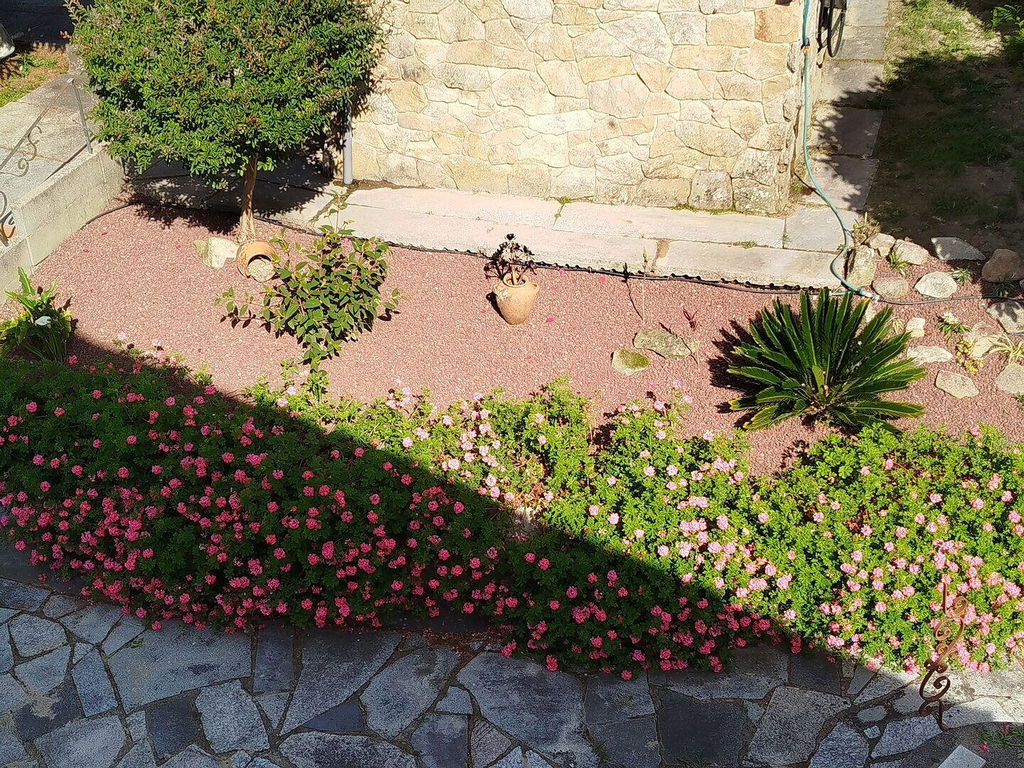
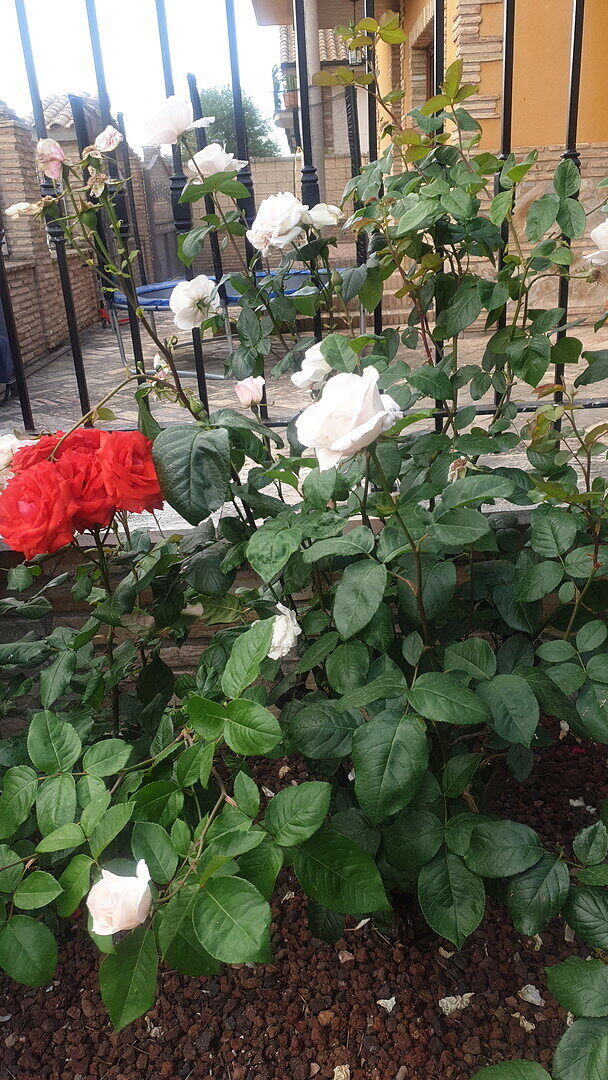
Es una piedra bonita y muy práctica cuando tienes plantas.
M
M.Jose R.
Espectacular
Es una piedra bonita y muy práctica cuando tienes plantas.
P
Pablo P.
Piedra volcánica
Queda muy bien en el jardín, le da un aspecto más cuidado. Recomiendo el tamaño más pequeño, ya que es más facil de colocar.
P
Pablo P.
Piedra volcánica
Queda muy bien en el jardín, le da un aspecto más cuidado. Recomiendo el tamaño más pequeño, ya que es más facil de colocar.
J
Joseba I.
Inmejorable servicio
Mi mejor valoración para Vetonek. El envío se realizó en un tiempo récord y recibí perfectamente paletizados los cien sacos de piedra volcánica.
J
Joseba I.
Inmejorable servicio
Mi mejor valoración para Vetonek. El envío se realizó en un tiempo récord y recibí perfectamente paletizados los cien sacos de piedra volcánica.
I
Ivan P.
Piedra volcánica
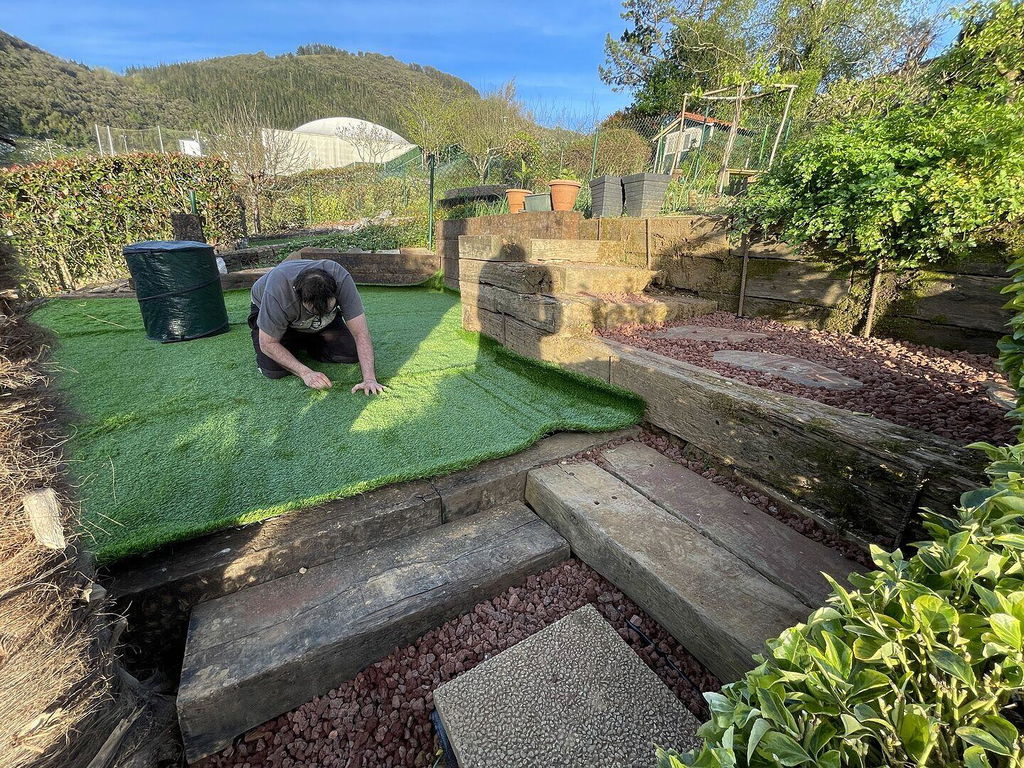
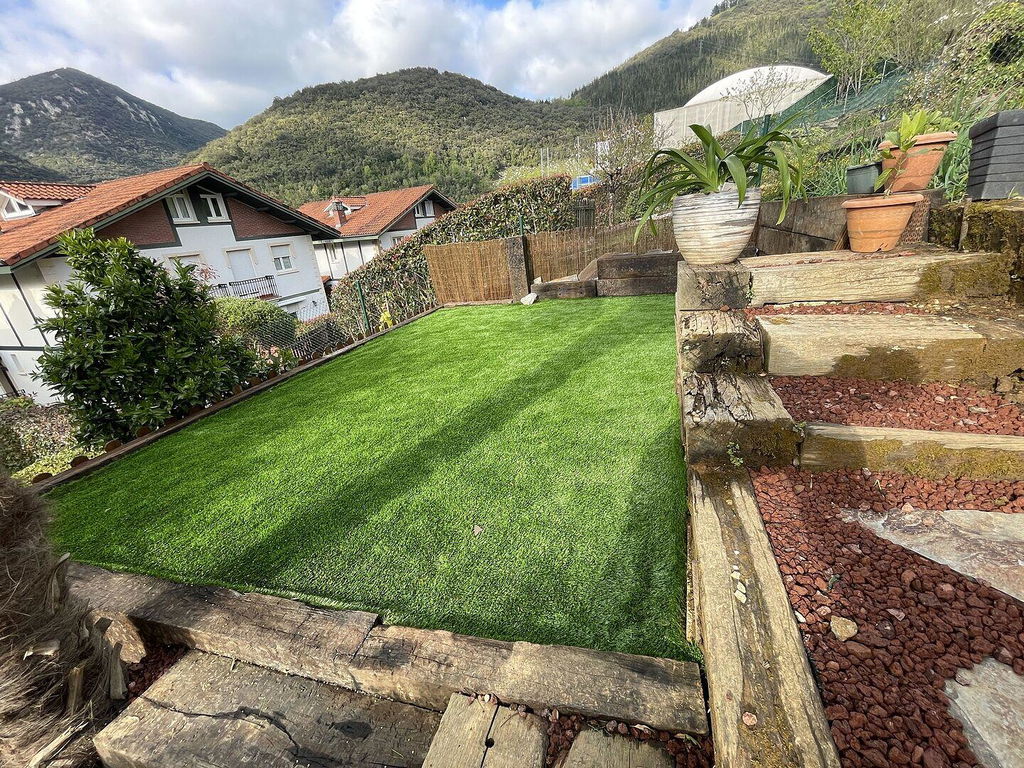
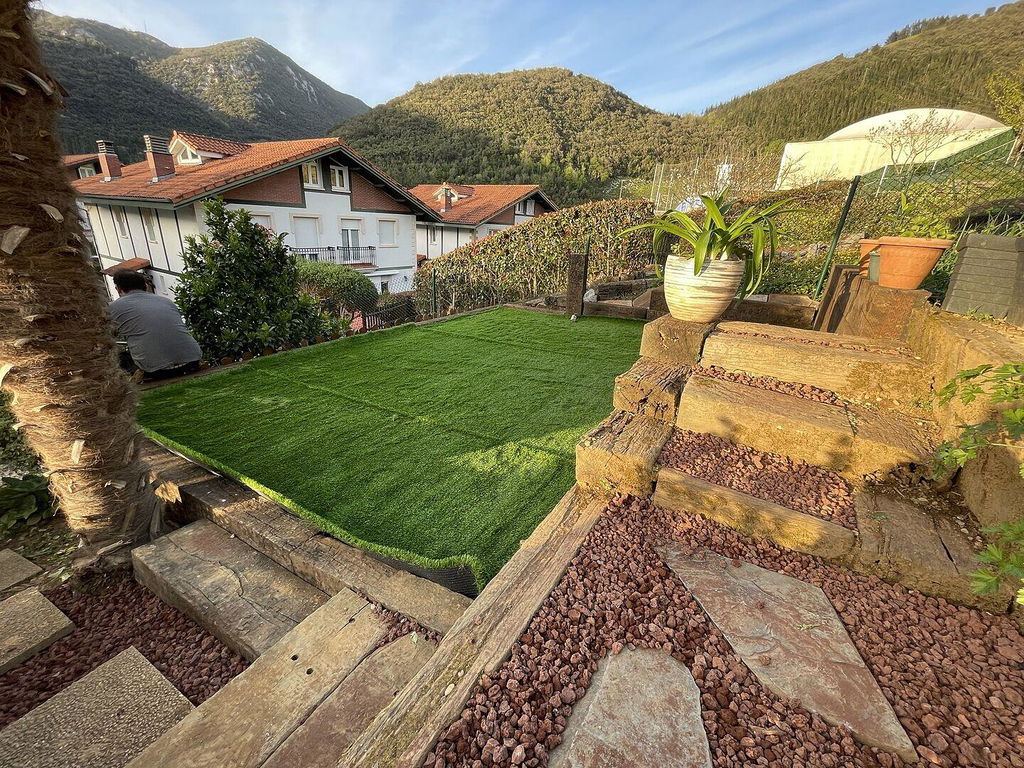
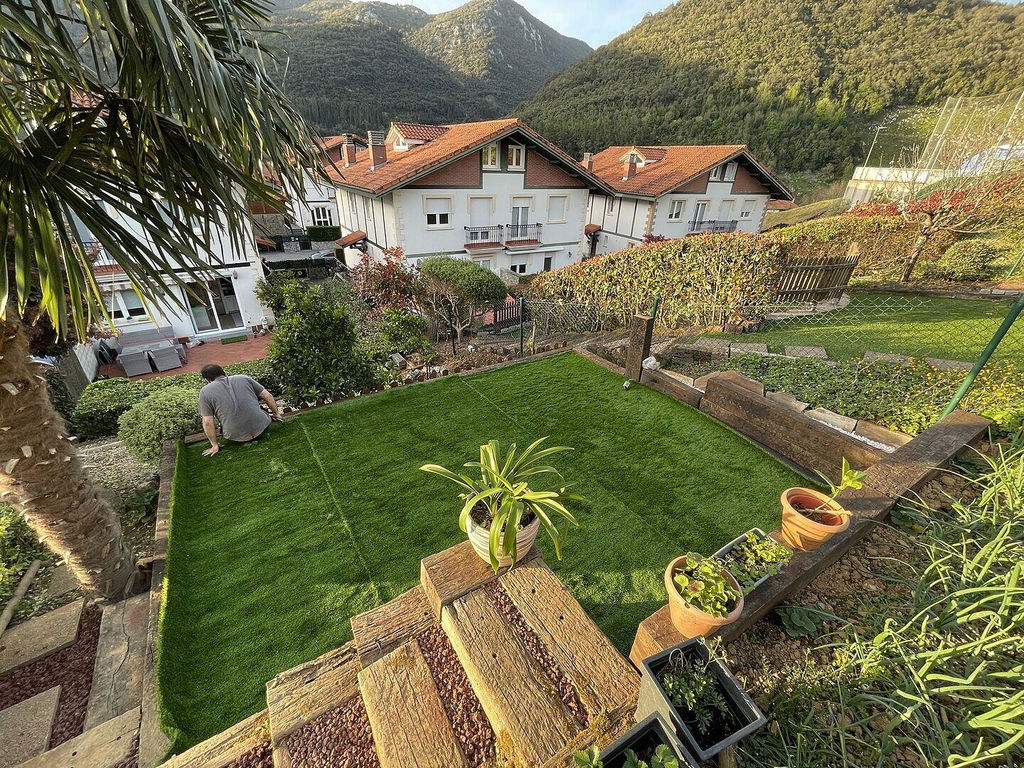
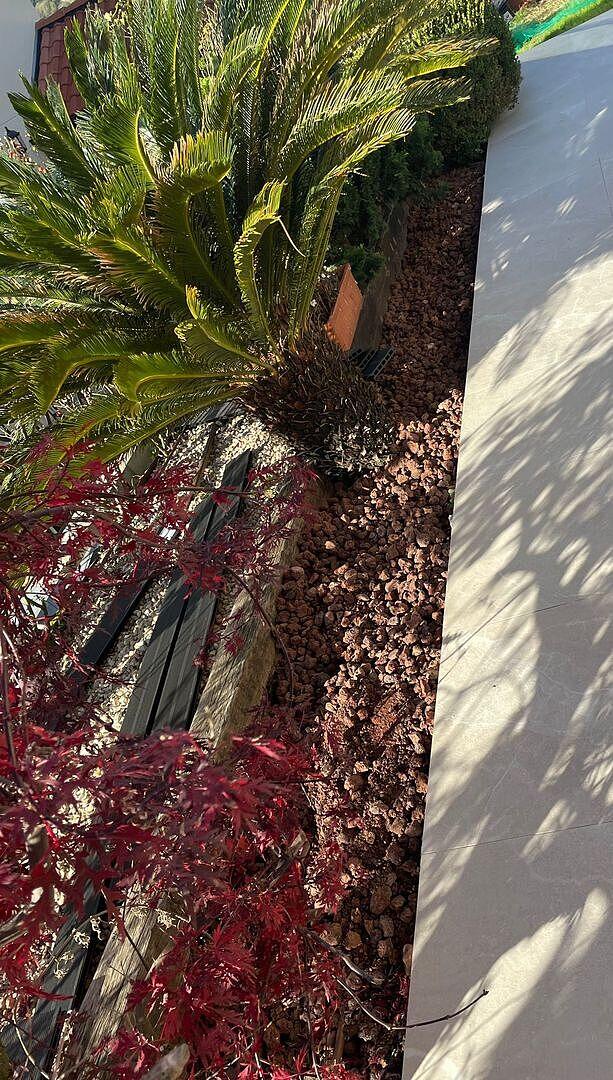
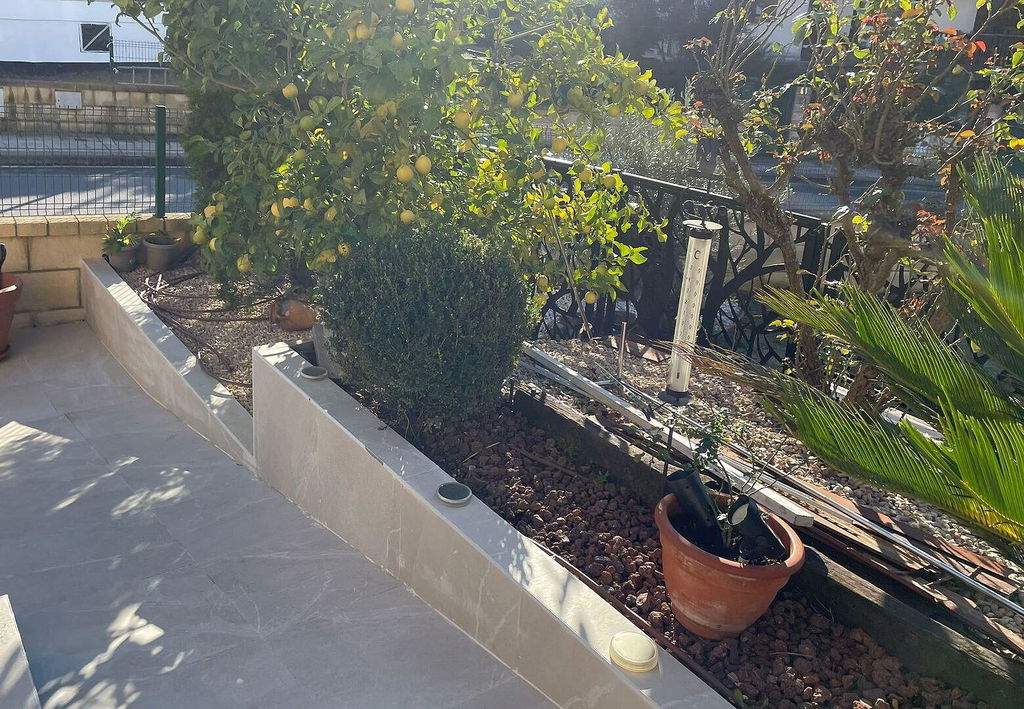
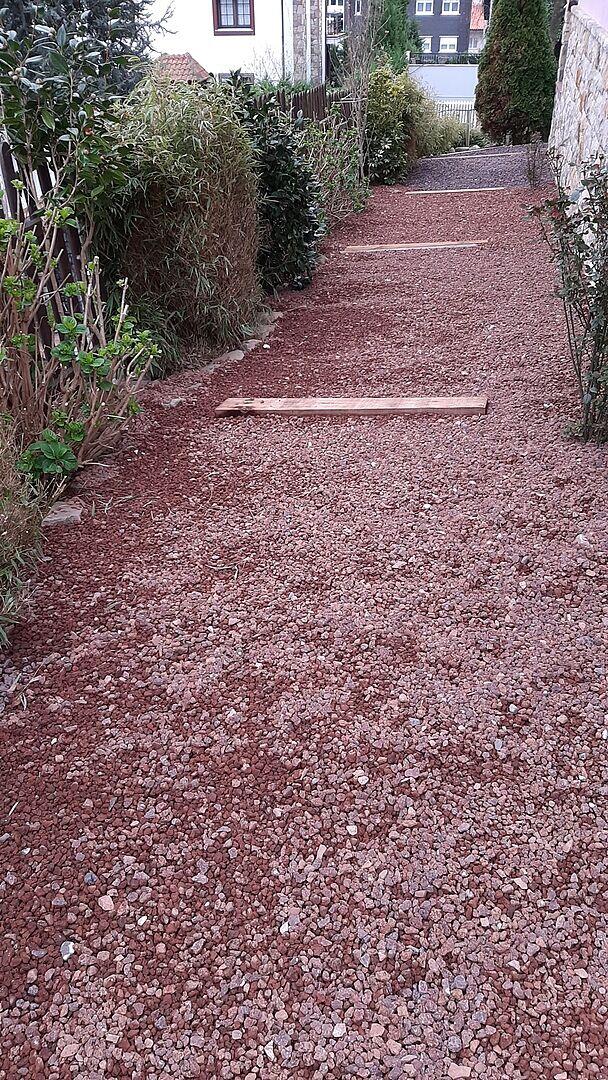
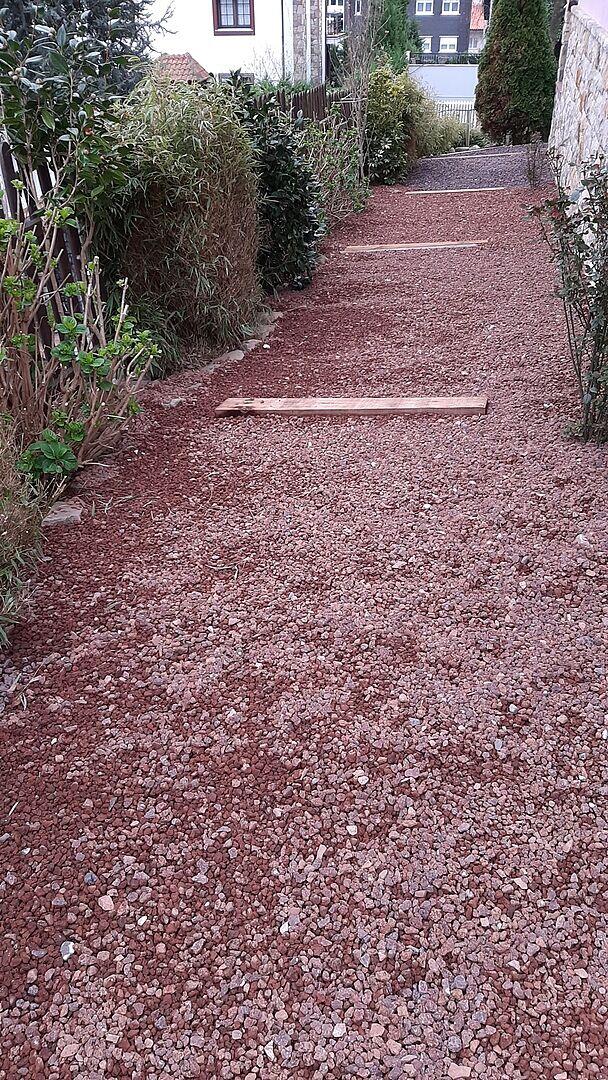
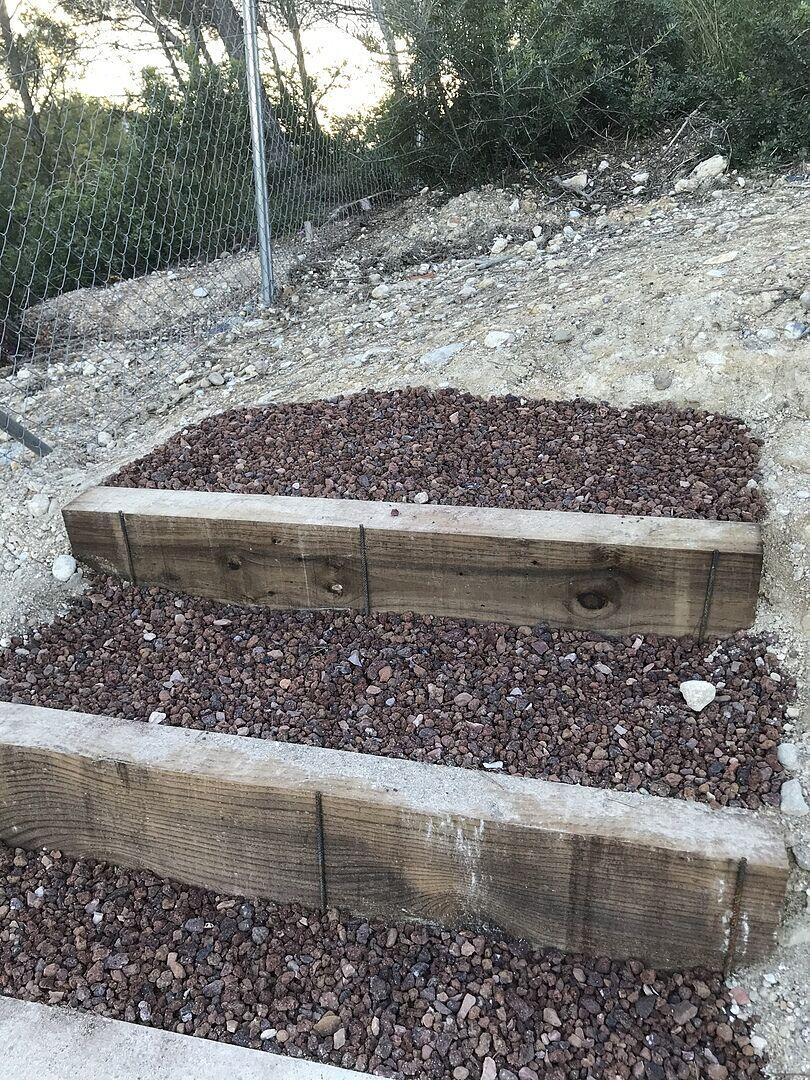
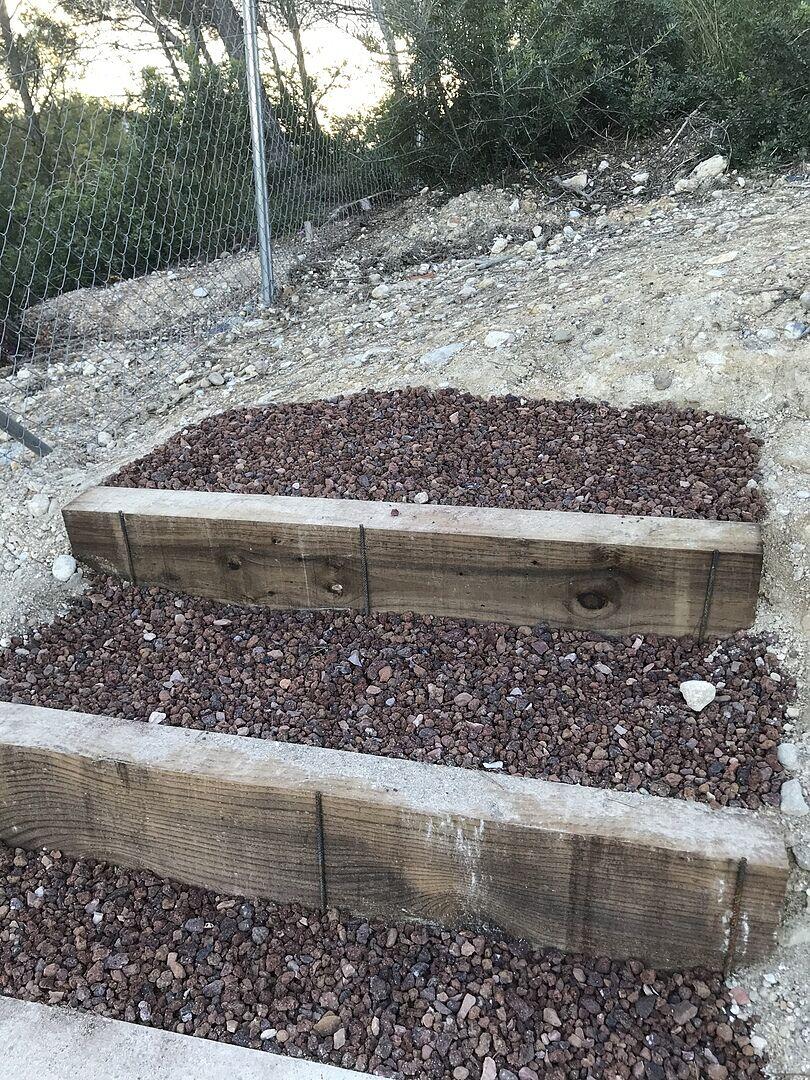
Buena opción para la decoración del jardín. Yo la he utilizado para relleno de escalera y de un camino decorativo. Me encanta el color. Llegó en tiempo y sin incidencias.
I
Ivan P.
Piedra volcánica
Buena opción para la decoración del jardín. Yo la he utilizado para relleno de escalera y de un camino decorativo. Me encanta el color. Llegó en tiempo y sin incidencias.
M
Montse C.
Correcto
Tanto la entrega como el producto ha sido correcto, el envío rápido. Seguro que os compraré en cuanto tenga algo que necesite. Gracias
M
Montse C.
Correcto
Tanto la entrega como el producto ha sido correcto, el envío rápido. Seguro que os compraré en cuanto tenga algo que necesite. Gracias
S
Sandra H.
Muy bonita. Perfecta para decorar el jardin
Piedra muy bonita, muy decorativa y muy manejable. Llego enseguida.
Embalaje perfecto.
Frequently asked questions about gravel, pebbles and decorative stone
How much gravel or pebbles do I need per square metre?
For gravel and pebbles you need approximately 80 kg per m² with a 5 cm thick layer. A 1,000 kg big bag (0.625 m³) covers about 12.5 m² at that thickness. For slate, volcanic rock or chamotte the amount is lower, around 50 kg per m² (20 m² per 1,000 kg big bag).
How thick should the gravel layer be?
For decorative use a layer of about 5 cm is recommended. With grain sizes above 32 mm it is advisable to increase the thickness slightly so that the stone covers the surface well.
Is a geotextile membrane needed before laying gravel?
Yes, it is recommended to lay a geotextile (weed control) membrane before spreading gravel or pebbles. It prevents the stone from mixing with the soil and reduces weed growth.
Why are some stones larger or smaller than the stated grain size?
The grain size (e.g. 60-80 mm) indicates the sieve size the stone passes through, not an exact measurement. A stone 100 mm long can still pass through an 80 mm mesh if its width allows, and no sorting process is 100% perfect, so it is normal to find some percentage of stone outside the stated range.
Is it normal for some pebbles to arrive broken?
Yes. In pebbles over 60 mm, up to 10% of the stones may break during sorting, washing, loading or transport. It is not a defect: the photos show real pieces, with broken ones not removed.
Are the gravel and pebbles washed?
No, the product may contain dust, sand or residues from the extraction and transport process. It does not affect its use: over time (rain, watering) it cleans itself, or you can wash it yourself before laying it.
Is the colour of the stone always exactly the same?
No. As it is natural stone, the colour can vary from one batch to another, especially in mixed-tone stones. If the exact shade is important for your project, we do not recommend buying without seeing it first, as we cannot guarantee it will match the photo.
How much stone do I need to fill a gabion?
The average density is about 1,650 kg per m³. For example, for a 100x50x30 cm gabion (0.15 m³) you will need approximately 247 kg of stone. It is advisable to allow 5% extra, as a little more stone than calculated usually fits when filling.
Todo perfecto
Envío rápido, aunque el transportista se hizonun lío con el bulto, al final la entrega fué perfecta.
Combre grava de río, el diámetro ybel color coinciden con lo ofertado. Venía algo sucia, pero nada del otro mundo.
La relación calidad/precio es inmellorable.