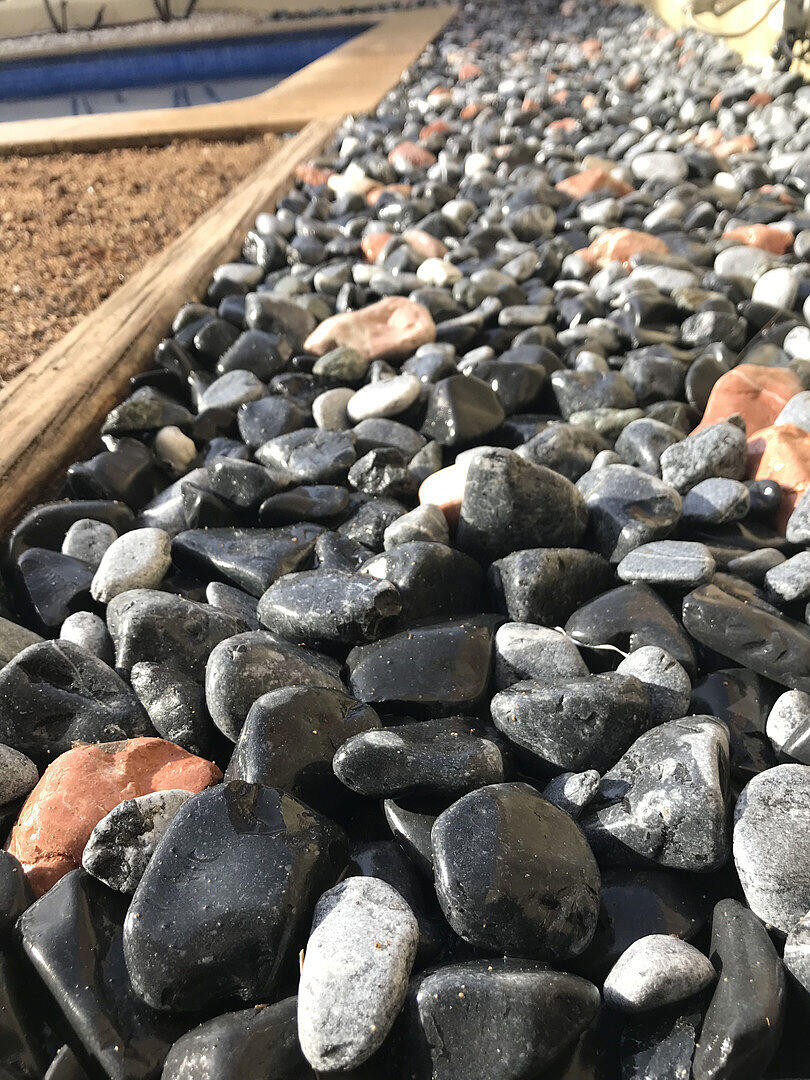
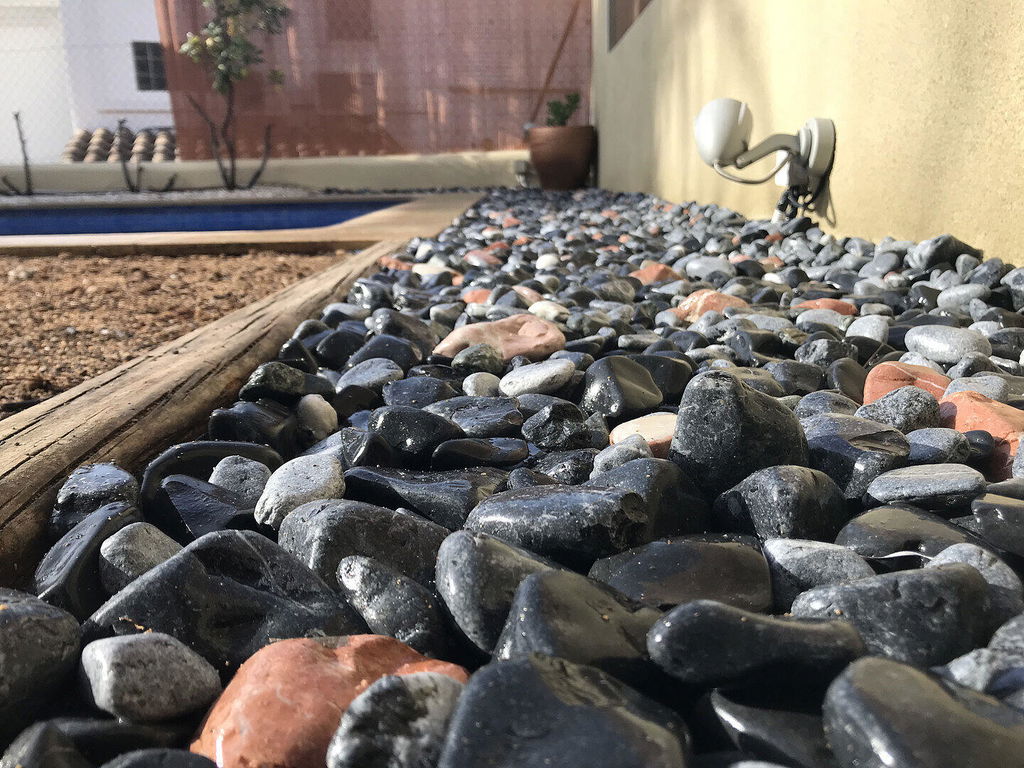
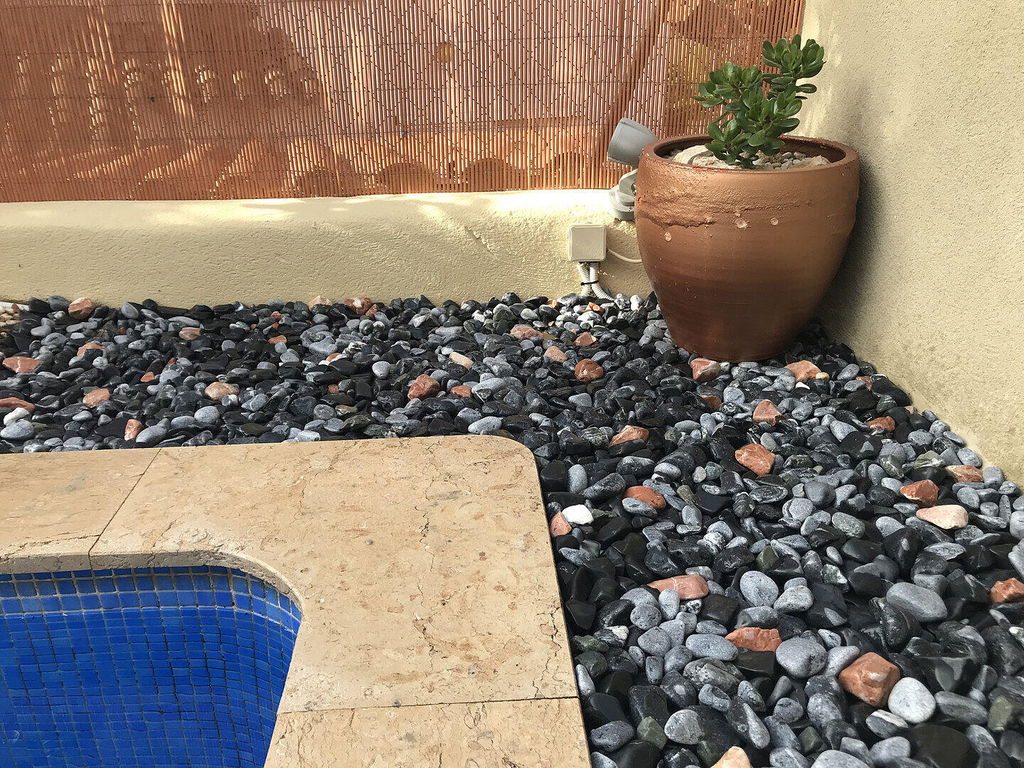
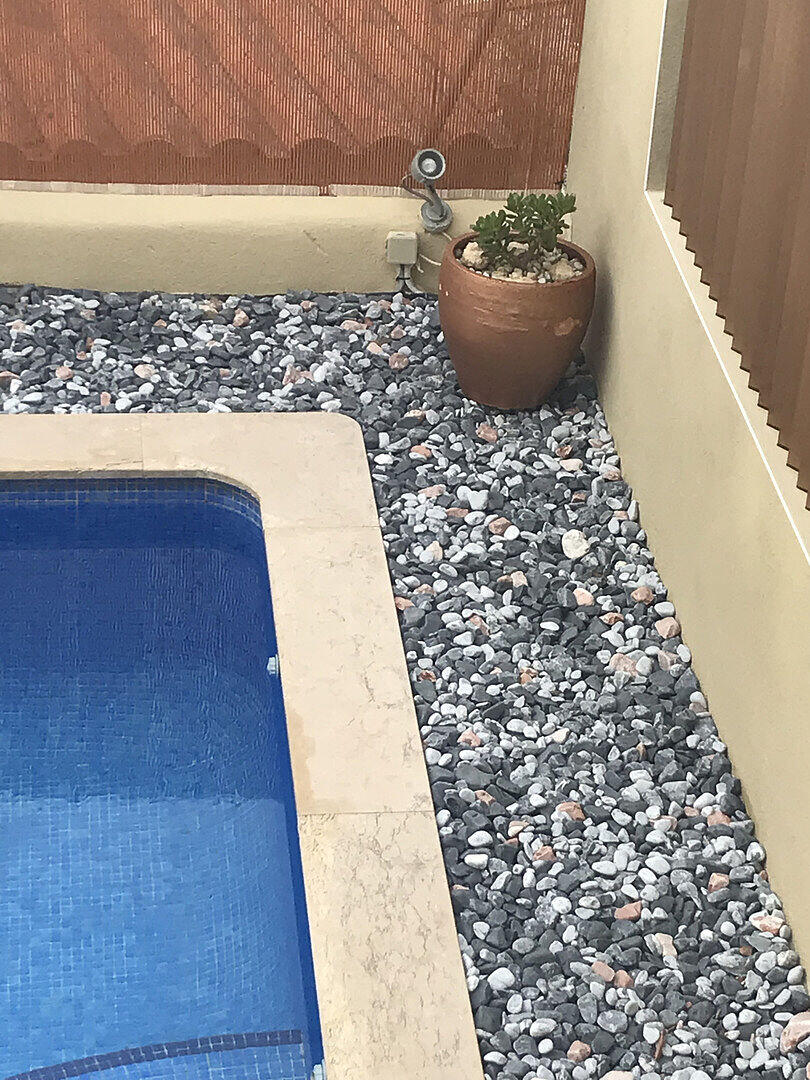
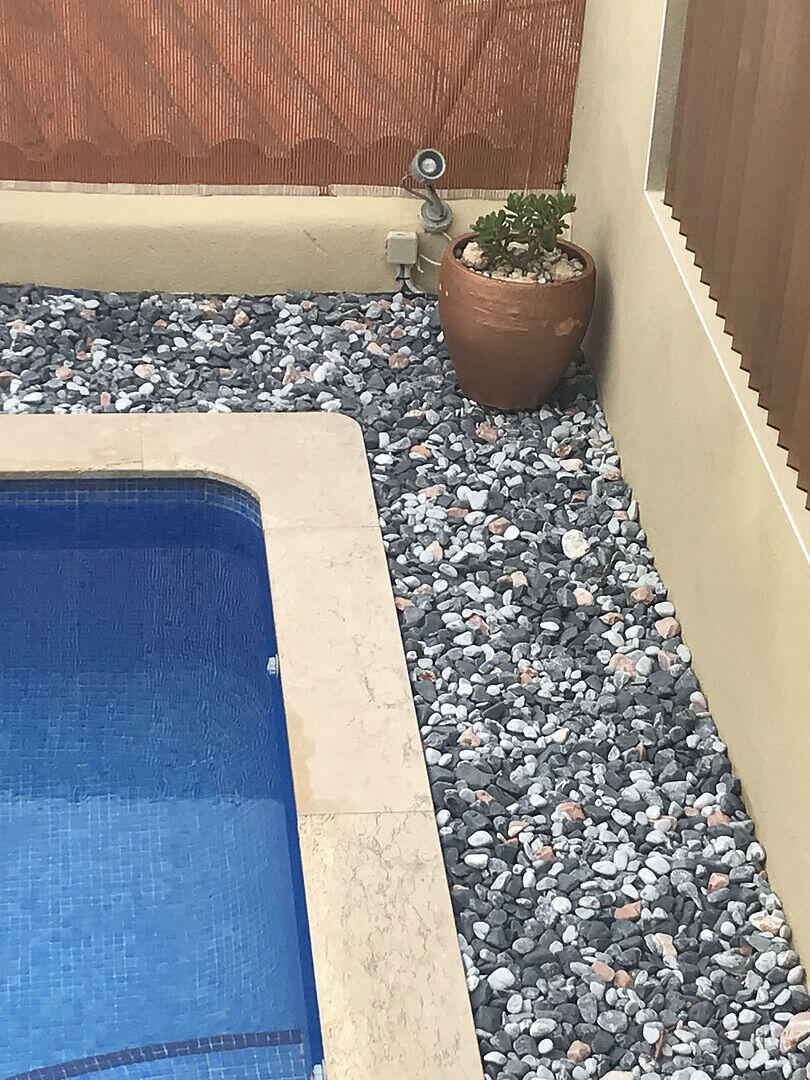
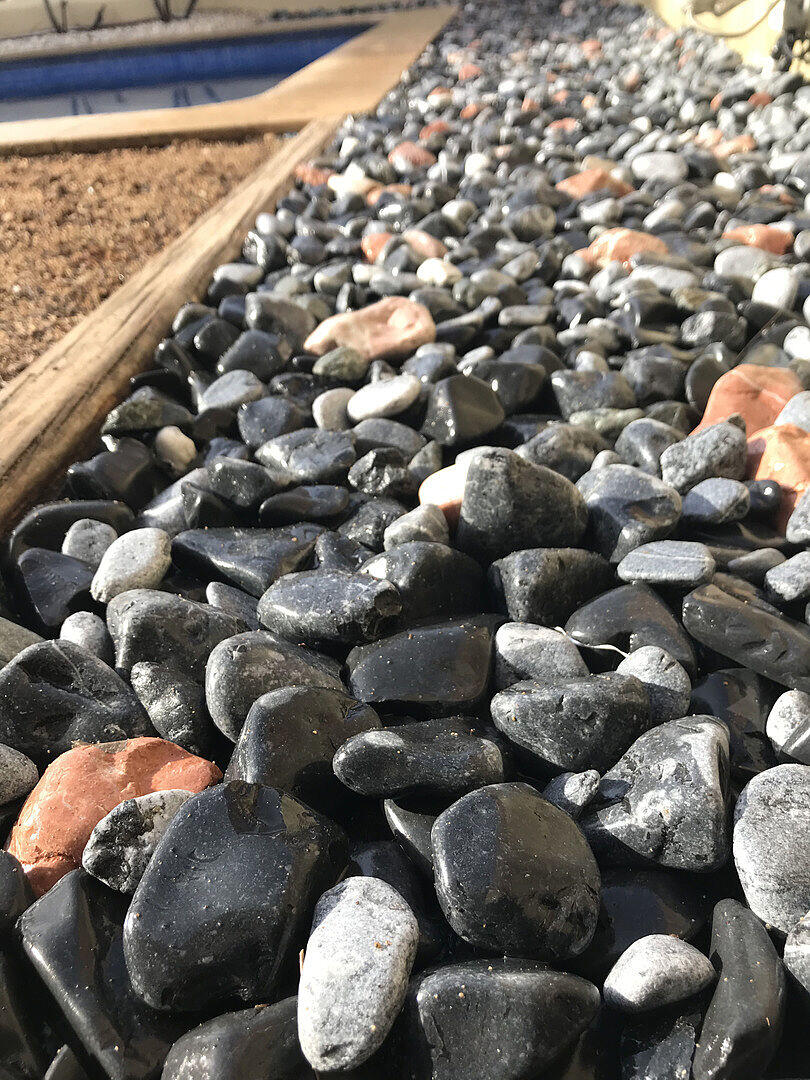
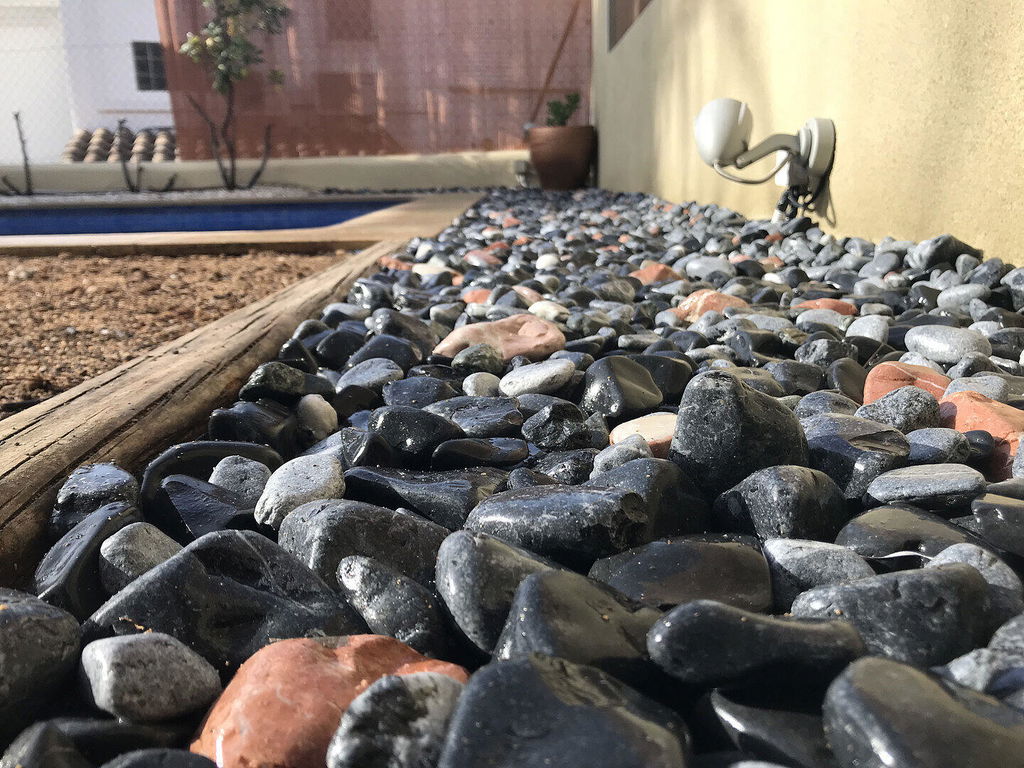
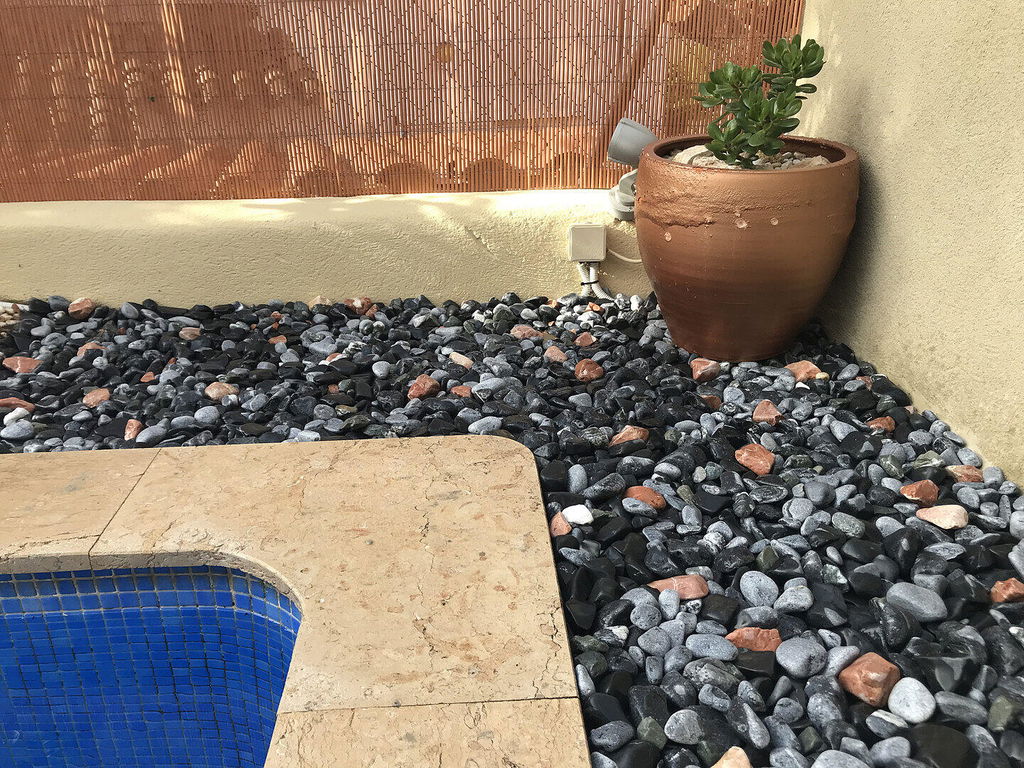
Para canto rodado y grava: • ±80kg por m², basado en una capa de 5cm.*Para granulometrías >32mm es necesaria una capa más gruesa.• Consumo por saca: 1000kg = 0,625m³. • Capacidad cubriente: ±12,5m² con una capa de 5 cm.
Para corteza de pino: • ±70L por m², basado en una capa de 5cm. • Consumo por saca: 1000L = ±1m³ = ±600kg • Capacidad cubriente: ±14m² con una capa de 5 cm.
Para volcánica, pizarra y chamota: • ±50kg por m², basado en una capa de 5cm. • Consumo por saca: 1000kg = ±1m³ • Capacidad cubriente: ±20m² con una capa de 5 cm
¿Qué cantidad de piedra necesito para rellenar un gavión?
Densidad de ±1.650kg por 1m³.
El cálculo es muy sencillo de entender con un ejemplo, si tienes un gavión de 100x50x30 cm. tienes que hacer las siguientes cuentas: 1x0,5x0,3= 0,15m³ 0,15x1,650= 247,50kg. de piedra. *Siempre viene bien calcular un 5% extra, ya que los gaviones al rellenarlos se anchan un poco y siempre entra algo más de piedra que en los cálculos teóricos.
¡Atención!
¡ATENCIÓN! Antes de comprar, lee esta información sobre gravas y cantos rodados
Las granulometrías son tamaños de tamiz, no medidas exactas
Cuando hablamos de piedra, por ejemplo, 60-80 mm, nos referimos a que las piedras pasan por una malla cuadrada de 80x80 mm y no pasan por una de 60x60 mm. Por esa malla de 80x80 puede pasar perfectamente una piedra de 100 mm de largo por 65 mm de ancho, ya que la malla clasifica por la anchura de la piedra al atravesarla, no por su longitud total. Por eso es normal que exista un porcentaje de piedras con alguna medida superior a 80 mm o inferior a 60 mm.
Las máquinas no clasifican al 100%
Además de lo anterior, ningún proceso de clasificación industrial es perfecto: siempre hay un pequeño porcentaje de piedra que, por velocidad de paso, forma irregular o solapamiento de piezas en la cinta, no llega a pasar correctamente por la malla correspondiente y se cuela en el calibre, pudiendo aparecer ocasionalmente piedras de tamaño mayor al indicado. Esto es habitual en este tipo de producto y no se considera un defecto.
Rotura de cantos rodados
En los cantos rodados de más de 60 mm hay un porcentaje de hasta un 10% de piedras que se pueden romper durante su clasificación, lavado, carga y descarga. A día de hoy no disponemos de maquinaria que evite estas roturas por completo. En las fotos del producto solo se muestran piezas reales: no se han retirado piezas rotas.
Polvo y arena en el producto
Este producto no está lavado, por lo que contiene polvo, arena e incluso trazas de otros materiales debido al procesado y transporte. Esto no supone ningún problema para su uso: la piedra se lava por sí sola con el tiempo, o puedes echarle agua antes de utilizarla si lo prefieres.
El color puede variar mucho entre remesas
Es piedra natural, y el color cambia de una remesa a otra, en ocasiones de forma notable. Esto es especialmente importante en piedras de varios tonos, como por ejemplo la Blanco Rosa: hay remesas que salen muy blancas y otras muy rosadas, dentro del mismo producto. Si para tu proyecto el tono exacto es algo muy importante, te recomendamos que no compres este tipo de producto online, ya que no podemos garantizar que la remesa que recibas coincida con la foto o con una compra anterior.
Devoluciones
Ten en cuenta que la devolución, sobre todo en big bags de 1.000 kg, suele ser complicada y cara por el peso y volumen del material. Si la devolución no se debe a un error por nuestra parte, los gastos y la gestión del transporte de vuelta corren por cuenta del cliente.
Red Pebble
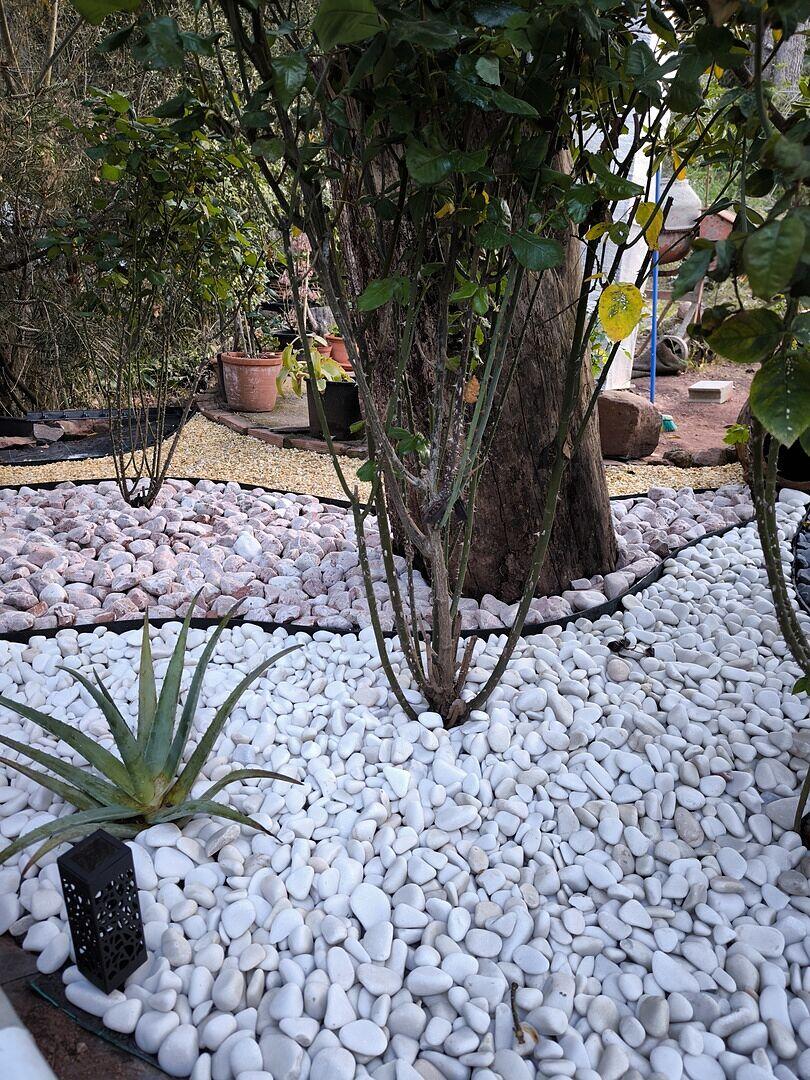
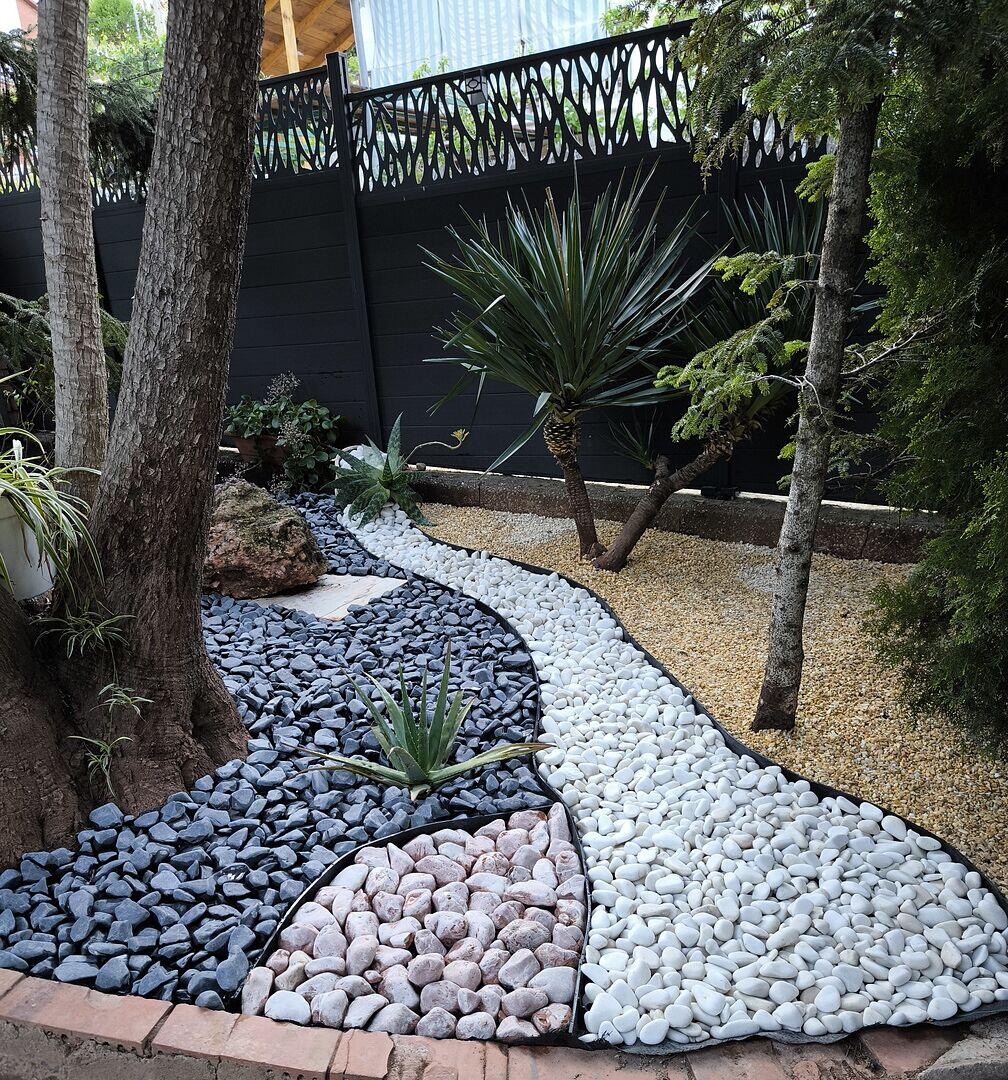
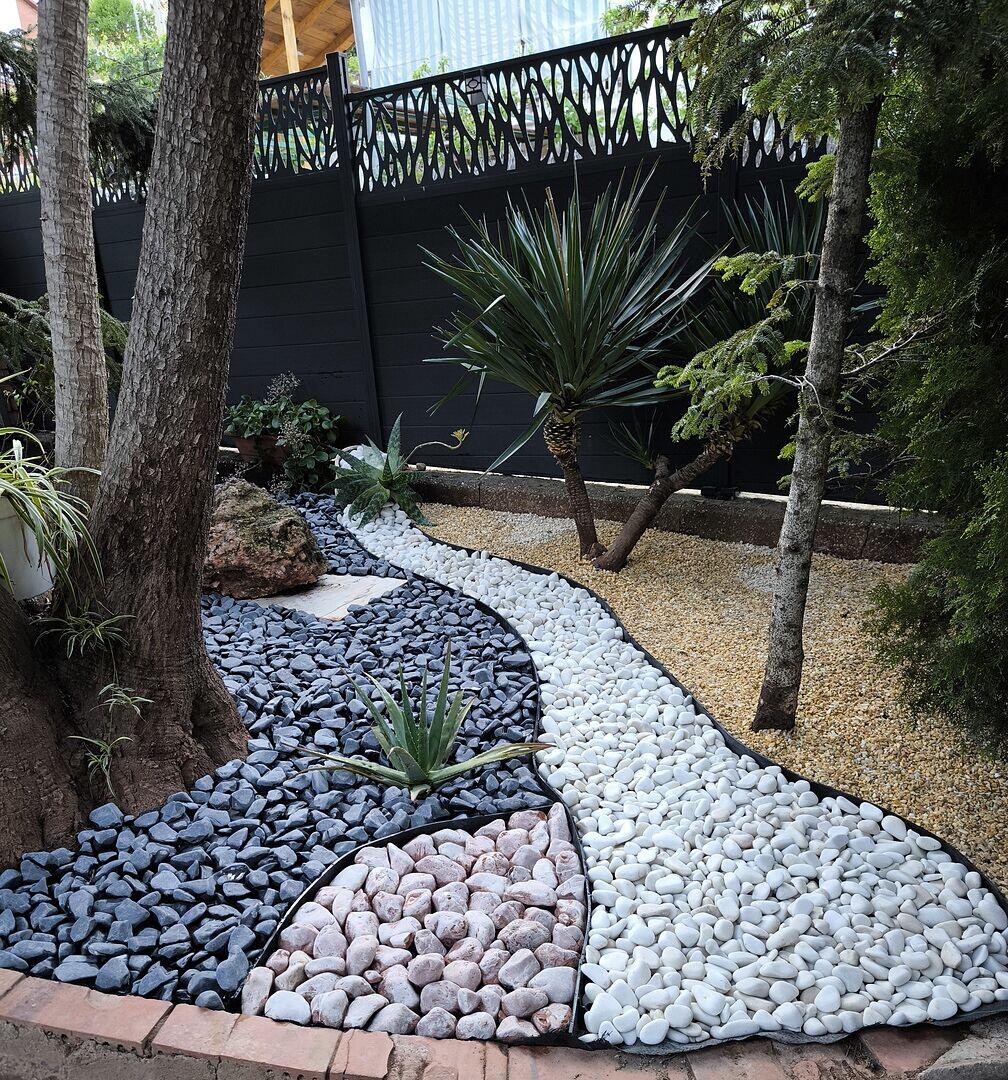
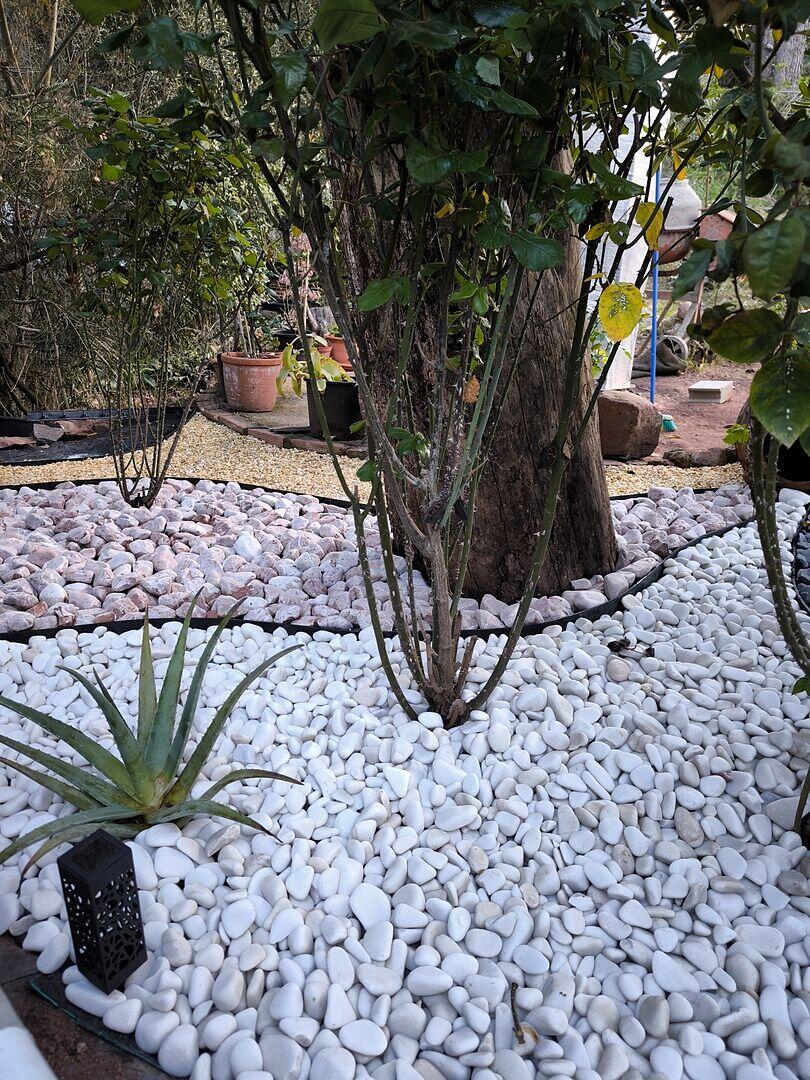
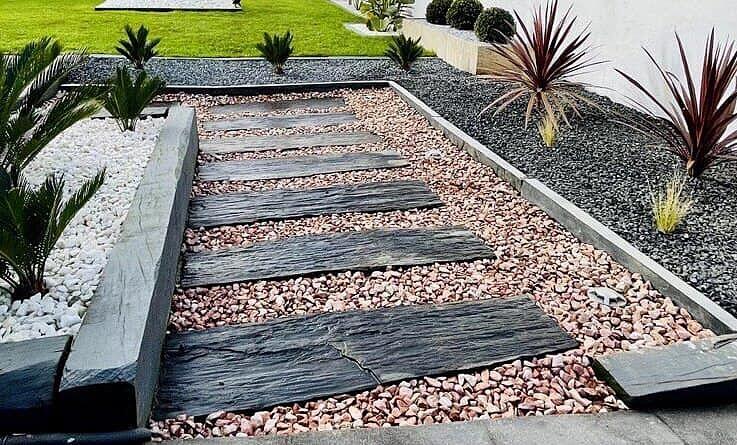
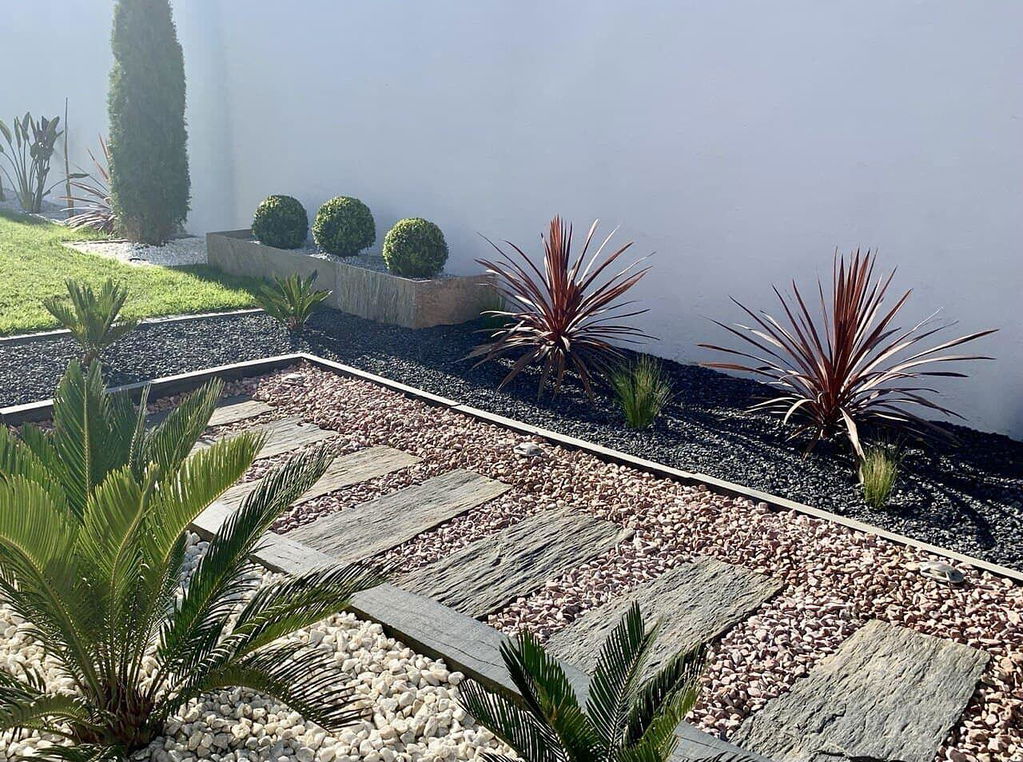
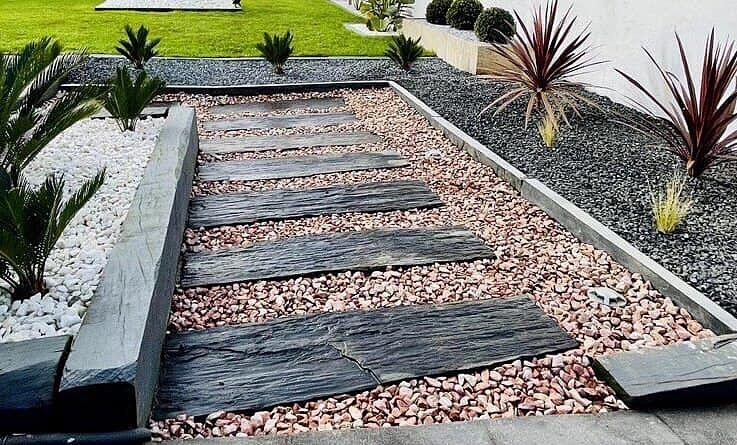
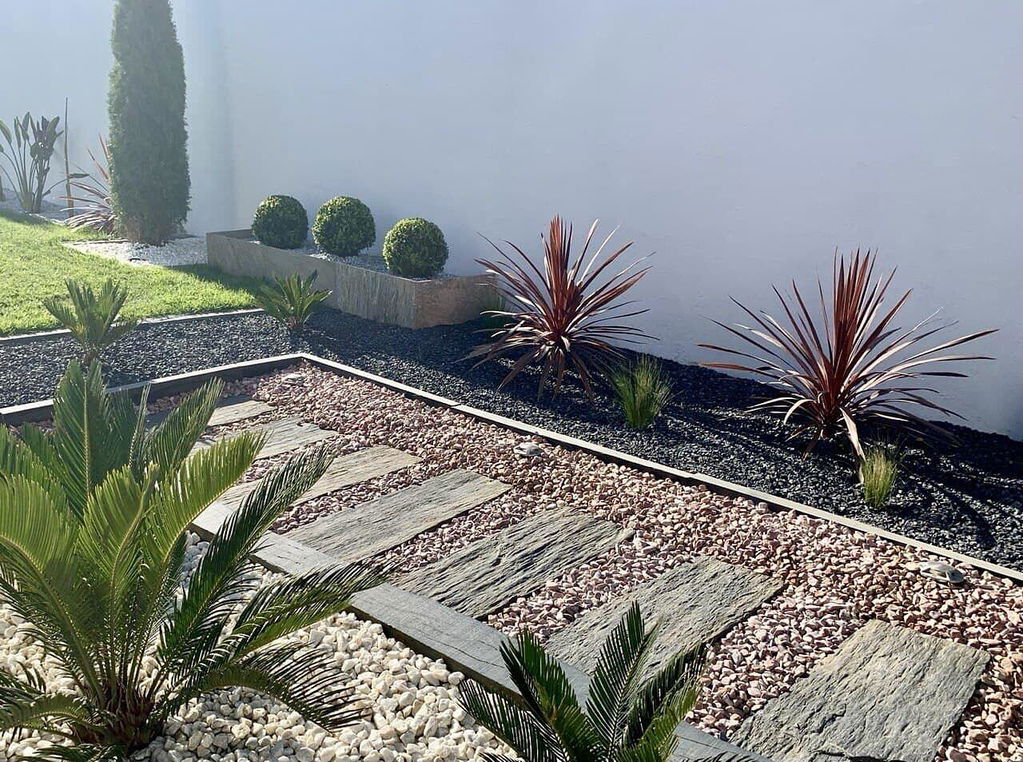
Red marble pebble: a red stone with white veins ideal for enhancing your outdoor space. This pebble perfectly combines with both modern gardens and more classic and rustic projects.
Easy placement: Installation is very easy. You just need to place a weed control fabric and spread the stone over it. Its color is very durable, making it perfect for areas with trees and plants, as leaves go unnoticed compared to lighter colored stones, such as white ones.
Differences of the Premium Red Pebble
The premium red pebble stands out for its wet rounding process, which provides a semi-polished finish and a very closed pore. This prevents the accumulation of greenery and dirt. Compared to other red pebbles, the Premium has 20% more rounding, in addition to offering a more intense color tone. On a scale of 1 to 10, the premium red pebble has two shades more color than the standard.
Why buy Premium Red Pebble?
We know that every euro counts when designing your garden, but this investment is meant to last several years, or even a lifetime. It's worth spending a little more on the premium red pebble. You will notice a significant difference in the aesthetics of your garden, and considering the durability of the product, the price difference is not that relevant.
Me ha gustado mucho y queda muy bien. La volvería a comprar
R
Rosa P.
Igual a la foto
Me ha gustado mucho y queda muy bien. La volvería a comprar
J
JOSEP V.
Cumplen
Llegaron tal y como están descritos, muy buena calidad. La entrega muy bien.
J
JOSEP V.
Cumplen
Llegaron tal y como están descritos, muy buena calidad. La entrega muy bien.
B
Borja C.
Productos de calidad
Muy buena calidad de los productos, precios competitivos y excelente servicio de Atención al Cliente.
B
Borja C.
Productos de calidad
Muy buena calidad de los productos, precios competitivos y excelente servicio de Atención al Cliente.
A
Anaïs G.
Producto de calidad idéntico a la descripción
Producto de calidad idéntico a la descripción
A
Anaïs G.
Producto de calidad idéntico a la descripción
Producto de calidad idéntico a la descripción
M
Miquel R.
Rapido y bien empaquetado
Me han mandado lo que pedia.
M
Miquel R.
Rapido y bien empaquetado
Me han mandado lo que pedia.
Preguntas frecuentes sobre grava, canto rodado y piedra decorativa
¿Cuánta grava o canto rodado necesito por metro cuadrado?
Para grava y canto rodado necesitas aproximadamente 80 kg por m² con una capa de 5 cm de grosor. Un saco de 1.000 kg (0,625 m³) cubre unos 12,5 m² con ese grosor. Para pizarra, volcánica o chamota la cantidad es menor, unos 50 kg por m² (20 m² por saco de 1.000 kg).
¿Qué grosor de capa debo poner al extender la grava?
Lo recomendado para uso decorativo es una capa de unos 5 cm. Con granulometrías superiores a 32 mm conviene aumentar algo el grosor para que la piedra cubra bien la superficie.
¿Es necesario poner malla geotextil antes de la grava?
Sí, se recomienda instalar una malla geotextil (anti-hierbas) antes de extender la grava o el canto rodado. Evita que la piedra se mezcle con la tierra y reduce la aparición de malas hierbas.
¿Por qué algunas piedras son más grandes o pequeñas que la granulometría indicada?
La granulometría (por ejemplo 60-80 mm) indica el tamaño del tamiz por el que pasa la piedra, no una medida exacta. Una piedra de 100 mm de largo puede pasar igualmente por una malla de 80 mm si su anchura lo permite, y ningún proceso de clasificación es 100% perfecto, así que es normal encontrar algún porcentaje de piedra fuera del rango indicado.
¿Es normal que algunos cantos rodados lleguen rotos?
Sí. En cantos rodados de más de 60 mm puede haber hasta un 10% de piedras rotas durante la clasificación, el lavado, la carga o el transporte. No es un defecto: las fotos muestran piezas reales, sin retirar las rotas.
¿La grava o el canto rodado vienen lavados?
No, el producto puede contener polvo, arena o restos del proceso de extracción y transporte. No afecta a su uso: con el tiempo (lluvia, riego) se limpia sola, o puedes lavarla tú mismo antes de colocarla.
¿El color de la piedra es siempre exactamente igual?
No. Al ser piedra natural, el color puede variar de una remesa a otra, especialmente en piedras de tonos mixtos. Si el tono exacto es importante para tu proyecto, no recomendamos comprar sin verlo primero, ya que no podemos garantizar que coincida con la foto.
¿Cuánta piedra necesito para rellenar un gabión?
La densidad media es de unos 1.650 kg por m³. Por ejemplo, para un gabión de 100x50x30 cm (0,15 m³) necesitarás aproximadamente 247 kg de piedra. Conviene calcular un 5% extra, ya que al rellenar suele entrar algo más piedra de la calculada.
Todo perfecto
Envío rápido, aunque el transportista se hizonun lío con el bulto, al final la entrega fué perfecta.
Combre grava de río, el diámetro ybel color coinciden con lo ofertado. Venía algo sucia, pero nada del otro mundo.
La relación calidad/precio es inmellorable.