


Todo perfecto, buen producto y muy bien embalado. Recibido en 5 días después de pedido.
How much stone do I need?
How much stone do I need for the ground?
For pebbles and gravel:
• ±80 kg per m², based on a 5 cm layer.*For grain sizes >32 mm a thicker layer is required.• Consumption per big bag: 1000 kg = 0.625 m³.
• Coverage: ±12.5 m² with a 5 cm layer.
For pine bark:
• ±70 L per m², based on a 5 cm layer.
• Consumption per big bag: 1000 L = ±1 m³ = ±600 kg
• Coverage: ±14 m² with a 5 cm layer.
For volcanic rock, slate and chamotte:
• ±50 kg per m², based on a 5 cm layer.
• Consumption per big bag: 1000 kg = ±1 m³
• Coverage: ±20 m² with a 5 cm layer
How much stone do I need to fill a gabion?
Density of ±1,650 kg per m³.
The calculation is easy to understand with an example: for a gabion measuring 100x50x30 cm, do the following:
1x0.5x0.3 = 0.15 m³
0.15x1,650 = 247.50 kg of stone.
*It is always a good idea to allow 5% extra, as gabions widen slightly when filled and always take a little more stone than the theoretical calculation.
Please note!
PLEASE NOTE! Before buying, read this information about gravel and pebbles
Grain sizes are sieve sizes, not exact measurements
When we talk about stone of, for example, 60-80 mm, we mean that the stones pass through an 80x80 mm square mesh and do not pass through a 60x60 mm one. A stone 100 mm long and 65 mm wide can easily pass through that 80x80 mesh, because the mesh sorts by the width of the stone as it passes through, not by its total length. That is why it is normal for a percentage of stones to have some dimension above 80 mm or below 60 mm.
Machines do not sort 100% accurately
In addition, no industrial sorting process is perfect: there is always a small percentage of stone which, due to speed, irregular shape or pieces overlapping on the belt, does not pass correctly through the corresponding mesh and slips into the grade, so stones larger than stated may occasionally appear. This is normal for this type of product and is not considered a defect.
Breakage of pebbles
In pebbles over 60 mm, up to 10% of the stones may break during sorting, washing, loading and unloading. We currently have no machinery that completely prevents this breakage. The product photos show only real pieces: broken pieces have not been removed.
Dust and sand in the product
This product is not washed, so it contains dust, sand and even traces of other materials from processing and transport. This is no problem for its use: the stone washes itself over time, or you can rinse it with water before use if you prefer.
Colour can vary considerably between batches
This is natural stone, and the colour changes from one batch to another, sometimes noticeably. This is especially important for multi-toned stones such as Blanco Rosa: some batches come out very white and others very pink, within the same product. If the exact shade is very important for your project, we recommend not buying this type of product online, as we cannot guarantee that the batch you receive will match the photo or a previous purchase.
Returns
Please bear in mind that returns, especially of 1,000 kg big bags, are usually complicated and expensive because of the weight and volume of the material. If the return is not due to an error on our part, the costs and arrangement of the return transport are borne by the customer.
River Pebble Golden Gabions
River Pebbles for Gabions: ideal and selected to create decorative gabions in your garden. Unlike other products available on the market, our stones are characterized by:
- Size Selection: carefully chosen with an optimal size to fill gabions, avoiding broken units.
- Polished Touch: thanks to their natural process, they have an almost polished finish, giving them an attractive appearance.
- Non-Porous: this property prevents dirt from embedding, unlike other pebbles with a sandy appearance.
Ideal Measurements for Gabions: For effective use in standard gabions with a mesh size of 50x100 cm, stones larger than 50 mm are required. A size starting from 60 mm is recommended to ensure that most stones are useful.
Choosing the right grain size not only improves aesthetics but also facilitates the assembly of the gabions. The available options are:
- Grain size 60-80 mm: ideal for a more harmonious finish.
- Grain size 80-100 mm: excellent for gabions with a mesh of 100x100 mm.
- Grain size 100-120 mm: suitable for a more robust appearance.
Regarding durability, it is important to note that when classifying, loading, and unloading the stones, there may be a 10% breakage. However, our stones come in bulk bag formats that faithfully show the quality of the product, including those that are essential for your project.
When mentioning the stone of 60-80 mm, this means that the stones are classified by a mesh of 80x80 mm, allowing the passage of stones that may vary in dimensions, ensuring diversity and quality in your purchase.
Maintaining the aesthetics and functionality of your gabions is simple and effective with our river pebbles. Choose the grain size that suits your needs and enjoy a more beautiful and well-kept garden.
j
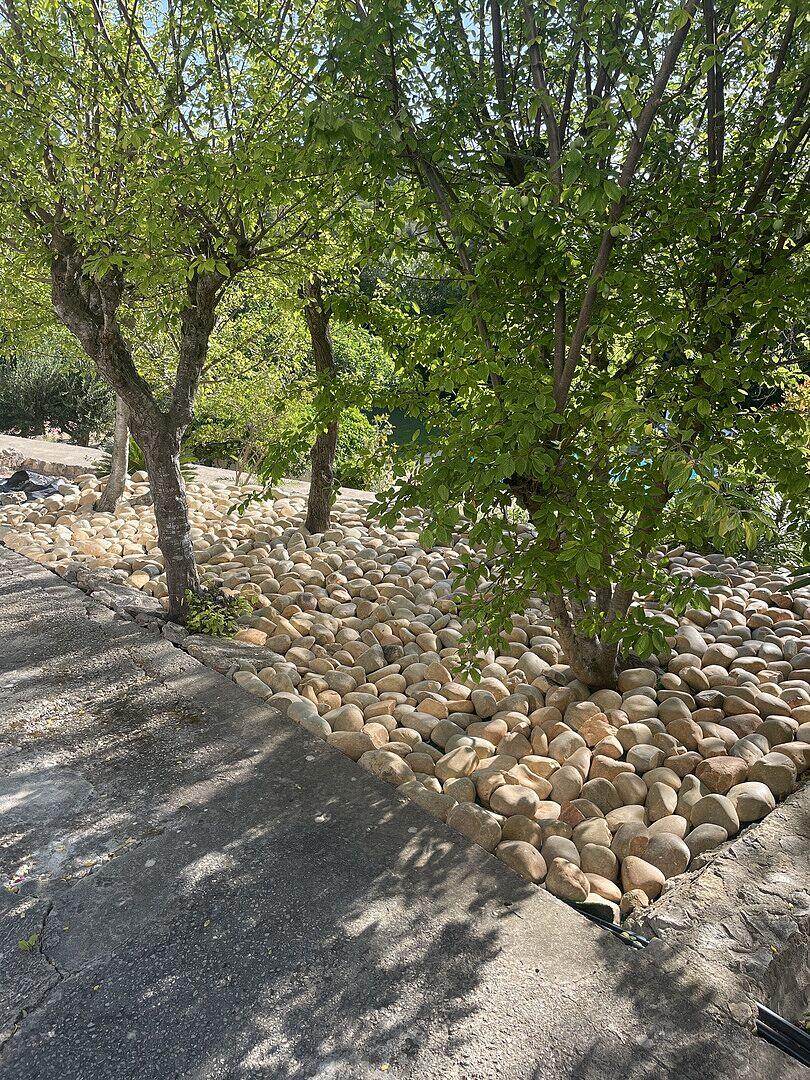
Son mejores de lo que anunciaban, el trato muy bueno
j
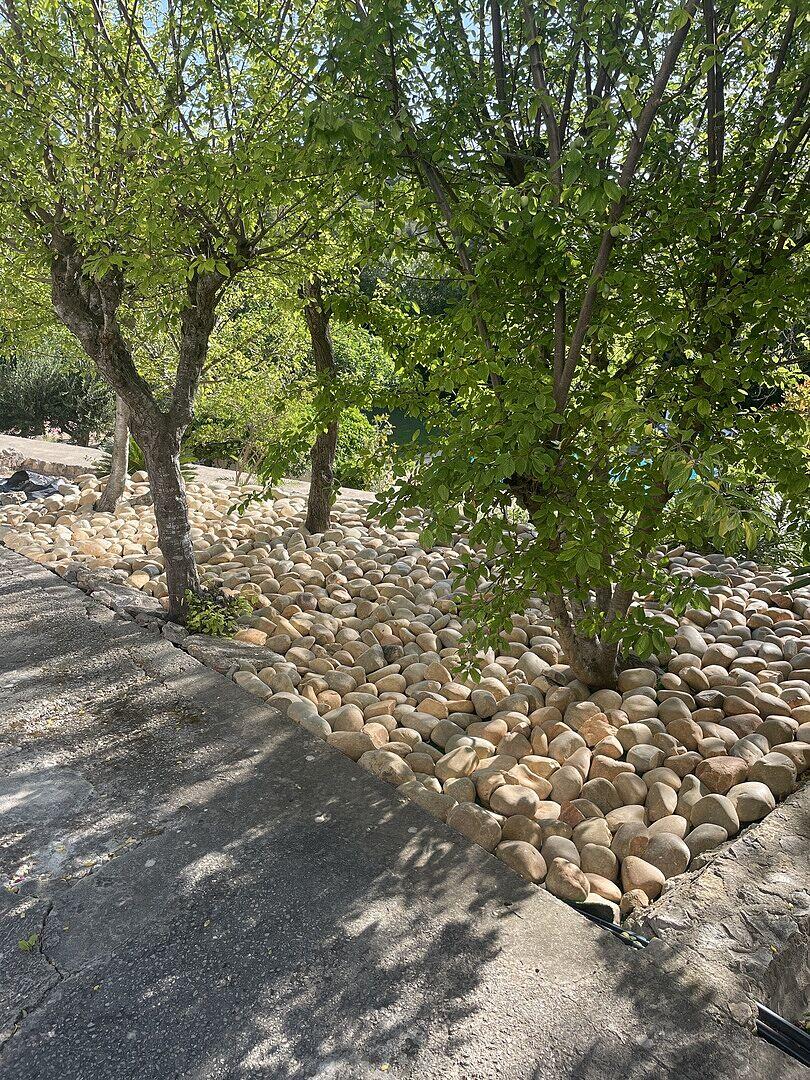
Son mejores de lo que anunciaban, el trato muy bueno
J
Servicio rápido y serio, recibes mail de confirmación y mail
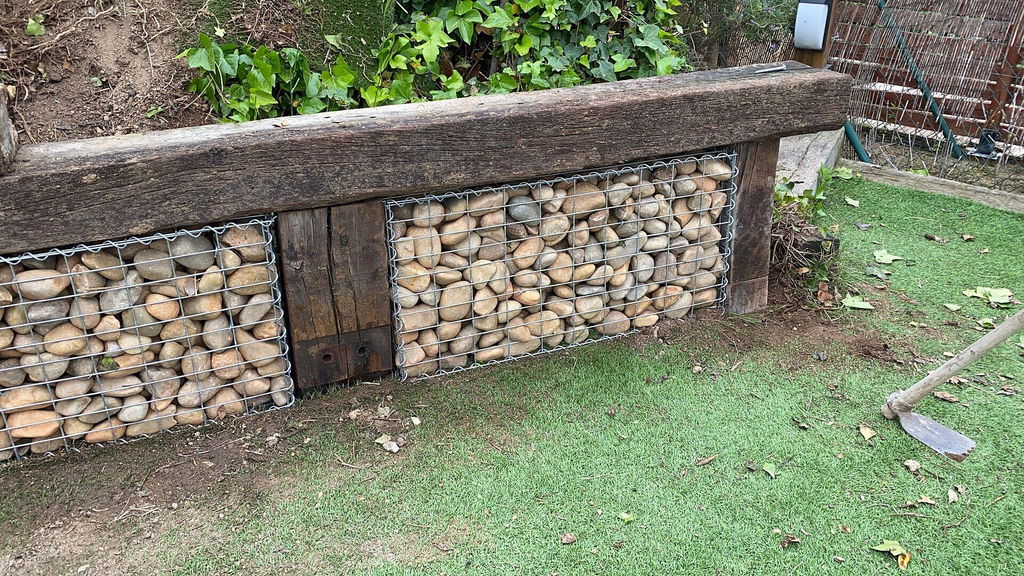
con factura al día siguiente creo recordar. En mi caso en 5 días tenía llamada del transportista para entregar el BigBag a pie de calle. Las piedras preciosas de medida perfecta para Gaviones, el único pero ... tener que trasladarlas a su sitio. Otro pero es que mi mujer quiere que ponga más piedras ...
J
Servicio rápido y serio, recibes mail de confirmación y mail
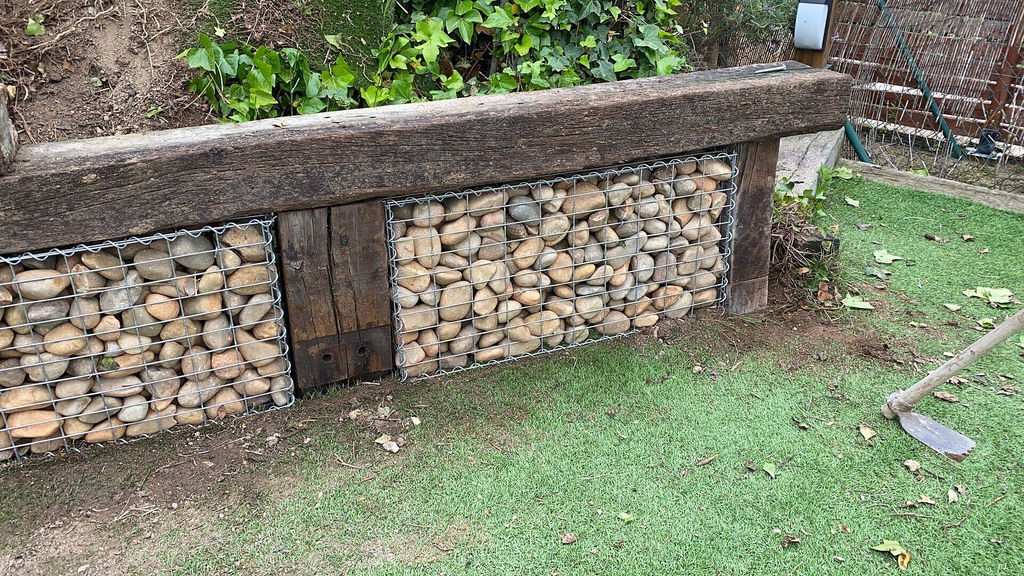
con factura al día siguiente creo recordar. En mi caso en 5 días tenía llamada del transportista para entregar el BigBag a pie de calle. Las piedras preciosas de medida perfecta para Gaviones, el único pero ... tener que trasladarlas a su sitio. Otro pero es que mi mujer quiere que ponga más piedras ...
A
El equipo de atención al cliente es muy eficiente y rápido.
Pude hacer las coordinaciones sin problemas para que llegara el material hasta mi zona.
Muy buena calidad de materiales.
Feliz con la compra.
A
El equipo de atención al cliente es muy eficiente y rápido.
Pude hacer las coordinaciones sin problemas para que llegara el material hasta mi zona.
Muy buena calidad de materiales.
Feliz con la compra.
Y
Servicio rápido y perfecto
Y
Servicio rápido y perfecto
C
Tanto la transacción de la compra como el transporte....todo fue muy bien. Muchas gracias!
C
Tanto la transacción de la compra como el transporte....todo fue muy bien. Muchas gracias!
B
genial todo
B
genial todo
S
Todo perfecto
S
Todo perfecto
Frequently asked questions about gravel, pebbles and decorative stone
¿Es adecuada Canto rodado Río Dorado Gaviones para rellenar gaviones?
Sí, es una piedra de granulometría y dureza adecuadas para el relleno de gaviones y muros decorativos, ofreciendo buena estabilidad y un acabado natural.
¿Cuánta piedra necesito para rellenar mi gavión?
Calcula el volumen del gavión (largo x ancho x alto, en metros) y multiplícalo por la densidad aproximada de la piedra, unos 1.650 kg/m³. Te recomendamos añadir un 5% extra, ya que al rellenar el gavión el material se acomoda y siempre entra algo más de piedra de la calculada.
¿El tamaño de la piedra es homogéneo?
El tamaño se mantiene dentro del rango de granulometría indicado en la ficha del producto, aunque al ser un material natural puede haber pequeñas variaciones entre piezas.
¿Sirve también para otros usos además de gaviones?
Sí, además de para gaviones, puede emplearse como piedra decorativa en jardines, taludes, drenajes o zonas de paso.
¿Es resistente a la intemperie?
Sí, es piedra natural, resistente al sol, la lluvia y las heladas, por lo que mantiene su aspecto con el paso del tiempo.