pebble Chamotte advantages over expanded clay
pebble Chamota advantages over arlita
The use of arlita has expanded significantly in recent years as a gardening substrate, in hydroponic systems, and as a filler application for outdoor floors. In this last context, pebble Chamota also appears, a new material launched at the end of 2020 that shares many characteristics in common with arlita.
Uses of pebble Chamota
pebble Chamota mainly works as decorative stone in gardens, outdoor spaces, porches and terraces. It is used as a floor covering that accompanies green areas and is capable of retaining moisture even in areas with high temperatures, thus protecting plants and the soil from excess heat.
This material has a very attractive rounded finish, as well as a polished surface that is non-abrasive, making it easy to walk on and a good choice for covering paths and garden walkways.
It is available in several sizes and can come in several colors, with great vividness and intensity, which undoubtedly helps to design outdoor spaces that are aesthetically pleasing and very easy to maintain.
pebble Chamota vs. arlita
If you are unsure whether to buy arlita or opt for pebble Chamota, both options are a good choice, but today we are highlighting the advantages of the latter, without forgetting that arlita also serves as a substrate material, and not just as a decorative element.
Arlita offers high performance, but pebble matches, or even surpasses, its rival for use as decorative stone.
Thus, pebble Chamota protects the soil against high temperatures, retaining its moisture, from which the surrounding plants can continue to feed. It is true that its density is higher, 900 kg/m³ compared to arlita's 325 kg/m³ in the best case, but this is explained by the composition of this material itself.
The pebbles of this type retain moisture up to five times more than regular gravel, prevent roots from rotting thanks to their powerful drainage, and also protect plants not only against high temperatures, but also during periods of cold and heavy rainfall.
Its use as decorative stone is on the rise because it offers a distinctive feature compared with arlita: it is a material derived from recycling other materials and in its manufacturing process energy consumption and other resources are kept to a minimum.
Recycled material
pebble Chamota is made from 100% recycled brick rubble. It is a material that fits into this new circular economy dynamic, which advocates reducing the input of new materials into the production cycle and reducing total waste.
To make pebble Chamota, the material, the brick rubble, is collected from landfills, by-products that cease to be waste and become support or a protective element for soils in gardens and terraces . On the other hand, its final appearance is more aesthetic, more pleasant, with brighter colors.

More sustainable option
Another point to highlight about these pebbles is their commitment to sustainability. Arlita is also recyclable, there is no doubt about that, and it is an option that offers many guarantees because of its stability against chemical attacks and its resistance to frost and high temperatures.
However, one advantage of pebble Chamota is that its production does not require as much energy as arlita. The sustainability of a filler or substrate material is not measured only by its ability to be recycled or its usage advantages by reducing the amount of water needed, but also by the manufacturing process itself.
Buy arlita or pebble Chamota?
All these issues are showing that pebble Chamota is an interesting choice as a filler material for decorating plant areas and landscaped spaces.
This option joins gravels, river boulders or rockeries that offer similar uses. However, the most current question is whether to buy arlita or pebble Chamota, because, as we are noting, both options are very interesting.
Buying arlita seems like a good bet if, in addition to decorative and protective use, we want it to act as a substrate. The choice of pebble is more in line with aesthetic and protective issues, not so much nutritional ones for plant species, and because of the material's sustainability.
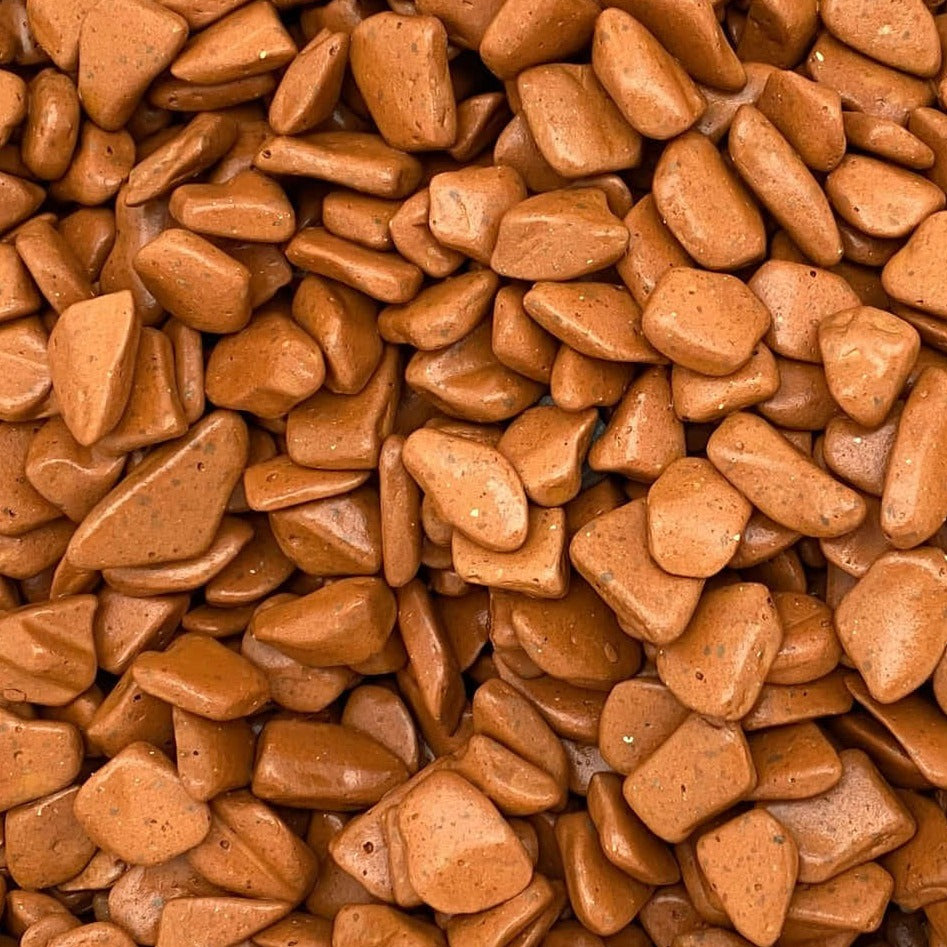
pebble Chamota is becoming a more and more common substitute for arlita, but the truth is that both options can complement each other if we consider their particularities and the advantages they offer, the first with a decorative use and the second acting as a substrate.
Buy
<div class="dynamic-checkout__content" id="dynamic-checkout-cart" data-shopify="dynamic-checkout-cart"> <shopify-accelerated-checkout-cart wallet-configs="[{"supports_subs":true,"supports_def_opts":false,"name":"shop_pay","wallet_params":{"shopId":27696988257,"merchantName":"Vetonek","personalized":true}},{"supports_subs":true,"supports_def_opts":false,"name":"paypal","wallet_params":{"shopId":27696988257,"countryCode":"ES","merchantName":"Vetonek","phoneRequired":true,"companyRequired":false,"shippingType":"shipping","shopifyPaymentsEnabled":true,"hasManagedSellingPlanState":false,"requiresBillingAgreement":false,"gatewayType":"CONNECTED","merchantId":"UZM9NWYU7353Y","sdkUrl":"https://www.paypal.com/sdk/js?components=buttons\u0026commit=false\u0026currency=EUR\u0026locale=en_US\u0026client-id=AexZEtAxk09Ncgj6FSWFFyGKbxxAZ_LTyJ2DPdJWl1YUlecinmc5AfIaRF2qYjWlusWahlzz6SVkY5Ci\u0026merchant-id=UZM9NWYU7353Y\u0026intent=authorize","serviceableCountryCodes":["AC","AD","AE","AF","AG","AI","AL","AM","AO","AR","AT","AU","AW","AX","AZ","BA","BB","BD","BE","BF","BG","BH","BI","BJ","BL","BM","BN","BO","BQ","BR","BS","BT","BW","BY","BZ","CA","CC","CD","CF","CG","CH","CI","CK","CL","CM","CN","CO","CR","CV","CW","CX","CY","CZ","DE","DJ","DK","DM","DO","DZ","EC","EE","EG","EH","ER","ES","ET","FI","FJ","FK","FO","FR","GA","GB","GD","GE","GF","GG","GH","GI","GL","GM","GN","GP","GQ","GR","GS","GT","GW","GY","HK","HN","HR","HT","HU","ID","IE","IL","IM","IN","IO","IQ","IS","IT","JE","JM","JO","JP","KE","KG","KH","KI","KM","KN","KR","KW","KY","KZ","LA","LB","LC","LI","LK","LR","LS","LT","LU","LV","LY","MA","MC","MD","ME","MF","MG","MK","ML","MM","MN","MO","MQ","MR","MS","MT","MU","MV","MW","MX","MY","MZ","NA","NC","NE","NF","NG","NI","NL","NO","NP","NR","NU","NZ","OM","PA","PE","PF","PG","PH","PK","PL","PM","PN","PS","PT","PY","QA","RE","RO","RS","RU","RW","SA","SB","SC","SD","SE","SG","SH","SI","SJ","SK","SL","SM","SN","SO","SR","SS","ST","SV","SX","SZ","TA","TC","TD","TF","TG","TH","TJ","TK","TL","TM","TN","TO","TR","TT","TV","TW","TZ","UA","UG","UM","US","UY","UZ","VA","VC","VE","VG","VN","VU","WF","WS","XK","YE","YT","ZA","ZM","ZW"]}}]" access-token="9ef02037107e0a13865b6afc7ab1f82e" buyer-country="ES" buyer-locale="en" buyer-currency="EUR" shop-id="27696988257" cart-id="548876ca6a1384d33fe8b8d1cad0e5b6" enabled-flags="["1172c16a","a1d1f9a1","f5afabb3","370070f3"]" > <div class="wallet-button-wrapper"> <ul class='wallet-cart-grid wallet-cart-grid--skeleton' role="list" data-shopify-buttoncontainer="true"> <li data-testid='grid-cell' class='wallet-cart-button-container'><div class='wallet-cart-button wallet-cart-button__skeleton' role='button' disabled aria-hidden='true'> </div></li><li data-testid='grid-cell' class='wallet-cart-button-container'><div class='wallet-cart-button wallet-cart-button__skeleton' role='button' disabled aria-hidden='true'> </div></li> </ul> </div> </shopify-accelerated-checkout-cart> </div>


