


Todo perfecto, buen producto y muy bien embalado. Recibido en 5 días después de pedido.
Yellow Gravel for Garden
162,70 €
162,70 €
220,00 €
You save
26%
(57,30 €)
Delivery in 3–9 days
Tax included.
Shipping calculated at checkout.
How much stone do I need?
How much stone do I need for the ground?
For pebbles and gravel:
• ±80 kg per m², based on a 5 cm layer.*For grain sizes >32 mm a thicker layer is required.• Consumption per big bag: 1000 kg = 0.625 m³.
• Coverage: ±12.5 m² with a 5 cm layer.
For pine bark:
• ±70 L per m², based on a 5 cm layer.
• Consumption per big bag: 1000 L = ±1 m³ = ±600 kg
• Coverage: ±14 m² with a 5 cm layer.
For volcanic rock, slate and chamotte:
• ±50 kg per m², based on a 5 cm layer.
• Consumption per big bag: 1000 kg = ±1 m³
• Coverage: ±20 m² with a 5 cm layer
How much stone do I need to fill a gabion?
Density of ±1,650 kg per m³.
The calculation is easy to understand with an example: for a gabion measuring 100x50x30 cm, do the following:
1x0.5x0.3 = 0.15 m³
0.15x1,650 = 247.50 kg of stone.
*It is always a good idea to allow 5% extra, as gabions widen slightly when filled and always take a little more stone than the theoretical calculation.
Please note!
PLEASE NOTE! Before buying, read this information about gravel and pebbles
Grain sizes are sieve sizes, not exact measurements
When we talk about stone of, for example, 60-80 mm, we mean that the stones pass through an 80x80 mm square mesh and do not pass through a 60x60 mm one. A stone 100 mm long and 65 mm wide can easily pass through that 80x80 mesh, because the mesh sorts by the width of the stone as it passes through, not by its total length. That is why it is normal for a percentage of stones to have some dimension above 80 mm or below 60 mm.
Machines do not sort 100% accurately
In addition, no industrial sorting process is perfect: there is always a small percentage of stone which, due to speed, irregular shape or pieces overlapping on the belt, does not pass correctly through the corresponding mesh and slips into the grade, so stones larger than stated may occasionally appear. This is normal for this type of product and is not considered a defect.
Breakage of pebbles
In pebbles over 60 mm, up to 10% of the stones may break during sorting, washing, loading and unloading. We currently have no machinery that completely prevents this breakage. The product photos show only real pieces: broken pieces have not been removed.
Dust and sand in the product
This product is not washed, so it contains dust, sand and even traces of other materials from processing and transport. This is no problem for its use: the stone washes itself over time, or you can rinse it with water before use if you prefer.
Colour can vary considerably between batches
This is natural stone, and the colour changes from one batch to another, sometimes noticeably. This is especially important for multi-toned stones such as Blanco Rosa: some batches come out very white and others very pink, within the same product. If the exact shade is very important for your project, we recommend not buying this type of product online, as we cannot guarantee that the batch you receive will match the photo or a previous purchase.
Returns
Please bear in mind that returns, especially of 1,000 kg big bags, are usually complicated and expensive because of the weight and volume of the material. If the return is not due to an error on our part, the costs and arrangement of the return transport are borne by the customer.
Yellow Gravel for Garden
Yellow Gravel: Durability and Classic Style for Your Garden
The Yellow Gravel is one of the most balanced solutions between aesthetics, resistance, and economy. With its characteristic soft and natural tone, this stone offers a timeless finish that adapts to any style, from rustic to minimalist.
Its grain size of 12-20 mm is the ideal technical measure: small enough to be comfortable to walk on and large enough to remain stable in gravel stabilizer systems.
✅ Main Features
-
Resistance and Hardness: A compact stone that does not degrade or lose its color over the years.
-
Moisture Maintenance: Its natural porosity helps retain moisture in planting holes and areas, promoting the health of your plants.
-
Total Versatility: Ideal for paths, parking lots, rest areas, and decorative drainage.
-
Smart Economy: Premium quality at an accessible price for large surfaces.
🚛 Logistics Information and Formats (VERY IMPORTANT!)
At Vetonek we adapt to the scale of your project, from a small garden to a large public work. Please read the conditions of each format carefully:
Savings Formats:
-
Bags of 20 kg and Big Bags (1,000 kg): Standard formats for domestic and professional use.
-
Offer Packs: Special discounts on lots of 3, 6, and 10 Big Bags.
-
Pack 24 Big Bags (Full Truck): The price DOES NOT include unloading. The customer must have means (forklift, tractor, or similar) to unload the bags from the truck.
NEW VARIANT: 25,000 kg Bulk (Full Trailer)
This format offers the lowest price per kilo, but requires very specific access conditions:
-
Vehicle: Delivered in a trailer truck of 12 meters long.
-
Weight and Space: The unloading area must be prepared to support a total weight of 41,000 kg.
-
Access: It is essential that the access road is wide, without sharp turns, low power lines, or tree branches that obstruct the passage of a large vehicle.
-
Unloading: Done by tipping (dump truck). Ensure that the unloading space is clear and the ground is firm.
S
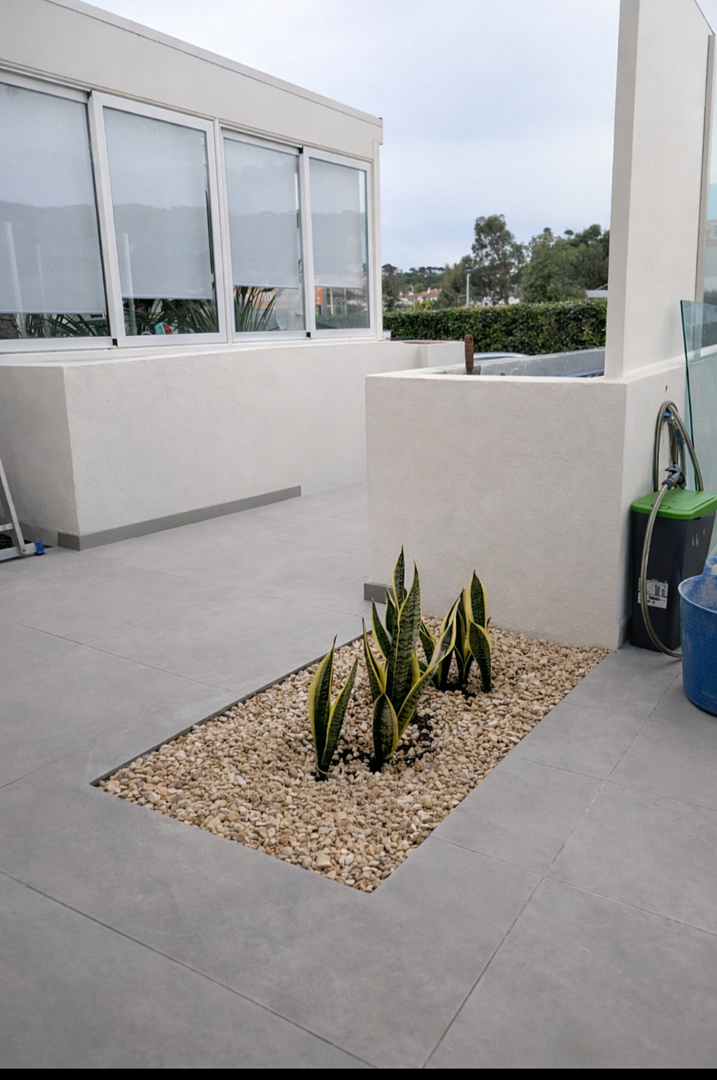
Perfecto para mi
J
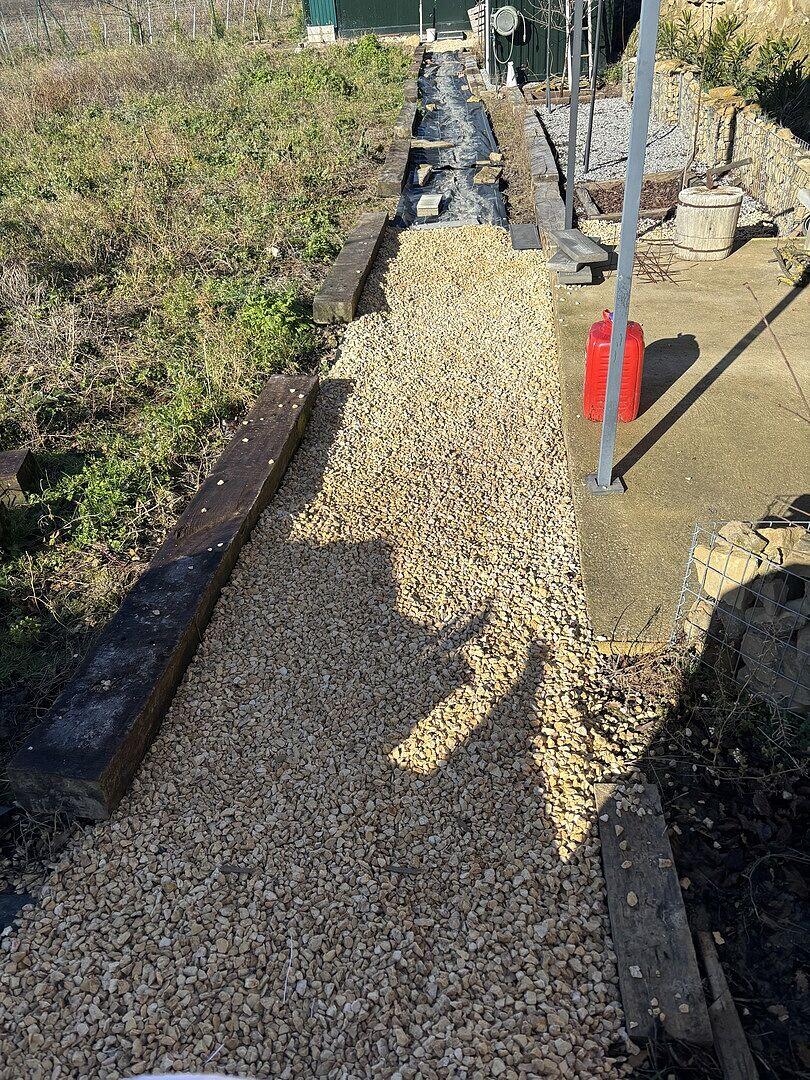
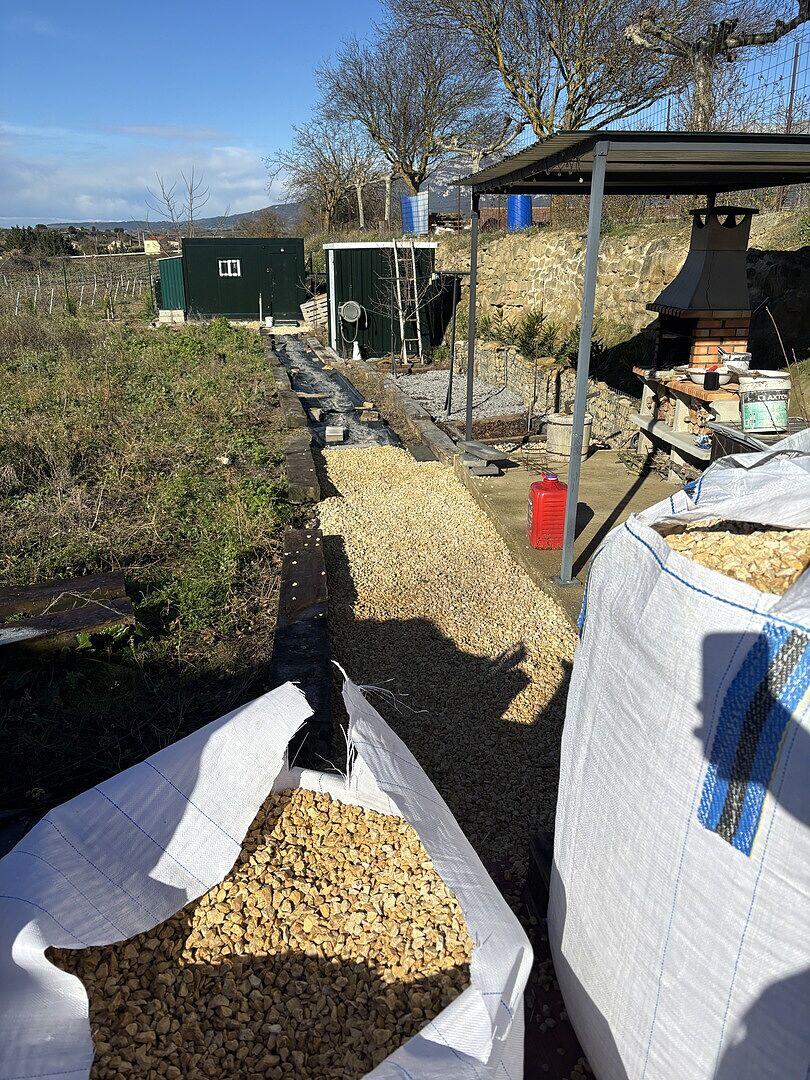
Piedra que queda muy bien, buen gramaje y uniforme. La recomiendo
J
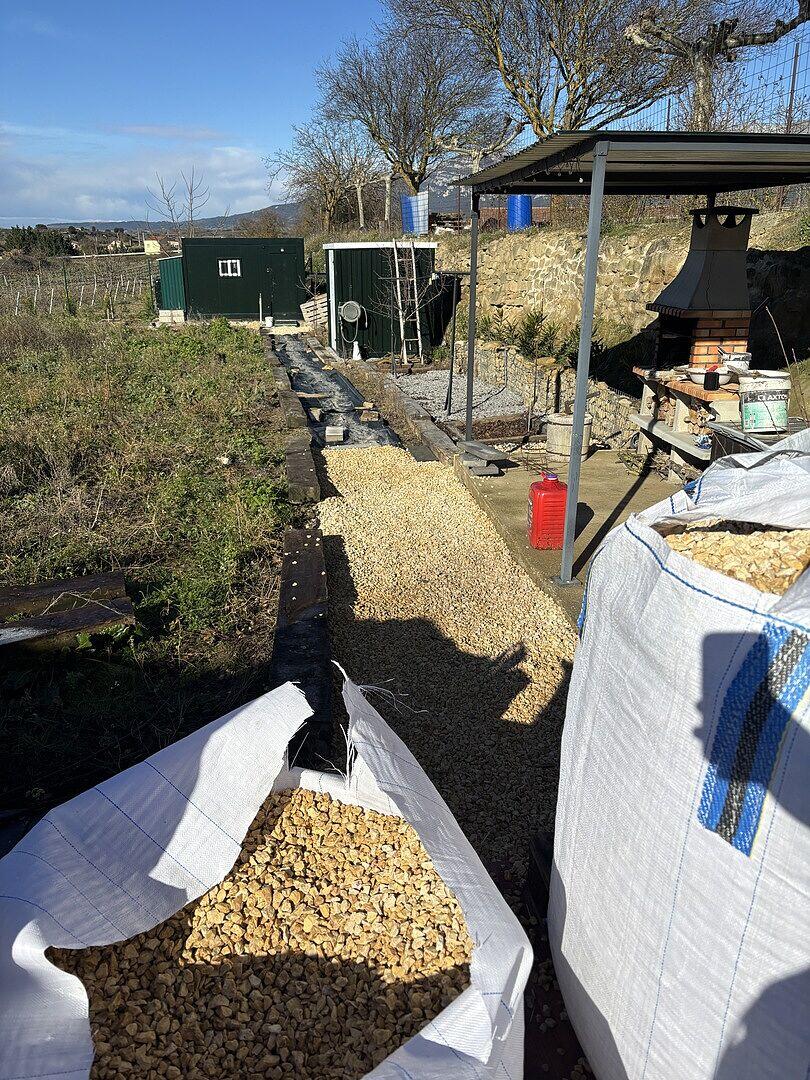
Piedra que queda muy bien, buen gramaje y uniforme. La recomiendo
A
Servicio perfecto
j
Material recibido perfecto y entrega rápida y eficiente.
H
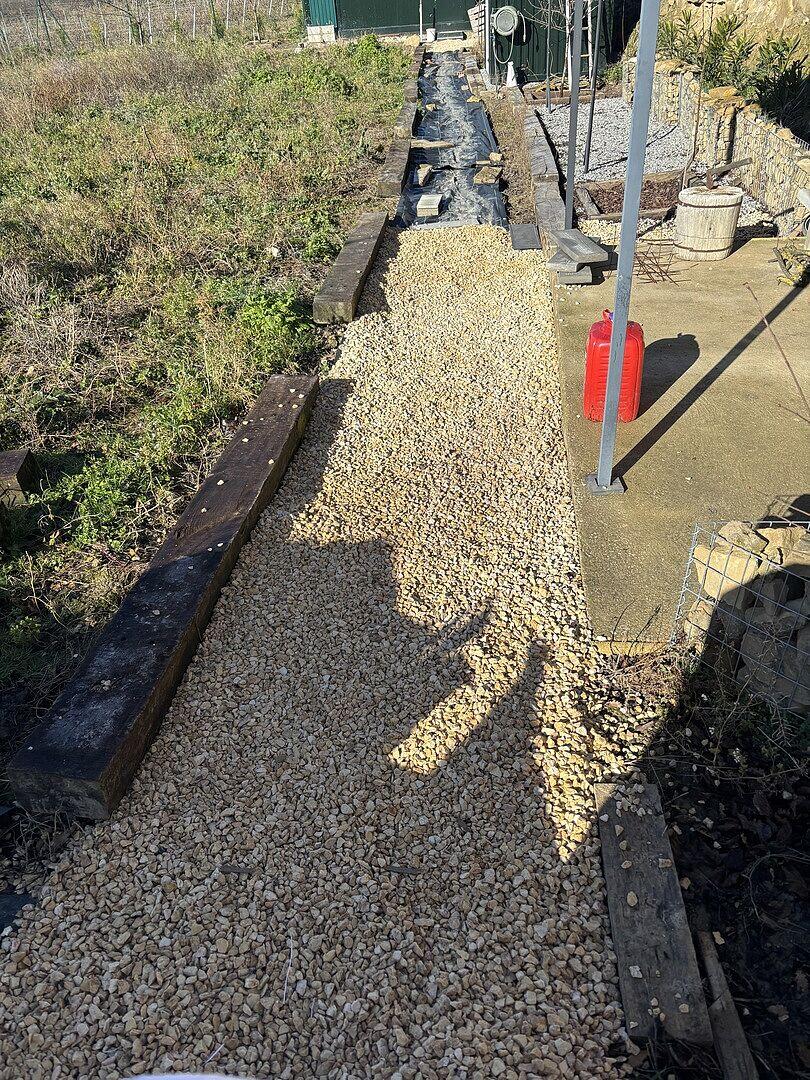
Hola. La entrega fue rápida y el transportista muy amable. La piedra es preciosa y queda muy bien en mi nuevo proyecto de huerto con bancales. Voy a comprar más para otras partes del jardín donde antes tenía corteza.
R
Todo perfecto. Envío rápido.
P
todo perfecto en la entrega y todo tal cual se pidió
S
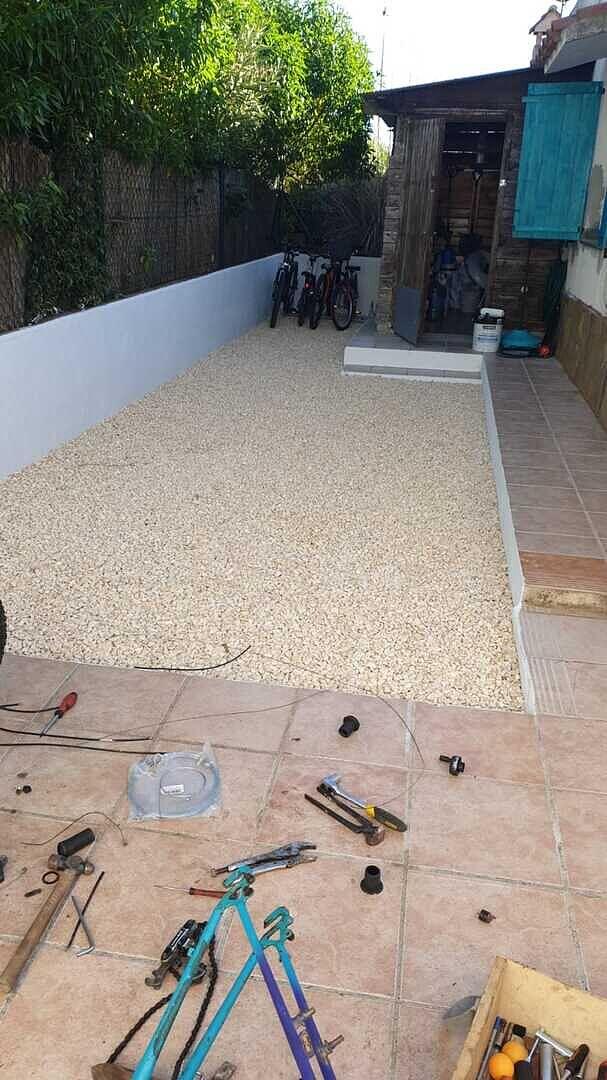
La grava queda muy bien para hacer un camino de entrada
N
Todo perfecto. Compré la grava Saturno y la piedra es preciosa!! Tenía dudas sobre qué grava comprar y me asesoraron de maravilla. Es de gran ayuda que vendan las muestras porque las puedes ver en el jardín con la luz y el resto de elementos. Es increíble el cambio que ha dado el jardín con poco esfuerzo. El envío y la entrega también genial. Gracias por todo
G
Una maravilla
M
Quality stone and a good price, good communication and efficient delivery. Would use again.
M
Quality stone and a good price, good communication and efficient delivery. Would use again.
S
Excepcional
M
Todo correcto, producto y entrega de
M
Todo correcto, producto y entrega de
J
Nette service en leverdatum in overleg. 5000kilo besteld en erg tevreden. Dus Nederlanders in Spanje kunnen dit veilig bestellen.
J
Nette service en leverdatum in overleg. 5000kilo besteld en erg tevreden. Dus Nederlanders in Spanje kunnen dit veilig bestellen.
A
Servicio perfecto
Frequently asked questions about gravel, pebbles and decorative stone
¿De qué color es exactamente?
Un amarillo suave y natural, de acabado atemporal: encaja igual de bien en un jardín rústico que en uno minimalista.
¿Sirve para estabilizadores de grava?
Sí: su granulometría de 12-20 mm es la medida técnica ideal para rellenar paneles estabilizadores tipo nido de abeja.
¿Por qué solo se vende en big bag y granel?
Porque está pensada para superficies medias y grandes: del big bag de 1.000 kg al granel de 25.000 kg (unos 416 m²), el precio por m² baja mucho con el volumen.
¿Cuánta cantidad necesito por metro cuadrado?
Calcula unos 80 kg por m² para una capa de 5 cm: un saco de 20 kg cubre aproximadamente 0,25 m² y un big bag de 1.000 kg, unos 12,5 m². En granulometrías gruesas conviene una capa algo mayor.
¿Qué granulometría tiene?
Se sirve en 12-20 mm, una medida equilibrada: cómoda al pisar y estable en zonas decorativas.
¿En qué formatos se vende?
En Big bag 1.000 kg, BB 3.000 kg (50 m2), BB 6.000 kg (100 m2), BB 24.000 kg (400 m2), Granel 25.000 kg (416 m2). El transporte te deja el palet o big bag en la puerta de casa.
¿Hace falta malla antihierbas debajo?
Sí, muy recomendable: una malla o geotextil antihierbas bajo la piedra evita que salgan malas hierbas y facilita el mantenimiento durante años.