Loarre Concrete Block - Carved Texture for Enclosures
20,76 €
20,76 €
Delivery in 3–9 days
Tax included.
Shipping calculated at checkout.
Loarre Concrete Block - Carved Texture for Enclosures
Loarre Block: What It Is
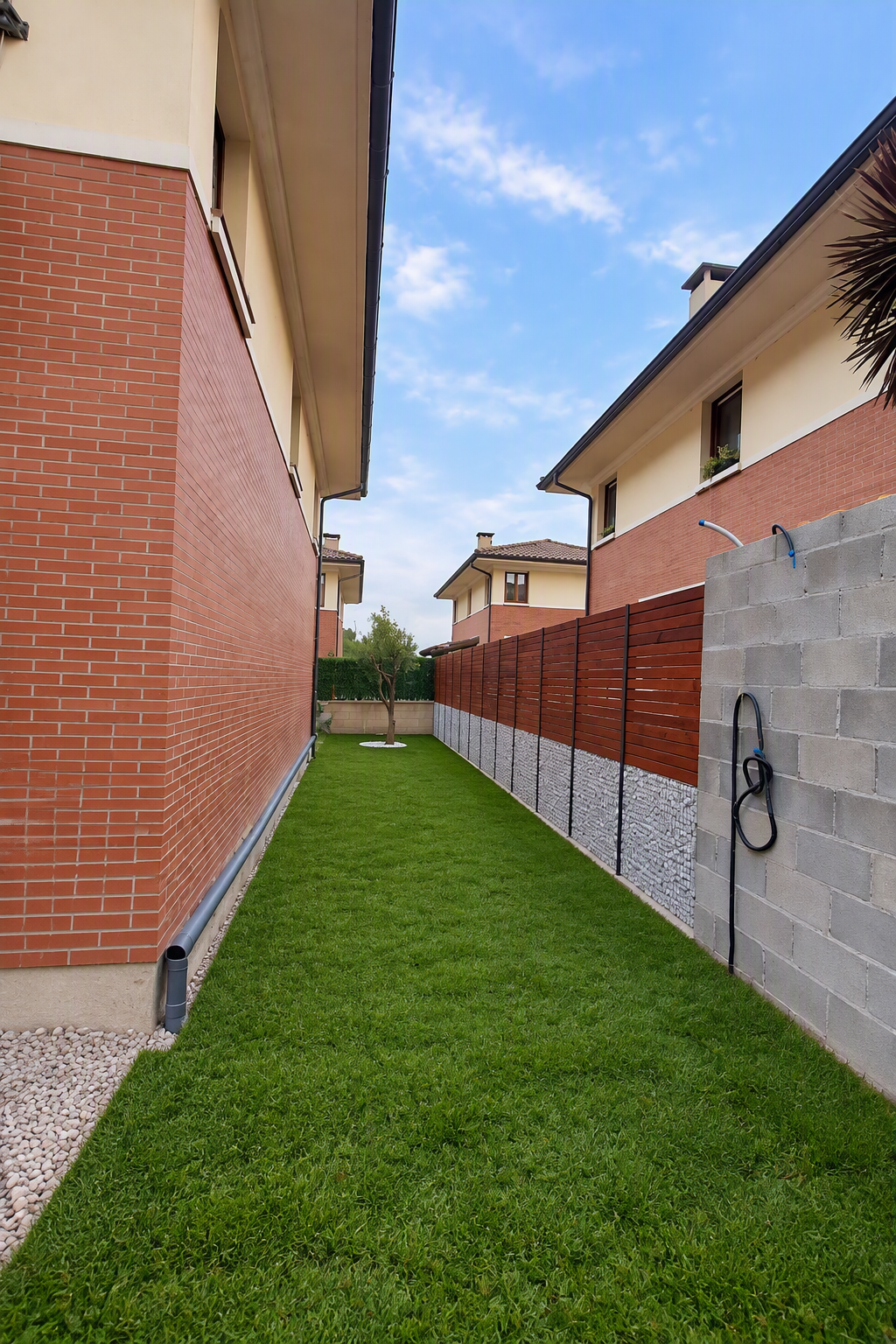
The Loarre block is a concrete unit with a tooled texture that captures the nobility of natural stone while keeping the regularity of a precast product. It is designed for enclosure walls and low walls where the exposed face is the star, with a coverage of 15 pieces per m².
✅ Main Advantages
- Tooled texture: the exposed face reproduces the coursing and relief of cut stone, with a pattern that breaks the monotony of a smooth block.
- High-quality concrete: a compact unit that withstands weathering without needing a coating.
- Two factory colors: white and beige, both through the full body of the unit.
- Consistent modulation: it shares its course height with the Loarre pillar, so wall and pillar fit together without cutting.
- Two supply series: a pallet of 84 units for long wall sections and a pallet of 24 units for small jobs or finishing details.
🏗️ Recommended Applications
- Plot enclosures and fences with a rustic finish.
- Garden low walls and terraced beds.
- Facade plinths and bases.
- Terrace parapets and porch dividers.
- Wall sections combined with pillars of the same texture.
📋 Technical Specifications
- Material: high-quality concrete.
- Dimensions: 40 × 17 × 17.1 cm.
- Weight per piece: 12.5 kg.
- Pieces per m²: 15.
- Available colors: white and beige.
- Units per pallet (84 series): 84 units.
- Units per pallet (24 series): 24 units.
🧰 Installation
- Build the strip foundation and check that it is perfectly level before laying the first course.
- Dry-lay the first three or four pieces to decide the position of the tooled pattern and avoid it repeating vertically.
- Bed the units in masonry mortar, keeping the joint consistent and cleaning off any excess before it sets.
- Build with staggered joints, checking plumb and level every two courses.
- Mix pieces from several pallets to spread any slight variation in shade between batches.
- Cap the wall with a coping or pillar cap with a drip edge that overhangs the wall face.
📦 Available Formats
- 40 × 17 × 17.1 cm — white or beige — single unit or pallet of 84 units.
- 40 × 17 × 17.1 cm — white or beige — single unit or pallet of 24 units.
💡 Professional tip: with tooled-texture pieces, the most common mistake is cleaning the mortar with plenty of water once it has already started to set: the water washes the slurry into the depths of the relief and leaves a whitish film that is impossible to remove afterwards. Remove the excess with the trowel while it is fresh and finish with a dry stiff-bristle brush.
Frequently Asked Questions
What is the Loarre block and what is it used for?
It is a concrete unit with a tooled texture that imitates natural stone. It is designed for enclosure walls and low walls where the exposed face is the star.
What are its dimensions, weight and coverage?
It measures 40 x 17 x 17.1 cm and weighs 12.5 kg per piece. The coverage is 15 pieces per square meter.
What colors is it available in?
It is available in white and beige, both through the full body of the piece.
How many units does each pallet contain?
There are two supply series: a pallet of 84 units for long wall sections and a pallet of 24 units for small jobs or finishing details. You can also buy it by the unit.
Is it compatible with the Loarre pillar?
Yes, it shares its course height with the Loarre pillar, so wall and pillar fit together without cutting. It is used in enclosure walls, garden low walls, terraced beds, facade plinths and terrace parapets.
Frequently Asked Questions
¿Cuántos bloques entran en un metro cuadrado?
15 piezas por m². Añada entre un 7 % y un 10 % para cortes, roturas y ajustes.
¿Cuánto pesa cada pieza?
12,5 kg, un peso que permite trabajar a mano sin medios de elevación.
¿En qué colores está disponible?
En blanco y en beige, con el color en toda la masa de la pieza.
¿Cuántas unidades trae el palet?
Hay dos series de suministro: palet de 84 unidades y palet de 24 unidades.
¿Hay que revestir el muro después?
No. La cara labrada es cara vista y está pensada para quedar a la intemperie sin revestimiento.
¿Combina con algún pilar?
Sí, con el pilar Loarre, que comparte textura labrada y altura de hilada.
¿Cómo se limpia el mortero sobrante?
En fresco, con la paleta, y rematando con cepillo seco de cerda dura. Evite el agua abundante sobre mortero ya fraguando.
¿Sirve para interiores?
Sí. Se puede usar tanto en interior, como muro decorativo, como en exterior.