


Todo perfecto, buen producto y muy bien embalado. Recibido en 5 días después de pedido.
Volcanic Lava Flour
Powerful mineral fertilizer
Rich in trace elements, silicon, calcium, and magnesium. Enhances the soil of your crops.
The foundation of agricultural production is the soil; in recent years we have focused on "feeding" the crops and have forgotten about the needs of the soil. Volcanic rock flour improves soil fertility and stimulates biological activity in the soil, resulting in fertile soil that yields good harvests regardless of the crop.
3Ms Organic Agriculture
Organic Matter - Microorganisms - Minerals
This is a simple model that has worked for millions of years; now, due to soil overexploitation, we must try to compensate for soil wear and the imbalance of the 3Ms, and this is where rock flours do their job, remineralizing the soil to achieve a perfect equation that allows for stronger and more productive crops.
Advantages of volcanic rock flour or pozzolana
- Universal mineral fertilizer, provides Silicon, Calcium, Magnesium, and iron among other 70 minerals.
- Revitalizes worn-out soils either due to the abuse of chemical fertilizers or continuous monoculture, causing the clay-humus complex.
- Soil regenerating agent, loosens soils, improving their structure for greater crop growth, especially in clayey and compact soils.
- Increases soil pH, reduces the content of exchangeable acid cations, increases the cation exchange capacity of the soil, and increases the content of basic cations in the soil.
- Protects against pests and diseases.
- Retains and conserves moisture
- Its acids dissolve the minerals already present in the soil, which the crops utilize.
- Prevents nitrogen losses
Chemical composition of volcanic rock powder for agriculture:
It has a stabilized pH between 5.5 and 6.
| Calcium Oxide | CaO | 12.14% |
| Silicon Oxide | SiO2 | 43.04% |
| Aluminum Oxide | Al2O3 | 12.6% |
| Iron Oxide | Fe2O3 | 13.38% |
| Magnesium Oxide | MgO | 10.74% |
| Sulfur Oxide | SO3 | 0.33% |
| Potassium Oxide | K2O | 1.67% |
| Sodium Oxide | Na2O | 0.35% |
| Titanium Oxide | TiO2 | 2.75% |
| Loss on Ignition | L.O.I | 2.87% |
| Reactive Silica | SiO2R | 27.68% |
Granulometry of rock flour
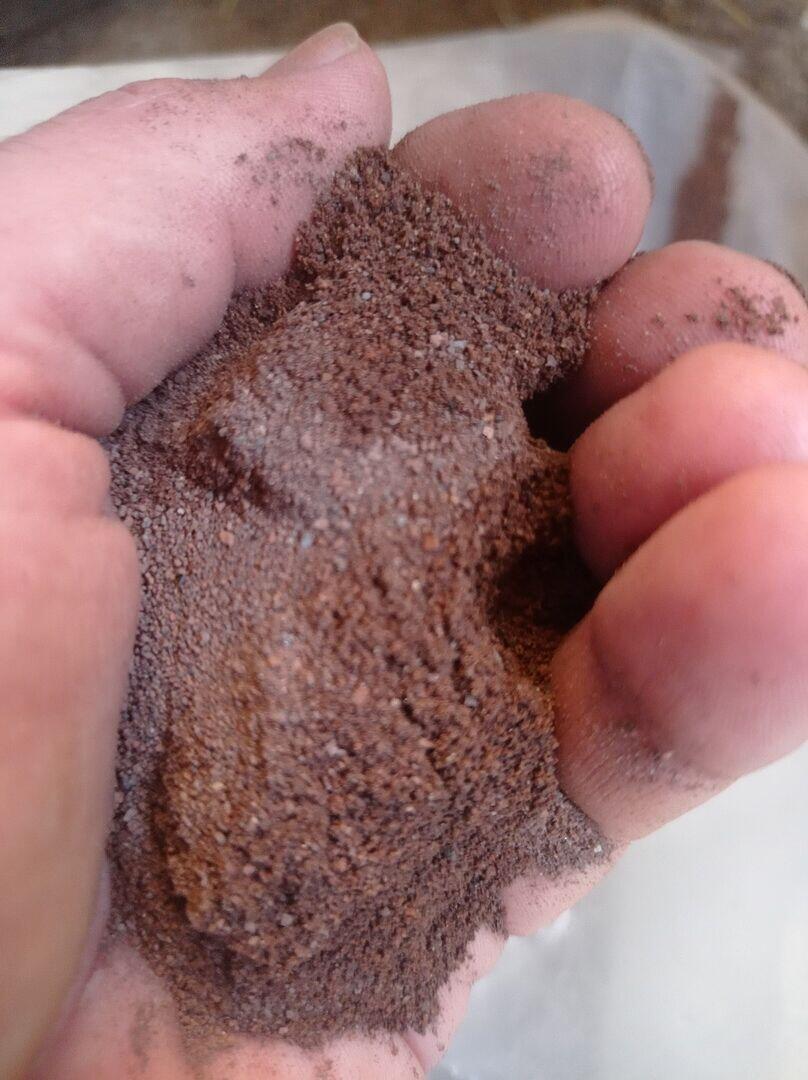
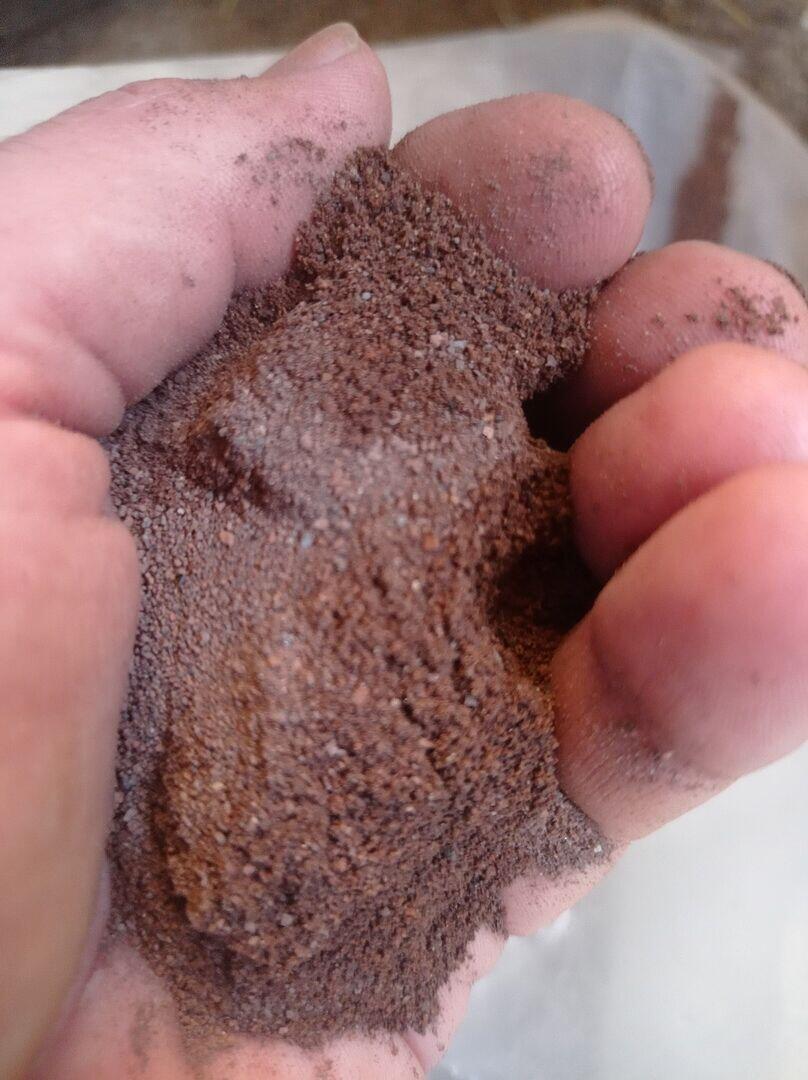
We have several granulometries, 0-1 mm. and micronized volcanic stone flour.
The micronized rock flour is more expensive but compensates as it reduces the amount needed to have a higher contact surface than the 0-1 mm granulometry.
Amount of volcanic rock flour to apply
In the case of application by sprinkling with micronized rock, 200 grams per 1 m² is sufficient, (2 tons per hectare); in the case of 0-1 mm rock flour, about 400 grams per m² (4 tons per hectare) will be necessary. If applied directly to the plant, we can reduce the required amount by half.
Application through irrigation water, only use micronized rock flour, mix and apply with continuous agitation machine.
Frequently Asked Questions
c
Llegó rápido, lo esperado
c
Llegó rápido, lo esperado
E
Pues no puedo dar ninguna opinión porque todavía no me han entregado el pedido que hice el 16/07 y salió al día siguiente. Así que espero que gracias a mi opinión me envíes un gran descuento. Ah las fotos no os las adjuntos pirque la tierra se ve igual, sin harina de lava volcánica ni harina de basalto
m
es del grosor perfecto para utilizar en el guerto
M
Fantastica
M
Fantastica
M
No me ha llegado el pedido todavía.
Tardan cerca de un mes en enviar un pedido. A otros les Daría tiempo a dar la vuelta al mundo y sobraría tiempo.
Si no mejoran el tiempo del envío no les auguro un buen negocio por internet.
M
No me ha llegado el pedido todavía.
Tardan cerca de un mes en enviar un pedido. A otros les Daría tiempo a dar la vuelta al mundo y sobraría tiempo.
Si no mejoran el tiempo del envío no les auguro un buen negocio por internet.
A
Producto de calidad idéntico a la descripción
A
Producto de calidad idéntico a la descripción
L
Vi en una crítica que no correspondía los kilos con la bolsa que entregaban , ese problema ya está solucionado , una buena forma de volver a mineralizar el suelo conservando un buen ph .
L
Vi en una crítica que no correspondía los kilos con la bolsa que entregaban , ese problema ya está solucionado , una buena forma de volver a mineralizar el suelo conservando un buen ph .
J
Tarda demasiado agencía
J
Tarda demasiado agencía
j
hola Recibo el pedido un mes despues de pedirlo y llegan yo compre los sacos de 20 kg y el que mas pesa son 17,5 kg hay alguno de 16 kg me parece sencillamente un timo.
Hola Juan
En primer lugar, agradecerte el tiempo tomado en poner tu comentario y disculparnos por el retraso.
Harina de lava volcanica es un producto nuevo que acabamos de poner en marcha, lo envasamos en nuestros sacos estandar para 20 kg. de piedra pero este producto tiene menos densidad. Al crear el producto en la tienda no caímos en cuenta, ahora mismo le vamos a hacer un abono por la diferencia de producto no recibida.
Vuesteras opiniones son la base sobre las que trabajamos para mejorar, vamos a cambiar la ficha de este producto,
Muchas gracias,
Joaquín Vicente
j
hola Recibo el pedido un mes despues de pedirlo y llegan yo compre los sacos de 20 kg y el que mas pesa son 17,5 kg hay alguno de 16 kg me parece sencillamente un timo.
Hola Juan
En primer lugar, agradecerte el tiempo tomado en poner tu comentario y disculparnos por el retraso.
Harina de lava volcanica es un producto nuevo que acabamos de poner en marcha, lo envasamos en nuestros sacos estandar para 20 kg. de piedra pero este producto tiene menos densidad. Al crear el producto en la tienda no caímos en cuenta, ahora mismo le vamos a hacer un abono por la diferencia de producto no recibida.
Vuesteras opiniones son la base sobre las que trabajamos para mejorar, vamos a cambiar la ficha de este producto,
Muchas gracias,
Joaquín Vicente